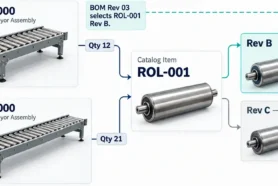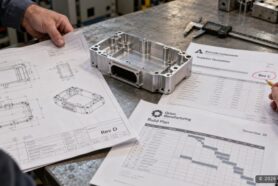
Manufacturing teams across industries face a consistent and very familiar operational bottleneck: the moment a design leaves the CAD system, the process of getting accurate product data into NetSuite becomes slow, manual, and error-prone. Engineering teams export BOMs, clean and restructure data, fix incomplete fields, add missing items, convert drawings, attach files, and then hand off spreadsheets for ERP import. Operations teams repeat the cycle on their side—validating, correcting, reconciling, re-importing—often more than once.
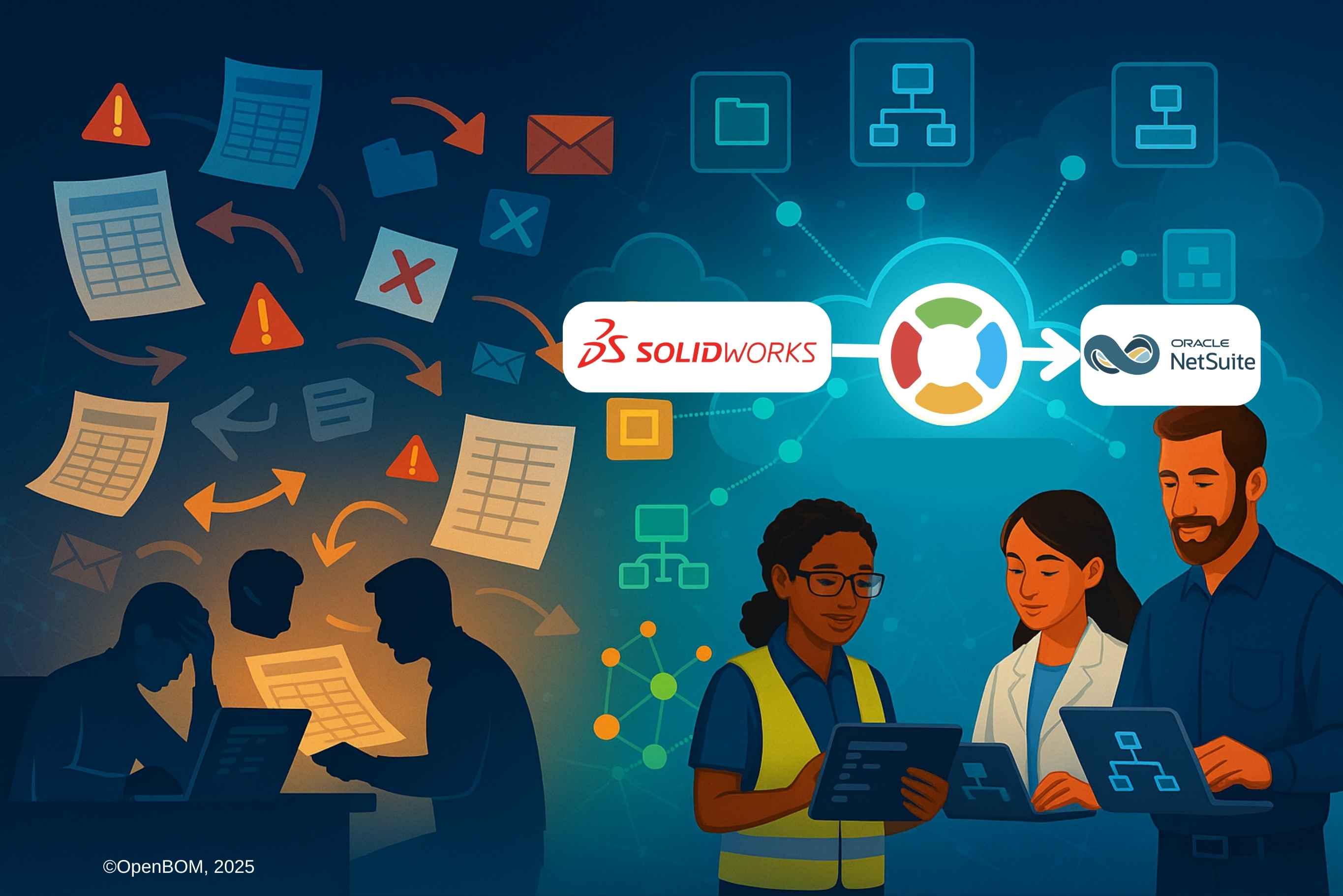
No matter how big or small the organization is, everyone wants the same thing: a clean, reliable connection between engineering and ERP. But most teams are still stuck in what I call the Excel shuttle era, where data travels back and forth in spreadsheets, and half the team ends up manually repairing something that should have been correct in the first place.
This isn’t a rare exception; it is the daily reality for many companies. What should be a seamless engineering-to-ERP flow frequently turns into a multi-step ritual of data translation and reconciliation. Every change or late-stage adjustment restarts the process, creating delays, duplicate items, mismatched costs, and a general erosion of trust in both engineering and ERP data.
This problem—persistent, structural, and costly—is precisely what OpenBOM and NetSuite integration is designed to solve.
The Broken Promise of CAD-to-ERP “Integrations”
Many years ago, engineers and CAD vendors came up with an idea: “Let’s push data from CAD straight into ERP.” And on paper, it sounded brilliant. You click a button, and suddenly your product appears in SAP, NetSuite, Epicor, Infor—take your pick.
The problem? The idea was based on the assumption that CAD is the center of the universe. That everything a manufacturing company needs comes from a CAD assembly tree.
In practice, this never works well…
CAD BOMs aren’t real BOMs. They don’t include a complete engineering BOM data – fasteners, adhesives, software, electronics, packaging, or anything that isn’t modeled. CAD doesn’t know your vendor preferences or your cost structure or where your parts are sourced. CAD doesn’t understand NetSuite’s item types or its dependencies. It certainly doesn’t understand revisions, lifecycle states, or how purchasing teams operate.
And when a one-way CAD connector tries to push all of this into ERP, you end up with a mess—wrong items, missing information, no real structure, and no history. ERP teams end up repairing the data manually, while engineering continues designing inside a silo.
This is why most so-called CAD-to-ERP integrations quietly fail — not dramatically, not catastrophically — but slowly, through daily friction.
People lose trust in the data.Engineers stop using the integration. ERP teams go back to spreadsheets. And the Excel shuttle continues.
Rethinking Integration: It’s Not a Sync, It’s a Lifecycle
When we built OpenBOM, we never believed that integration should be just “moving data from CAD to ERP.” That felt like trying to build a bridge by throwing two planks across a river and hoping nobody slips.
Instead, we looked at how products actually come to life.
A modern hardware product is a mix of mechanical design, electronics, firmware, packaging, purchased parts, custom parts, suppliers, prices, and—most importantly—constant change. Engineering produces one view of this data. Manufacturing needs a different one. Purchasing needs yet another. ERP manages the items and the supply chain.
There isn’t one BOM. There are many BOMs, each serving a purpose. And none of them should live in spreadsheets.
So our philosophy became simple: if engineering and ERP are two ends of the same lifecycle, OpenBOM should be the connective tissue that keeps everything aligned.
Not a pipe. Not an exporter. But a foundation that represents the full product, in all its variations, disciplines, and stages.
That’s why OpenBOM supports engineering and manufacturing perspectives, captures disciplines beyond CAD, handles revisions and change, and connects items, BOMs, sourcing, files, and lifecycle events into a living model.
When this model is connected to ERP, something magical happens: data moves with clarity, not chaos.
Why NetSuite Was the Perfect Candidate for a Deeper Integration
As we built more ERP integrations, it became clear that NetSuite demanded a different approach. Unlike other ERPs, NetSuite has a very refined way of thinking about items, BOMs, vendors, and costs.
It’s structured. It’s flexible. And it rewards systems that respect its architecture.
So instead of building yet another external connector—another “pipe” that pushes data—we decided to go deeper. We wanted engineering and operations teams to work as if OpenBOM existed inside NetSuite itself.
And that’s exactly what we built.
Today, OpenBOM appears inside NetSuite as an Engineering tab. It feels native because it is native. When engineers build their product in OpenBOM, the data doesn’t fly blindly into NetSuite. It enters NetSuite through its own language—its own item types, fields, sourcing logic, and BOM structure.
What I really love is this: operations teams never leave NetSuite. They look at engineering data right next to purchasing data. They review attachments, costs, files, classifications, vendor options—the full picture. And they decide when and how product data becomes ERP data.
No more scripts. No more transformations in Excel. No more “something went wrong” emails. It’s all consistent, controlled, and understandable.
Engineers work in OpenBOM. Operations work in NetSuite. And the bridge between them is not a file export—it’s a shared understanding.
A Story From the Field: SolidWorks → OpenBOM → NetSuite
Many of OpenBOM’s customers use SolidWorks. Let me give you an example from a typical SolidWorks team (and we have many of those)
They design complex electromechanical assemblies (eg. motors, housings, PCBs, wiring, firmware, the works). Before OpenBOM, their process was the predictable heartbreak: export a SolidWorks BOM to Excel, adjust it manually, add non-modeled parts, attach PDFs, fix file names, reformat everything, and upload it all into NetSuite.
It took days. And every change restarted the cycle. Now, the workflow looks very different.
They complete a design in SolidWorks. OpenBOM extracts the product structure, thumbnails, configurations, metadata, and all the necessary derivatives. They enrich it with electronics, purchased parts, packaging, wiring, and everything that normally lives outside CAD. They assign vendors and categories. They run cost rollups to get visibility before the data even reaches ERP.
Then they go to NetSuite. Under the Engineering tab—OpenBOM’s home inside NetSuite—they see the engineering BOM exactly as the engineers built it. They review the mapping: item types, fields, costing, attachments, sourcing. The transformation is controlled from inside NetSuite, meaning nothing unexpected happens. Items land exactly where they belong. BOMs appear the way NetSuite prefers them to look. Files show up in the right place. Costs carry through cleanly.
What they told me afterward was my favorite part of the whole story: “It feels like engineering is finally speaking our language.”
And this is the point. When engineering and ERP finally understand each other, manufacturing becomes predictable.
Why Customers Keep Coming Back to This Integration
When I speak with customers about why they prefer OpenBOM’s NetSuite integration, the conversation rarely begins with technical features. They start with how it makes their work feel:
- predictable instead of chaotic
- fast instead of tedious
- collaborative instead of disconnected
- controlled instead of risky
They often describe it as “finally having one story of the product.” Engineering knows that what they send will be understood. Purchasing trusts that the data is accurate. Manufacturing knows revisions will flow properly. ERP administrators stop worrying about corrupted records.
And when people trust their tools, they stop relying on Excel as a safety blanket.
That’s the moment when a team starts to scale.
Why This Matters for the Future (and for AI)
Everyone is talking about AI right now. Everyone wants automated costing, procurement agents, predictive supply chains, automated order planning.
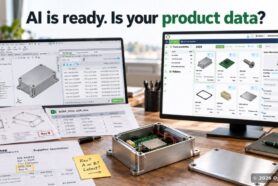
And I keep saying the same thing: AI cannot work if the data is wrong.
ERP is where your supply chain lives. If the items, vendors, BOMs, and attachments are clean and connected to engineering, AI becomes possible. If they’re scattered and inconsistent, AI becomes ridiculous.
OpenBOM + NetSuite creates the clean foundation that AI needs. Not someday, not after a long implementation, but now. Because the product lifecycle becomes one continuous flow instead of a set of broken handoffs.
If You’re Curious What This Looks Like…
Explore the details here – OpenBOM NetSuite Integration page where you can check more details, functional breakdown and videos. Watch a demo webinar of OpenBOM integration with SolidWorks and NetSuite.
If you want to dive deeper, read the article about how OpenBOM thinks about ERP and AI agentic workflows. OpenBOM Integration circa 2025 or How to try OpenBOM – ERP integrations.
Conclusion: Let’s Talk
I’m always happy to discuss how teams connect engineering to NetSuite and what this means for scaling operations. If you’re building hardware, dealing with constant changes, and tired of the Excel shuttle, send me a message. I’d be glad to help.
In the end, integration is not about moving data. It’s about aligning people, decisions, and the product itself. And when that alignment happens, everything downstream just works.
REGISTER FOR FREE and check how OpenBOM can help you.
Best, Oleg
Join our newsletter to receive a weekly portion of news, articles, and tips about OpenBOM and our community.