In my article today, I want to talk about OpenBOM’s next step toward seamless product data connectivity
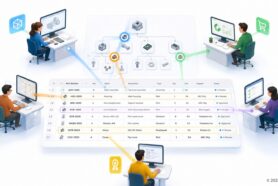
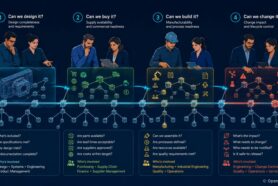
Manufacturing is changing fast. The days when engineering, procurement, and finance operated in separate silos are over. Modern manufacturing environments depend on a connected ecosystem of cloud services — CAD, PDM, ERP, and financial tools — working together in real time.
At OpenBOM, we believe that openness and connectivity are the foundation of this new digital era. Our vision is simple: enable companies to connect design, engineering, and business systems without friction, enabling data to flow freely and accurately across all stages of product development.
The next step in that vision is coming soon — OpenBOM Connected Data Services, a new capability that enables one-click, granular item-level integration with ERP and financial systems like QuickBooks, Xero, Odoo, Visma, and Microsoft Dynamics 365.
The Vision: Openness as a Core Principle
From the very beginning, OpenBOM has been designed as a cloud-native, multi-tenant platform that thrives on openness and data sharing. We see product data not as a closed hierarchy but as a connected network — where items, bills of materials, purchase orders, and costs all coexist within a flexible digital thread.
Our mission is to empower manufacturers to connect their favorite tools and services — not to replace them. By bridging design and business systems, OpenBOM helps create a single source of truth that unites engineering creativity with operational precision.
The Challenge: Why Integration Has Been So Hard
For decades, connecting PLM and ERP systems has been one of the hardest problems in manufacturing.
Traditional “one-size-fits-all” integrations are rigid, expensive, and often require months of IT setup. They don’t adapt to the diversity of company workflows or to the reality of constantly evolving cloud services.
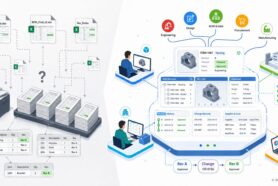
Many teams still rely on manual exports, Excel files, and email attachments to share data between systems — and that’s where mistakes happen.
Duplicate items, incorrect pricing, and mismatched part numbers often lead to delays, overspending, and production errors.
The result is clear: companies want better connectivity, but they also want it to be simple, flexible, and under their control.
The Solution: Granular, Service-Based Connectivity
OpenBOM is taking integration to the next level with granular connectivity services.
Instead of forcing a single integration path, we’re introducing a flexible, service-based model that lets users configure and control data synchronization at the item level.
This approach means that each connection — whether it’s to QuickBooks, Xero, or Visma — can be customized to match your company’s specific process and data structure.
The model is user-configurable, secure, and event-driven, giving you full control over what data is transferred and when. It’s a new kind of integration — one that fits the agility of cloud-native manufacturing.
The Feature: One-Click ERP and Financial Connectivity
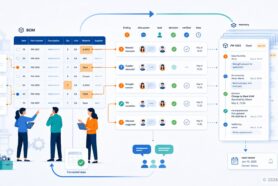
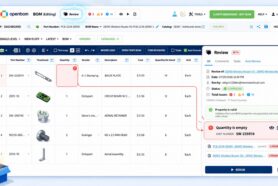
The upcoming OpenBOM connectivity layer we introduce a new experience: once a connectivity license is activated for your chosen service, OpenBOM will automatically enable menu commands and workflow events to transfer or sync data with a single click.
In the example demonstration, you’ll see how easy it is to connect items and purchase orders from OpenBOM directly to an ERP system:
- Choose your service (for example, QuickBooks, Dynamics 365, or Visma)
- Select the item or PO you want to connect
- Click “Connect” — and instantly sync item details, cost data, and supplier information
No middleware. No complicated setup. Just clear, structured data exchange between OpenBOM and your ERP or financial service.
Example: From BOM to ERP in Seconds
Imagine your engineering team completes a new assembly in CAD and synchronizes it to OpenBOM. You now have a full Bill of Materials, ready for procurement. With one click, your purchasing team can send this BOM data directly to QuickBooks or Visma — automatically creating or updating items, quantities, and prices.
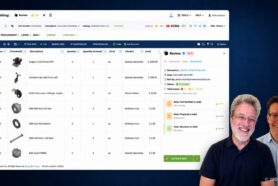
Check the video with OpenBOM demo transferring item data to ERP and financial applications.
This real-time connection eliminates manual steps, prevents errors, and ensures that the financial side of your operation always reflects the most current engineering data. It’s a small change that delivers a huge impact on accuracy, efficiency, and collaboration.
Conclusion: The Future Is About Connected Services
The digital thread isn’t about building bigger systems — it’s about connecting smarter ones.
Manufacturers deserve tools that adapt to their workflows, not the other way around.
With OpenBOM Connected Data Services, we’re making it possible to connect your BOMs, items, and purchase orders with ERP and financial systems in seconds — creating a seamless bridge between engineering and business.
This is the next step in OpenBOM’s journey to help manufacturers build a connected, data-driven enterprise — where every part, every cost, and every decision are synchronized across the digital thread.
Stay tuned for the upcoming release and demo video — and see how OpenBOM brings one-click ERP connectivity to life.
REGISTER FOR FREE to learn how OpenBOM can help you.
Best, Oleg
Join our newsletter to receive a weekly portion of news, articles, and tips about OpenBOM and our community.