For years, the PDM vs PLM conversation followed a familiar pattern. Product Data Management controlled CAD files and engineering revisions. Product Lifecycle Management extended that information into broader business processes.
That explanation gave companies a way to organize their software decisions. But I think it has become an increasingly poor starting point for modern product development.
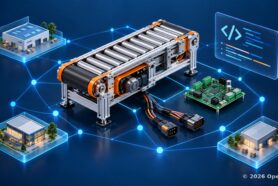
Products combine mechanical systems, electrical components, electronics, and software. Their design and manufacturing involve multiple disciplines, specialized tools, and often several companies. Teams work across mechanical CAD (MCAD), electrical CAD (ECAD), PCB design, and software development environments. Each environment may have its own cloud-based or on-premises PDM system or repository, with separate data structures, version histories, and release processes.
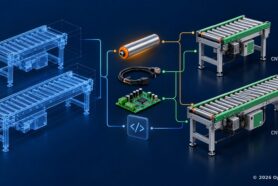
These environments need to be orchestrated together so their contributions form a coherent product definition as work progresses. Engineering must connect component identities, design configurations, revisions, and software releases across systems, while preserving each source’s authority over its data. The team needs to understand which combination of mechanical, electrical, electronic, and software states belongs together—and which combination has been accepted for manufacturing. This is the coordination that a modern engineering frontend must provide.
For modern multidisciplinary products, the old dividing line between PDM and PLM has lost its practical meaning. Engineering needs a connected environment that brings design information into product context and carries that context forward.
This is the role of OpenBOM Engineering Frontend. It also provides a foundation for the broader direction we are building toward: Product Memory.
The product has outgrown the mechanical CAD assembly
The MCAD-centered PDM model familiar from 10–20 years ago addressed an essential engineering problem: managing models, drawings, assembly references, and their changing states.
These responsibilities remain essential. What has changed is the product context around them.
Consider an illustrative inspection robot. Its mechanical team designs the chassis and camera mount. An electronics partner develops the controller board. An electrical engineer defines power distribution and wiring. A software team develops the firmware. A contract manufacturer needs the information required to assemble, program, and test the robot.
Now imagine that the controller board changes.
The mounting pattern may affect the chassis. A connector change may affect the harness. Updated electronics may require a different firmware release. Manufacturing needs to know which combination the engineering team has reviewed and accepted.
Each discipline can have well-managed source data while the team still struggles to answer one basic question:
Which combination defines the product we intend to build?
That question crosses the boundary traditionally drawn between PDM and PLM. It arises during everyday engineering work, long before the final manufacturing handoff.
PDM evolves into an engineering frontend
I use the term engineering frontend to describe the working environment that connects design sources with a reviewed engineering product definition.
In OpenBOM Engineering Frontend for Complex Product Development, I explain how this architectural role brings together cloud PDM, integrations, configurable product data, and collaboration.
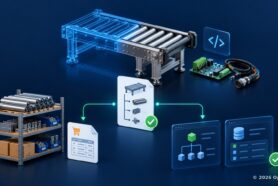
OpenBOM can manage desktop design files and their versions. It can also connect engineering information from sources that manage their own design objects and states. CAD integrations, imports, source references, and APIs provide different connection paths.
The engineering workspace brings those contributions together through Items, BOMs, supporting information, and lifecycle context. Companies can configure their properties, catalogs, and product structures, and share selected information with partners under defined permissions.
This changes the starting point for the PDM conversation. A CAD file becomes part of an engineering definition that includes contributions from other disciplines and companies.
The following questions show how the focus expands:
| Familiar MCAD PDM question | Question for multidisciplinary engineering |
|---|---|
| Which model or drawing version should I use? | Which source states support this product definition? |
| What does this CAD assembly reference? | Which mechanical, electrical, electronic, and software contributions belong in the product? |
| Who can change this file? | Who maintains each contribution, and who accepts its use in the product? |
| Has this design been released? | Which combination has been reviewed, and what must manufacturing receive? |
The file-management problem remains. The engineering frontend gives it the wider context modern products require.
A CAD file and a product Item have different meanings
Connecting disciplines requires a clear understanding of the information being connected.
A CAD file is a design artifact. An engineering Item identifies something that participates in the product. Its use in a BOM carries information such as quantity.
These relationships are not always one-to-one. One configured CAD file can represent multiple engineering Items. A component can have mechanical and electrical representations that refer to the same Item. Some product content has no separate CAD file.
In Design BOM vs Engineering BOM: An Engineering Ontology for Complex Products, I distinguish three structures:
- Design Folders organize managed files and their versions.
- Design BOMs describe assembly file references and captured design states.
- Engineering BOMs define products through Items, their properties, and their usage.
Electrical, PCB, and software sources contribute their own structures and state references. They can participate in the engineering definition without being forced into a mechanical file hierarchy.
This separation gives the engineering frontend a consistent way to connect design evidence with product identity.
Engineering release becomes a multidisciplinary decision
Return to the inspection robot. The mechanical model, controller board, wiring definition, and firmware can advance on different schedules.
A product release must preserve the combination accepted for use together. Each contribution can retain its own version or revision identifier.
As I describe in From CAD to Manufacturing: Engineering Release and ERP Integration, capturing source data, accepting an engineering definition, and confirming its downstream publication are separate events.
OpenBOM revision and change-management functions support the applicable review process. The accepted definition needs the selected source states and supporting evidence, including stable references where another system manages the source.
The reviewed information can then support OpenBOM planning and purchasing or a configured handoff to enterprise PLM and ERP. That handoff must preserve the agreed identities, structures, properties, and revision treatment. Manufacturing may also need an MBOM transformation.
For the robot manufacturer, the practical outcome is clear: the team can determine which hardware and firmware combination engineering accepted and what information must accompany it into manufacturing.
A broader PLM vision grows from connected engineering work
This approach changes how I think about PLM adoption.
A small engineering company can encounter a multidisciplinary lifecycle problem with its first product. Team size alone does not determine when product relationships, change decisions, and manufacturing readiness become important.
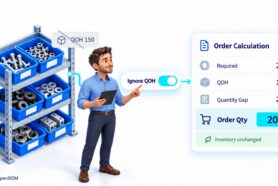
OpenBOM’s approach connects engineering data, change processes, collaboration, and operational uses. A manufacturer can build a workflow using OpenBOM’s PDM, PLM, inventory, and ordering capabilities. In an enterprise environment, the engineering frontend can connect to established PLM and ERP systems, with responsibilities assigned across the deployment.
The graph-based architecture provides a foundation for connecting Items, supporting records, and different product structures. Engineering, manufacturing, and service can organize information for their own purposes while maintaining relationships across those representations.
The useful direction is continuity: carry product identity and engineering context through the processes that depend on them.
For our robot, this means connecting its engineering definition with how it is assembled, what is sourced, and which configuration is supported. Each additional lifecycle perspective builds on a product the organization can already understand.
From engineering context to Product Memory
A connected product definition also creates the opportunity to preserve the reasoning behind it.
Why did the team choose this controller? Why was a particular firmware release accepted? What test result led to the harness change? Why did manufacturing request a different assembly sequence?
The OpenBOM Product Memory Platform vision extends toward retaining decisions, evidence, and context alongside product information. Its Capture, Review, and Flow cycle describes how knowledge can accumulate as engineering work moves into downstream use.
Engineering Frontend provides a practical foundation through connected source information, product structures, revisions, and review. The broader Product Memory direction builds on that foundation as we develop ways to preserve and use more of the organization’s understanding.
Recording a relationship does not establish compatibility. Preserving a revision does not automatically capture every reason behind it. Decisions and their evidence must become part of the connected record.
That accumulated context can help future engineers understand earlier choices and give AI agents a stronger basis for assistance.
Start with the product your team actually builds
When evaluating PDM and PLM, I would start with a real product and one change involving more than one discipline.
Follow the change from its design sources into the engineering definition. Identify who reviews it, which combination is accepted, and how manufacturing receives the result. Then ask whether someone joining the team later could understand the decision from the information preserved.
This reveals what the engineering environment needs to provide.
The old PDM vs PLM distinction reflected a narrower view of engineering data. Modern products require a connected view from the beginning. OpenBOM Engineering Frontend brings multidisciplinary design work into that product context, with a path into broader lifecycle processes and Product Memory.
REGISTER FOR FREE to explore OpenBOM with your own product data.
Best, Oleg
Join our newsletter to receive a weekly portion of news, articles, and tips about OpenBOM and our community.