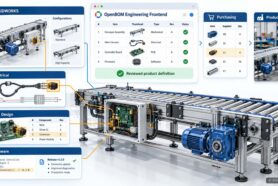
AI will not fix broken CAD-to-Excel-to-file processes. It will expose them. Engineering teams that want real value from AI need workflows built around context, validation, and traceability.
Everyone is asking how AI will change engineering. The better question is whether today’s engineering workflows are ready for AI. Most are not.
For decades, engineering and manufacturing teams have built their work around CAD files, Excel spreadsheets, shared folders, PDF drawings, email approvals, and manual handoffs. These workflows function because people supply the missing context. An engineer knows which file is the real one. A buyer knows which spreadsheet is the latest. Manufacturing knows which revision actually shipped. When something is unclear, someone knows who to ask.
AI knows none of this unless the workflow captures it.
That is the problem most teams are about to discover. AI will not quietly fix a broken engineering workflow. More often, it will expose one. If your product data is scattered across CAD systems, spreadsheets, folders, supplier emails, and ERP exports, AI sees scattered fragments. If your engineering decisions live only in people’s heads, AI cannot tell you why anything happened. If your BOM changes are disconnected from purchasing and manufacturing, AI cannot trace the impact. Feed AI a chaotic process and it will either miss the context or invent it, and a confident wrong answer in engineering is more dangerous than no answer at all.
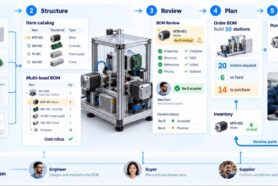
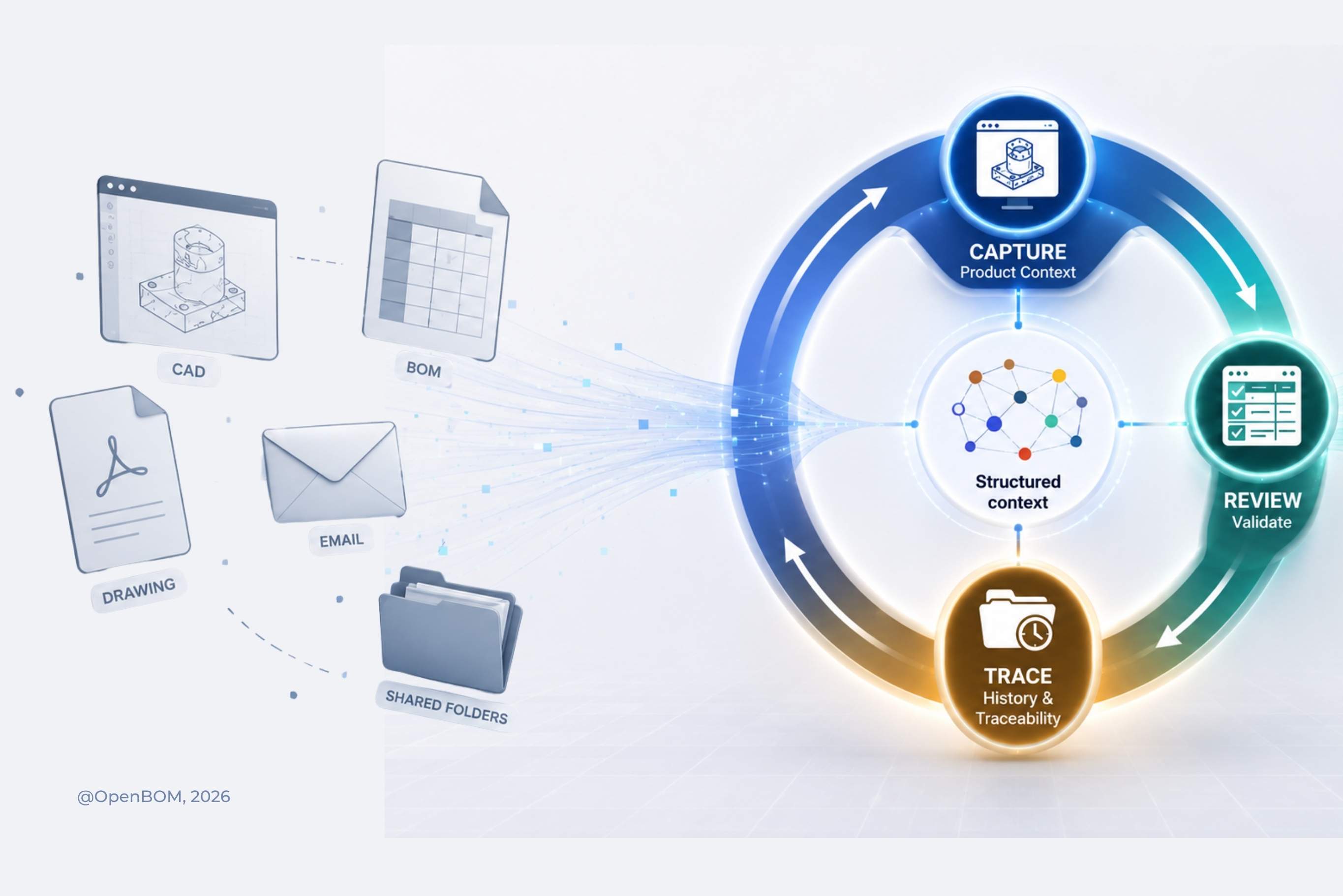
So becoming AI-ready is not mainly about picking an AI tool. It is about rethinking the workflow itself. The old pipeline that ran from CAD to Excel to files to email to ERP was designed for human interpretation. An AI-ready workflow has to be designed around three things: context, validation, and traceability. Put together, they form a different operating model for engineering work: Capture → Review → Flow.
Capture: AI Is Only as Good as the Product Context It Can Reach
An AI-ready engineering workflow is one that captures product context, makes AI output reviewable before it moves downstream, and keeps a traceable history of every decision, so AI operates on connected product knowledge instead of scattered files.
The first mistake teams make is assuming the prompt is the workflow. “Analyze this BOM” sounds simple, but consider everything the request actually depends on. Is this the engineering BOM, the manufacturing BOM, or the procurement view? Which revision? Which CAD structure produced it? Which parts are approved, which are purchased, which are made in house? Which suppliers are preferred? Which costs are historical, quoted, or estimated? Did the quantities come from the design, or were they edited during planning?
Now make the request realistic.“Compare Rev B and Rev C of this harness assembly and tell me what changed and why.” To answer well, AI needs the two revisions linked, the change reason recorded, and the released state identified. If those connections do not exist, AI will guess, and it will sound confident while doing it.
This is where traditional workflows break. Most companies do not have product memory. They have files, spreadsheets, CAD folders, PDFs, emails, ERP records, and knowledge inside people’s heads. People can reconstruct meaning from those fragments. AI cannot do it reliably unless the context is captured and connected.
So the first question is not “Can we use AI on our engineering data?” It is “Do we have the product context AI needs to work?” An AI-ready workflow captures that context continuously, from the places where engineering work actually happens: CAD, BOMs, item catalogs, drawings, specifications, change records, supplier data, and purchasing activity. It turns scattered artifacts into connected product knowledge.
AI does not need more files. It needs product memory.
Review: AI Output Has to Be Visible Before It Flows Downstream
The second element is validation, and it cannot be an afterthought.
In many traditional workflows, validation happens far too late. A BOM is exported from CAD, edited in Excel, sent to purchasing, imported into ERP. A supplier quote comes back. A manufacturing problem surfaces. Only then does anyone start asking which file was used, who changed the quantity, which revision was released, and why the ERP record no longer matches the engineering BOM. By the time the problem is visible, the context that explained it is gone.
AI raises the stakes. If it extracts a BOM from a CAD assembly, the engineer needs to review that structure right away. If it proposes missing item properties, the user needs to see the evidence. If it compares two revisions, the differences have to be easy to inspect. If it prepares purchasing data, the buyer needs to see exactly what would go downstream before it goes. If it flags a risk, the team needs to understand why.
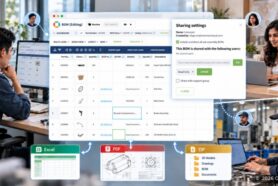
This is more than “human in the loop” as a slogan. It is a design principle. AI output should appear inside a review loop, not at the end of a long disconnected chain, and that review should happen where the product data lives, while the context is still fresh. Engineers, planners, procurement, and suppliers all need to see the output, check the assumptions, and approve the next step.
It also changes how to think about AI’s role. In engineering, AI is not an oracle handing down final answers. It works better as an assistant that captures, organizes, compares, and proposes, while people validate decisions before they move forward. The practical test is simple: can your workflow show AI-generated results in a form people can review, correct, and trust? If not, the workflow is not AI-ready.
Trace: Probabilistic Systems Need Memory and History
The third element is traceability, and AI makes it non-negotiable.
Engineering work is never static. Products, parts, suppliers, costs, revisions, and manufacturing plans all change. So AI-ready workflows cannot be one-time transactions. They have to be repeatable loops. This matters because AI is probabilistic: the same request can produce a stronger or weaker answer depending on the context and data available at the moment it runs.
That means teams need to trace the process, not just the result. What data was used, which revision was analyzed, which CAD files and supplier records were included, what assumptions AI made, what it recommended, who reviewed it, what was accepted or rejected, and what changed before anything moved downstream. Without that history, AI work becomes impossible to trust. Teams cannot explain why a recommendation was made, cannot compare today’s result against last week’s, and cannot tell whether their product data is improving or drifting, or whether a problem was actually fixed or quietly hidden.
Traceability is also what makes comparison possible, and comparison is the heart of engineering: what changed between two revisions, between two supplier quotes, between the engineering and manufacturing BOM, between the CAD structure and the released BOM, between the planned purchase and the actual order. In the old world that comparison was manual, done by opening spreadsheets and drawings or asking whoever remembered. In an AI-ready workflow, comparison is built into the system.
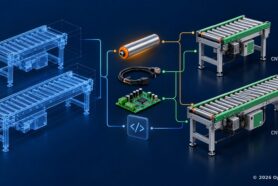
This is the foundation of a product memory flywheel. Capture the context, review the result, flow the validated information forward, then repeat as the product evolves. Each cycle adds context. More context improves the quality of AI assistance. Better assistance improves review and decisions. Better decisions create more structured history, and that history makes the next cycle better.
Why CAD to Excel to Files Was Never AI-Ready
For most engineering teams the existing workflow looks familiar: CAD creates the design, a BOM is exported to Excel, files land in folders, drawings go out as PDFs, changes get discussed in meetings or email, purchasing data is copied into another spreadsheet, and ERP, suppliers, and manufacturing each end up working from a slightly different version of the truth. This has worked for years, but it was never designed for AI. It was designed for people who already carry the context in their heads.
That is the hidden weakness. A person looks at a spreadsheet and remembers where it came from; AI cannot, unless the connection is captured. A person recognizes an outdated file name; AI cannot, unless revision history is available. A person knows a supplier is no longer approved; AI cannot, unless the supplier status is connected. A person remembers why a part was changed; AI cannot, unless the decision was recorded. And when a person is unsure, they ask someone. AI has no one to ask. It needs product memory.
This is why many AI projects in engineering will struggle, and it usually has nothing to do with the model. The model is powerful enough. The workflow simply does not provide the context, validation, and traceability AI needs to be useful. The answer is not to ask AI to make sense of chaos. It is to redesign the workflow so AI operates on connected, validated, traceable product knowledge.
The Future Workflow Is a Flywheel, Not a Pipeline
The future engineering workflow is not a linear handoff from CAD to Excel to files to email. It is a flywheel: Capture → Review → Flow.
Capture means collecting product context as engineering work happens, turning CAD structures, BOMs, item records, drawings, revisions, supplier data, and costs into connected product knowledge. Review means making AI output visible, explainable, and correctable, so teams can see what AI found, understand why, and validate it before it moves. Flow means moving trusted product knowledge across the organization, from engineering to manufacturing, from BOM management to procurement, from suppliers to ERP, and from one revision to the next.
This reframes what AI actually is for engineering teams. It is not a feature bolted onto the end of a broken process. It is a forcing function to redesign the process. When context is missing, AI hallucinates. When validation is missing, AI creates risk. When traceability is missing, AI cannot be trusted. But when all three are built into the workflow, AI becomes genuinely useful. It can help teams understand product data, surface problems, compare changes, prepare purchasing information, validate BOMs, and move faster with more confidence. That is the difference between using AI as a chatbot and building an AI-ready engineering workflow.
It is also the model OpenBOM is built around. The Product Memory Flywheel, Capture → Review → Flow, is exactly this pattern: capture product knowledge from CAD, files, and engineering work, review what changed and why, and flow structured product knowledge across teams, suppliers, ERP, and the full product lifecycle.
AI Readiness Starts with Workflow Readiness
AI will change engineering and manufacturing, but not in the way most people expect. The biggest gains will not come from better prompts. They will come from redesigning workflows so AI can reach the right context, produce reviewable results, and operate inside a traceable loop.
Every engineering workflow needs the same three elements to get there. Capture the context. Review and validate the result. Trace, compare, and repeat the flow. That is the practical path from today’s fragmented CAD to Excel to files process to an AI-ready product memory workflow, and the teams that make the shift will get far more out of AI, because they will finally give it what it needs most: connected, validated, traceable product knowledge.
AI does not need more disconnected engineering files. It needs product memory. And product memory starts with Capture → Review → Flow.
Common Questions About AI-Ready Engineering Workflows
What does it mean for an engineering workflow to be AI-ready?
An AI-ready workflow captures product context, lets people review AI output before it flows downstream, and keeps a traceable history of decisions. It turns scattered CAD files, spreadsheets, and emails into connected product knowledge that AI can reason over reliably instead of guessing at the missing pieces.
Why does AI struggle with traditional CAD-to-Excel workflows?
Those workflows were designed for people who already carry the context in their heads. They know which file is current and which revision shipped. AI knows none of that unless the workflow captures it, so it either misses the context or invents it, producing confident but wrong answers.
What is product memory in engineering?
Product memory is the connected history of parts, BOMs, files, revisions, suppliers, costs, and decisions, with the relationships between them preserved. A single spreadsheet or CAD file is a snapshot. Product memory is what lets AI know what something means, where it came from, and how it changed.
What are the three elements of an AI-ready engineering workflow?
Capture the context, so AI can reach connected product knowledge. Review the result, so AI output is visible and correctable before it moves downstream. Trace and compare, so a probabilistic system leaves behind memory and history. Together they form the pattern Capture, Review, Flow.
Does AI replace engineers in BOM and product data management?
No. In engineering, AI works best as an assistant that captures, organizes, compares, and proposes, while people validate decisions before they flow downstream. It is not an oracle handing down final answers. The cost of an unchecked wrong answer about a BOM is too high.
REGISTER FOR FREE to learn more about how OpenBOM can help.
Best, Oleg
Join our newsletter to receive a weekly portion of news, articles, and tips about OpenBOM and our community.