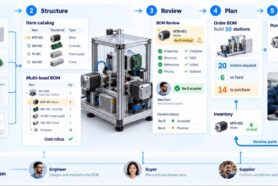
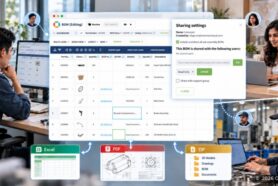
In OpenBOM, Items are the starting point for building product structures. One Item can be used in several types of Bills of Materials (BOMs). Most teams create an Engineering BOM first, but the same Item can also appear in Manufacturing, Service, Maintenance, or other custom BOM structures.
Because OpenBOM uses a flexible data model, these structures can be organized and viewed in different ways. Teams can look at the same product data from different angles while keeping everything tied back to the Item.
That flexibility also means one Item can have several BOMs linked to it. In the past, if you wanted to delete an Item, you first had to find every BOM connected to it and remove those manually.
Now OpenBOM handles that step automatically.
How It Works
When you delete an Item, OpenBOM checks for any BOMs linked to it, no matter the BOM type.
If the system finds related BOMs, it shows a confirmation message explaining that those BOMs will also be removed. You can review the message and confirm the action.

After confirmation, OpenBOM deletes the Item and all associated BOM structures in one step.

Key Benefits
This update helps in two ways.
First, it keeps the data model clean. A BOM can’t exist without its parent Item, so removing the Item also removes its BOMs.
Second, it saves time. You no longer need to track down and delete each BOM manually.
Demo video
Conclusion:
The goal is to make less clicks. The new improvement is exactly there. The new process now looks like this: (1) Create an Item; (2) Create a BOM; (3) Delete the Item — OpenBOM detects and deletes the related BOM automatically. No additional clicks needed. Fewer steps, fewer clicks, and cleaner data.
REGISTER FOR FREE to check how OpenBOM can help you.
Best, Oleg In OpenBOM, Items are the starting point for building product structures. One Item can be used in several types of Bills of Materials (BOMs). Most teams create an Engineering BOM first, but the same Item can also appear in Manufacturing, Service, Maintenance, or other custom BOM structures.
Because OpenBOM uses a flexible data model, these structures can be organized and viewed in different ways. Teams can look at the same product data from different angles while keeping everything tied back to the Item.
That flexibility also means one Item can have several BOMs linked to it. In the past, if you wanted to delete an Item, you first had to find every BOM connected to it and remove those manually.
Now OpenBOM handles that step automatically.
Join our newsletter to receive a weekly portion of news, articles, and tips about OpenBOM and our community.