A bill of materials is one of the most important records in any manufacturing business. It defines what goes into a product, how assemblies connect, which materials must be purchased, and what the finished item is likely to cost. A well-managed bill of materials BOM is not just an engineering data. It is also a financial, operational, and supply chain control system. When manufacturers treat BOM optimization as a core business discipline, they improve cost efficiency, reduce avoidable waste, strengthen procurement decisions, and protect profit margins.
For many organizations, however, BOM optimization is still reactive. Teams revisit the BOM only after a cost overrun, a sourcing issue, or a production problem forces attention back to the data. By then, opportunities for early cost reduction, better cost estimation, or improved sourcing leverage have often already been missed. That is why BOM optimization matters. It turns the BOM from a static reference file into a living source of insight for engineering, sourcing, planning, and finance.
The business value is substantial. Strong BOM cost management supports better inventory management, more reliable supplier coordination, and clearer visibility into BOM costs across the entire product structure. It helps organizations identify hidden costs, compare alternate sourcing paths, understand cost implications at each assembly level, and make decisions that improve overall BOM cost instead of focusing only on line-item prices. A structured optimization process also helps teams uncover cost saving opportunities, improve cost control, and respond more effectively to supply chain disruptions.
This guide explains how to build a practical, repeatable process for BOM cost analysis, BOM cost optimization, and long-term effective cost management. It covers data quality, revision discipline, sourcing strategy, multi-level structure, automated cost roll ups, and the role of BOM management software in keeping everything connected. Whether you manufacture industrial equipment, consumer products, or products built around complex electronic components, these practices will help you manage cost more intelligently and reduce operational risk.
Why BOM Optimization Matters More Than Ever
Manufacturers today operate in an environment shaped by tighter margins, global sourcing complexity, and persistent market volatility. Supplier lead times change quickly. Price volatility affects everything from metals to semiconductors. Freight costs rise unexpectedly. Geopolitical and transportation issues increase the risk of shortages and production delays. In this context, managing BOM costs effectively is not optional. It is central to business resilience.
A BOM sits at the center of these pressures because it connects design choices with purchasing, planning, and production. When BOM data is incomplete, inaccurate, or disconnected from real supplier conditions, teams make decisions based on assumptions rather than facts. Procurement may buy parts that appear affordable but carry higher landed cost. Planners may underestimate lead times and create schedules that cannot be executed. Engineers may release designs without understanding downstream manufacturing costs or inventory risk. The result is a chain reaction of avoidable waste.
This is why BOM optimization should be treated as a cross-functional process. It is not only about documentation quality. It is about using structured, current BOM information to support better sourcing, stronger cost analysis, improved release processes, and lower total operational burden. A good optimization program reduces surprises and creates a more stable foundation for decision-making across the organization.
What BOM Optimization Means in Practice
In practice, BOM optimization means continuously improving the product definition so it is more cost-effective, easier to source, easier to build, and easier to manage over time. That includes improving BOM structure, verifying revisions, cleaning up BOM data, reviewing supplier options, and measuring cost not only at the component level but across the entire product hierarchy.
A mature approach to optimization looks at much more than one-time part pricing. It examines direct material costs, assembly effort, freight exposure, risk from single-source suppliers, the effect of part standardization on excess inventory, and the relationship between engineering choices and long-term maintenance costs. It also depends on collaboration among engineering, sourcing, finance, operations, and manufacturing. Without shared visibility, the BOM becomes fragmented across disconnected systems and spreadsheets.
BOM optimization also includes building a habit of continuous cost analysis. Costs move. Supply conditions change. Suppliers perform differently over time. A BOM that was accurate at release can become financially inefficient six months later if it is not actively reviewed. That is why effective BOM cost management depends on ongoing updates, not one-time cleanup.

1. Conduct a Thorough BOM Cost Analysis
A strong optimization program always starts with a thorough BOM cost analysis. Before teams can improve cost, they need to understand it. The purpose of analysis is to calculate the real total BOM cost, not just the list price of purchased items. That requires looking beyond individual components and building a reliable view of how cost accumulates through the complete product structure.
A detailed BOM cost analysis should examine each line item, each subassembly, and each top-level assembly. It should identify where cost is concentrated, which parts are driving the largest share of spend, and where cost reduction opportunities may exist. It should also surface assumptions. If a component cost is based on an outdated quote, if freight has not been included, or if labor assumptions are too simplistic, the resulting number will distort planning and sourcing decisions.
This is why BOM cost analysis is foundational. It turns the BOM into a decision-making tool. With accurate cost roll-ups and complete assumptions, teams can prioritize improvement work where it matters most. Instead of arguing over isolated supplier prices, they can focus on the assemblies, materials, and process steps that have the biggest influence on the overall BOM cost.
Understand the Difference Between Price and Cost
One of the most common mistakes in BOM review is confusing price with cost. The quoted purchase price of a component is only one part of the total picture. A part that appears inexpensive may create higher downstream labor, higher inspection effort, more scrap, or greater supply risk. Those factors affect real cost even if they do not show up in a simple component table.
This distinction matters because effective cost analysis must evaluate the full burden created by a part or assembly choice. The true total cost of a BOM includes not only component prices, but also labor, handling, freight, inventory burden, quality overhead, and the effect of delays or substitutions. When teams optimize only for price, they often increase the real cost of the product.
Understanding this difference also improves communication across functions. Engineering may focus on performance and specification. Procurement may focus on supplier pricing. Manufacturing may focus on build effort and yield. A good BOM cost analysis brings those perspectives together so the company can evaluate decisions based on total business impact.
Calculate Direct Material Costs
The first layer of any cost model is the material itself. Teams must calculate direct material costs for every part, raw input, and purchased subassembly in the BOM. This includes standard components, custom parts, outsourced assemblies, packaging items, and any other purchased materials that directly contribute to the product.
Getting this step right is essential for accurate BOM costing. Every line should have a current unit cost, validated supplier source, relevant quantity per assembly, and the correct revision. For products built with volatile markets or scarce electronic components, this data may need to be refreshed frequently. If the material layer is stale, everything built on top of it becomes less reliable.
Direct material costing should also distinguish between estimated pricing and committed pricing. Early in the design process, some costs may be modeled. Later, as supplier quotes become available, those values should be updated. This progression improves cost estimation and supports more reliable decisions as the product moves from engineering concept to production reality.
Include Labor Costs and Manufacturing Burden
Material alone does not determine product economics. Labor costs are often a significant part of the BOM cost picture, especially for products that require testing, calibration, manual assembly, finishing, inspection, or rework. A component choice that reduces material spend but increases assembly effort may not create real savings.
Manufacturers should include labor assumptions for assembly time, machine setup, inspection time, test procedures, and expected rework. These assumptions should be realistic, not generic. In many cases, labor is where manufacturing process complexity becomes visible. A more complex BOM often increases touch time, introduces more opportunities for error, and drives up production variability.
Bringing labor costs into the BOM view also helps engineering and sourcing understand the real effect of design simplification. When a redesign reduces part count, simplifies fasteners, or improves standardization, the benefit is often seen not only in material spend but also in reduced assembly effort and lower production costs.
Account for Logistics, Packaging, and Total Landed Cost
A complete cost model must also include transportation and related fulfillment costs. Logistics costs, duties, import charges, insurance, brokerage fees, packaging materials, and handling charges all affect the real cost to deliver a finished product. That is why total landed cost is so important in BOM decisions.
Looking only at ex-works supplier pricing can make an overseas component appear cheaper than it really is. Once freight, tariffs, and buffer inventory requirements are included, the full landed cost may be much higher. This is especially important when comparing domestic and offshore sourcing options or when evaluating long lead-time suppliers.
Including these items in BOM cost calculations improves cost control and makes sourcing tradeoffs clearer. It also helps companies avoid false savings that later disappear into emergency shipments, customs delays, or excess stocking. For many products, strong visibility into total landed cost is one of the fastest ways to improve cost efficiency.
Use Automated Cost Roll Ups Across Multi-Level Structures
For anything beyond a simple product, manual cost aggregation becomes risky. In a multi-level assembly, every lower-level part contributes to the cost of its parent, and every parent contributes to the cost of the finished product. This is where automated cost roll ups provide real value.
Automated roll-ups reduce spreadsheet errors, eliminate broken formulas, and make it easier to maintain current BOM cost data across changes. They also improve the speed of analysis. When engineering updates a part, sourcing changes a quote, or a subassembly is revised, the top-level total production cost can be recalculated immediately. That supports faster, more reliable decisions.
For multi-level products, BOM cost analysis enables deeper insight only when the data structure supports it. Without roll-ups, teams are often working from partial numbers or disconnected snapshots. With them, the full overall BOM cost remains visible and traceable.
2. Identify and Eliminate Hidden Costs
A large share of preventable waste comes from hidden costs that never appear clearly in an initial quote or BOM review. These costs often emerge later as exceptions, one-time charges, or operational inefficiencies. The earlier they are identified, the easier it is to prevent them from distorting margins.
Examples include tooling amortization, setup fees, inspection costs, supplier onboarding costs, tariffs, obsolescence exposure, packaging requirements, and minimum-order commitments. Some components also create hidden cost through poor quality performance, inconsistent delivery, or added handling effort. These effects do not always show up in the standard cost column, but they still affect the business.
This is why effective BOM cost analysis must go deeper than nominal pricing. Teams should ask what each line item really costs the company over time. When this habit becomes part of the review process, it becomes much easier to find sustainable cost reduction opportunities.
Watch for Minimum Order and Excess Inventory Risk
A common hidden cost comes from purchasing constraints. Minimum order quantities may force the company to buy far more than current production needs. That creates excess inventory, ties up working capital, increases storage costs, and raises the chance of future write-offs if demand shifts or the design changes.
This is especially dangerous for specialized parts and low-volume programs. A supplier may offer an attractive unit cost, but only at a purchase level far above what the business can use efficiently. In these cases, the apparent savings can be offset by inventory burden and obsolescence exposure.
Optimization means comparing price breaks against inventory risk. A part choice should support both sourcing efficiency and healthy inventory turns. This is where BOM-linked inventory management becomes essential to real cost reduction.
Measure the Cost of Quality and Supplier Instability
Quality problems and unreliable delivery are cost problems, even when quoted prices are low. Poor incoming quality drives inspection time, rework, scrap, and production interruption. Weak supplier performance also increases the need for expediting and buffer inventory.
These effects are often treated separately from the BOM, but they are tightly connected to it. A component with unstable quality or inconsistent availability changes the real cost of the assembly. If the same issue repeats across multiple products, the hidden burden becomes substantial.
By including supplier history in BOM review, companies gain a clearer picture of total cost. That makes supplier pricing easier to evaluate in context and leads to smarter sourcing decisions that support cost optimization rather than just short-term price reduction.
3. Standardize Components Across Product Lines
Standardization is one of the most powerful and repeatable ways to create cost savings. When the same parts are used across multiple products, manufacturers reduce SKU count, simplify sourcing, improve leverage with suppliers, and lower warehouse complexity. Standardization also improves resilience because shared parts are easier to forecast and support.
From a cost perspective, this creates several advantages at once. Purchasing gains volume, which improves negotiation leverage. Planning becomes easier because more demand can be consolidated through fewer part numbers. Inventory becomes more flexible because one stocked component can support multiple programs. These changes reduce waste and improve cost efficiency.
Standardization also makes BOM maintenance easier. Fewer unique parts mean fewer quotes to refresh, fewer lifecycle risks to monitor, and fewer revisions to manage. Over time, that contributes to stronger effective cost management across the whole product portfolio.
Standardization Reduces Inventory, Complexity, and Cost Drivers
One of the clearest benefits of standardization is the reduction of recurring cost drivers. Every unique part introduces additional effort: sourcing, qualification, stocking, revision management, supplier oversight, and potential substitution planning. Reducing unique parts reduces those burdens.
It also reduces manufacturing process complexity. Shared hardware, common connectors, and standard fasteners simplify work instructions and reduce the risk of incorrect assembly. That translates into lower production costs and more stable operations.
Companies that compare BOMs across product families often find multiple parts serving the same function with only minor specification differences. Consolidating those parts is often one of the fastest ways to improve BOM cost optimization and uncover durable cost saving opportunities.
4. Improve BOM Data Quality Early in the Lifecycle
Clean BOM data is the backbone of reliable BOM management. Without accurate supplier references, lifecycle information, revisions, pricing, and approved alternatives, even the best optimization strategy will fail. Bad data spreads errors into purchasing, planning, production, and finance.
The cheapest time to improve data quality is early. During concept and design, changes are easier and cheaper to make. Once the product is released or production begins, corrections become much more expensive. A wrong part number, outdated supplier, or stale cost field can create rework, buying mistakes, and schedule disruption.
This is why early BOM data discipline is central to effective BOM cost management. It creates a stronger foundation for every downstream function. It also makes analysis easier because the inputs are trustworthy.
For a deeper view of this topic, see BOM data management best practices.
Capture the Right Fields for Cost and Supply Decisions
Not all BOM fields carry equal operational value. To support cost analysis, sourcing, and planning, teams should capture more than quantity and part number. Useful fields include approved vendor, manufacturer part number, lead time, lifecycle status, standard cost, quoted cost, alternate parts, and revision.
These fields make the BOM usable across functions. Engineering sees structure and intent. Procurement sees sourcing choices and lead times. Finance sees BOM cost data. Planning sees material availability exposure. The more complete the fields, the more effective the BOM becomes as a shared control document.
A BOM that lacks these fields forces every function to work from separate spreadsheets or disconnected systems. That fragmentation creates hidden risk and weakens both cost estimation and real-time decision-making.
5. Strengthen Change Control and Revision Discipline
Revision control is one of the most important controls in BOM management. When the wrong version of a BOM reaches production, the result can be scrap, rework, supplier confusion, quality problems, and delayed shipments. These are direct cost issues, not just documentation issues.
Strong change control requires clear revision identifiers, approval workflows, traceability, and a disciplined distinction between draft and released data. Teams need to know who changed what, when, and why. They also need confidence that the released BOM is the same BOM being used for purchasing and planning.
This is especially important for the engineering BOM, where design changes can cascade into sourcing, assembly, and quality implications. Good revision practices protect cost control by preventing avoidable mistakes from spreading through the business.
For more on revision practice, see BOM management best practices.
Revision Control Matters Even More in Multi-Level BOMs
Revision issues become more severe as BOM structure becomes more complex. In a multi-level BOM, a change to a lower-level component may affect several parents or multiple top-level products. If those dependencies are not visible, the company may buy, stock, or build from inconsistent data.
That is why revision discipline is inseparable from BOM cost management. Each revision can alter cost roll-ups, supplier needs, and production timing. Without good control, teams lose trust in the numbers and spend time resolving document confusion instead of improving cost.
For more detail on this area, review revision control in multi-level BOMs.
6. Optimize BOM Structure for Visibility and Analysis
A clean BOM structure is not just an engineering preference. It directly affects the ability to perform effective cost analysis and understand where cost accumulates. If all parts are presented in a flat list, it becomes difficult to see which subassembly drives the most expense or where design changes would have the greatest effect.
A multi-level structure provides hierarchy. It shows parent-child relationships, identifies shared subassemblies, and makes cost roll-up logic more transparent. This structure supports more precise BOM cost calculations and makes improvement work easier to prioritize.
It also improves communication. Engineering, manufacturing, and sourcing can all understand the same product architecture. When the structure is well organized, cost and supply issues become easier to localize and address.
Use BOM Structure to Expose Major Cost Drivers
Every product contains a few assemblies or component groups that account for a disproportionate share of spend. A well-structured BOM makes those cost drivers visible. Once identified, teams can focus improvement work where it matters instead of spreading effort evenly across low-impact areas.
For example, a product may be dominated by a custom housing, a purchased electronic module, or an assembly with high labor content. Knowing that allows teams to ask better questions: Can the design be simplified? Can volume be consolidated? Can the sourcing strategy change? Can the assembly process be improved?
This is one of the clearest ways BOM cost analysis enables action. It turns the BOM into a map of opportunity rather than just a list of components.
7. Build Supply Chain Resilience Into the BOM
Modern BOM management must include supply awareness. The BOM should not only define what is needed, but also show which parts are difficult to source, which suppliers are high-risk, which items are single-source, and which alternates are approved. Without that information, the company is exposed to avoidable supply chain disruptions.
The benefits of embedding supply information in the BOM are immediate. Engineering can make better design choices. Procurement can react faster to shortages. Planners can see long lead-time exposure earlier. Operations can reduce the risk of production delays caused by unavailable parts.
This is particularly important when products rely on electronic components, globally sourced parts, or suppliers with unstable performance. A BOM that reflects supply reality is far more valuable than one that reflects only design intent.
Track Lead Times, Alternates, and Component Availability
To make the BOM useful for resilience, teams should maintain current lead times, alternate parts, approved suppliers, and flags for critical items. Component availability should be treated as a live operational issue, not a detail hidden in purchasing emails or supplier portals.
When lead time and alternates are visible, the company can plan around risk earlier. It can adjust orders, qualify substitutes, or redesign before shortages become crises. That reduces expediting, spot buys, and production disruption.
Better visibility also improves inventory management, because planners can set safety stock and order timing based on real supply conditions. This is one of the most practical ways BOM discipline supports the wider supply chain.
8. Use BOM Data to Improve Inventory Management
A clean BOM is one of the most important inputs to inventory management. Every quantity, revision, and alternate affects what materials need to be purchased, how much must be stocked, and when replenishment should occur. If BOM data is wrong, inventory planning becomes guesswork.
That leads directly to waste. Incorrect quantities create shortages or overbuying. Obsolete revisions create dead stock. Missing alternates increase stockouts. Inaccurate lead times force planners into conservative buffers that raise inventory burden. Over time, these weaknesses drive both cost and service risk.
Using BOM data well helps reduce excess inventory, improve turns, and align purchasing with true demand. It also supports better production planning, since the company can see which materials are actually required for upcoming builds.
Accurate BOMs Improve Forecasting and Production Planning
Forecasting at the finished goods level is only part of the story. To support material planning, demand must be translated through the BOM into part-level requirements. That only works when the BOM is current, complete, and properly structured.
This translation supports better production planning, more accurate purchase timing, and stronger supplier coordination. It also allows procurement to spot which materials will see demand increases and where volume commitments may be worth negotiating.
In this sense, BOM optimization is not separate from planning. It is one of the main inputs that makes planning credible. Without it, the company pays for uncertainty through buffers, delays, and emergency buying.
9. Align Procurement and Engineering Teams Around Cost Targets
Some of the best cost reduction efforts come from closer alignment between procurement and engineering teams. Engineering controls product choices, but procurement understands supplier economics, pricing trends, and sourcing constraints. When the two functions work together early, they can make far better decisions.
This collaboration matters for cost targets. A target cost should not be set only by finance or only by sourcing. It should be informed by design requirements, supplier realities, and realistic manufacturing assumptions. When the teams are aligned, tradeoffs become clearer and improvement actions become more practical.
This also improves strategic sourcing. Procurement can bring market intelligence into design conversations earlier, and engineering can evaluate alternatives with clearer understanding of cost and supply impact.
Use Supplier Pricing and Market Signals More Strategically
Good sourcing decisions depend on more than collecting quotes. Teams should monitor supplier pricing, commodity movements, price trends, and price volatility for important materials and components. This is especially useful for categories where market conditions change quickly.
When this information is connected to the BOM, cost decisions become more proactive. Instead of reacting after prices jump, companies can redesign, rebalance supplier mix, or place strategic buys earlier. This supports both cost optimization and supply continuity.
Strategic use of supplier and market data also improves cost estimation for future products. Historical BOM-linked pricing becomes a valuable input to new product planning and should-cost thinking.
10. Move Beyond Spreadsheets With Cloud BOM Management
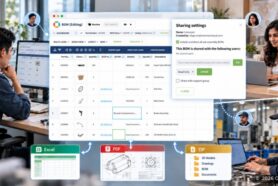
Manufacturers should move beyond spreadsheets when BOM optimization depends on current revisions, multi-level cost rollups, supplier data, and collaboration across engineering and purchasing. A cloud BOM management system keeps those inputs connected in one controlled source of truth, so teams can improve cost, sourcing, and production decisions without reconciling disconnected files.
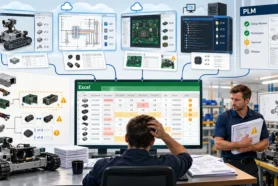
Spreadsheets are useful for an early BOM, but they become fragile as product complexity and team size grow. Manual formulas break, copies drift out of sync, and purchasing may act on data that no longer matches the latest engineering revision. Those gaps turn BOM optimization into a periodic cleanup exercise instead of a repeatable management process.
| Spreadsheet-based BOM process | Cloud BOM management process |
|---|---|
| Separate files and uncertain versions | One controlled, current BOM shared across teams |
| Manual updates from CAD and supplier records | Connected product data through multi-CAD and business-system integrations |
| Static component prices and manual rollups | Current cost inputs and repeatable multi-level cost rollups |
| Changes communicated through email and meetings | Revision history, change control, and real-time collaboration |
| Limited supplier access or uncontrolled file sharing | Controlled collaboration, including unlimited free read-only users |
OpenBOM connects BOM management with CAD integrations, revision control, and collaboration. Engineering, sourcing, and manufacturing teams can work from the same product definition while maintaining visibility into the structure, cost, and supply information needed to optimize the BOM over time.
Ready to replace spreadsheet-based BOM management with a connected process? Start a 14-day OpenBOM free trial or review OpenBOM pricing.
Integrated BOM Management Systems Improve Cost Control
The real value comes when teams adopt integrated BOM management systems instead of isolated files. Integration connects engineering data, sourcing information, cost models, and planning inputs. That improves cost control and makes the BOM more useful as a company-wide operating model.
With integrated systems, updates flow more quickly. Revisions can trigger current cost roll-ups. Supplier changes can be reflected in the same environment engineering uses. Planning can work from synchronized data instead of manually re-entered files. These are practical gains that improve both speed and reliability.
For companies trying to reduce errors and manage complexity, integrated workflows are often a prerequisite for sustained BOM cost optimization.
Continuous Cost Analysis Creates Long-Term Cost Improvement
Optimization is not a one-time event. Suppliers change. New alternates become available. Designs evolve. Market prices move. That is why continuous cost analysis is essential if the goal is long-term cost improvement rather than a short burst of savings.
A recurring review cadence helps teams find new cost reduction opportunities, validate assumptions, and keep BOM cost data current. This may include quarterly reviews, pre-release checks, or targeted analysis of high-cost product families. What matters is that analysis becomes routine instead of reactive.
Over time, this discipline compounds. Cost models become better. Supplier understanding improves. Standardization increases. Inventory burden drops. The company becomes more capable of managing BOM costs effectively with each review cycle.
Use BOM Cost Analysis to Maintain Healthy Profit Margins
Margins are affected by more than sales price. They depend on whether the company truly understands and controls the underlying cost structure. That makes BOM cost analysis directly relevant to profitability.
A company that knows its true total BOM cost, including direct material costs, labor, logistics, and supply risk, is far better positioned to price accurately, negotiate effectively, and protect profit margins. It can also spot erosion earlier. If freight rises, suppliers shift pricing, or build complexity increases, the effect becomes visible before margins collapse.
In this way, strong BOM discipline supports not just operational efficiency but commercial strength. It helps manufacturers maintain healthy profit margins even in volatile markets.
Conclusion: Better BOM Workflows Help Launch Products Faster
Optimization also affects speed. Companies that manage structure, revisions, cost, and sourcing in a connected way can launch products faster because they reduce the delays that come from poor data and late surprises. Design reviews are cleaner. Sourcing starts earlier. Alternates are identified sooner. Planning receives more reliable information.
This matters because speed-to-market is often as important as unit economics. A product released on time with fewer sourcing surprises can generate revenue sooner and avoid costly firefighting during ramp-up. Good BOM discipline supports both launch speed and cost stability.
For related reading, see launch products faster and streamlining BOM and purchasing processes.
Frequently Asked Questions
The questions below address common SEO search intent around BOM management, BOM cost analysis, and operational cost reduction.
What is BOM optimization?
BOM optimization is the process of improving a bill of materials so it supports better sourcing, lower cost, cleaner data, and more reliable production outcomes. It includes BOM cost analysis, revision control, standardization, supply risk visibility, and stronger planning inputs.
The goal is not just a cleaner document. The goal is a more cost-effective, resilient, and operationally useful product definition.
What is BOM cost analysis?
BOM cost analysis is the process of evaluating the costs built into a BOM. It includes material spend, labor costs, freight, packaging, and other cost contributors required to build and deliver the product.
A strong analysis produces a more accurate picture of total BOM cost, identifies major cost drivers, and helps teams uncover cost reduction opportunities.
Why are automated cost roll ups important?
Automated cost roll ups are important because they calculate assembly costs consistently across multi-level product structures. They reduce manual error and make sure the overall BOM cost updates when lower-level data changes.
Without them, teams often rely on stale spreadsheet snapshots, which weakens accurate BOM costing and slows down decision-making.
How does BOM optimization reduce costs?
Optimization reduces costs by improving sourcing, eliminating redundant parts, strengthening revision control, lowering inventory waste, and making hidden costs visible. It helps companies find both immediate and structural savings.
This includes BOM cost reduction, stronger standardization, better supply decisions, and more reliable planning across the manufacturing process.
How does BOM optimization support supply chain resilience?
A well-managed BOM improves resilience by showing approved alternates, lead times, and sourcing risk directly in the product structure. That helps teams respond faster to supply chain disruptions and avoid production delays.
It also supports better planning and earlier action when a supplier or material becomes constrained.
When should a company adopt BOM management software?
A company should move to BOM management software when spreadsheets begin creating version problems, manual cost errors, collaboration bottlenecks, or gaps in revision traceability. This is especially true for multi-level products and growing teams.
Purpose-built tools improve BOM management, strengthen cost accuracy, and provide the control needed for connected workflows.
Conclusion
BOM optimization is one of the most practical ways manufacturers can improve performance across engineering, sourcing, planning, and production. A disciplined approach to BOM cost management helps companies understand BOM costs more accurately, strengthen cost estimation, reduce operational costs, and improve decisions across the entire product lifecycle.
The path is clear. Conduct a thorough BOM cost analysis. Calculate direct material costs carefully. Include labor, freight, packaging, and hidden costs. Use automated cost roll ups for multi-level assemblies. Improve BOM data quality early. Strengthen revision control. Use structure to expose cost drivers. Build resilience into the BOM to reduce supply chain disruptions. Connect the BOM to inventory management, production planning, and strategic sourcing. And when spreadsheet-based processes begin to limit control, adopt integrated BOM management systems and BOM management software that keep cost, revision, and sourcing data aligned.
Taken together, these practices deliver more than documentation quality. They create better cost control, stronger cost efficiency, more reliable operations, and a more resilient manufacturing business. They support effective BOM cost analysis, lasting cost reduction, and the ability to manage costs effectively even as products and markets grow more complex.
OpenBOM helps teams manage BOM data, revisions, cost roll-ups, and collaboration in one connected environment. Register for free to see how a modern BOM workflow can reduce errors and improve cost visibility.
Best, Oleg
Join our newsletter to receive a weekly portion of news, articles, and tips about OpenBOM and our community.