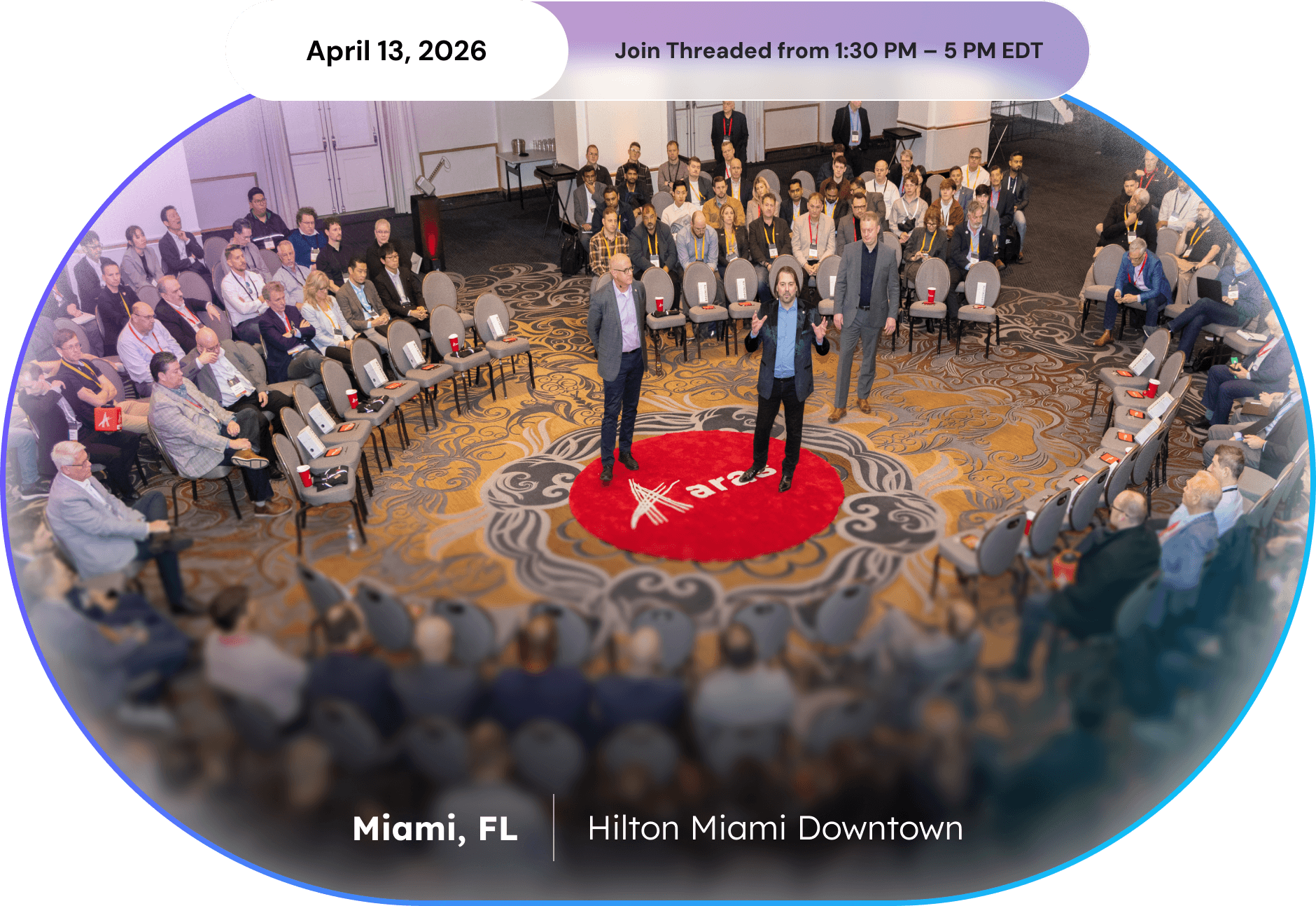
OpenBOM will be presenting at Threaded in Miami, the startup gathering space hosted by Aras ACE 2026 at the Hilton Miami Downtown on April 13 and 14. I am looking forward to the event, and I wanted to write a short piece about why it matters to us and what it reflects about where the industry is heading.
Why Engineering Software Is Seeing Its Biggest Innovation Wave in a Decade
For most of the past two decades, the engineering software landscape was defined by consolidation. Large vendors acquired smaller ones, platforms expanded their scope, and the implicit message to manufacturing companies was that more integration meant buying more from fewer suppliers. Innovation happened, but it happened slowly and mostly within boundaries that the incumbents controlled.
That pattern is now shifting in a visible and accelerating way. Threaded was created specifically to reflect this shift. It is designed as a free startup gathering space at ACE, connecting companies building solutions for engineering, manufacturing, PLM, AI, and the digital thread with enterprise product development teams attending the conference. The agenda across both days covers AI-enabled design understanding, digital thread intelligence, requirements management, physics-based simulation, procurement transformation, agentic hardware platforms, and more. That breadth is not accidental. It describes where real investment and genuine experimentation are concentrated right now.
What makes this moment interesting is not just the number of new companies entering the space. It is the diversity of the specific problems they are attacking. Companies are approaching engineering from angles that traditional PLM vendors either ignored or addressed inadequately: the context behind design decisions, the gap between CAD files and structured product data, the friction in cross-functional collaboration, and the difficulty of helping manufacturing teams understand design changes quickly and without manual translation. These are not marginal problems. They sit at the center of how modern product companies operate, and they have been underserved for a long time. Threaded is a signal that the ecosystem is taking them seriously.
Aras ACE 2026 and Why Open PLM Architecture Matters
Aras has always occupied a distinctive position in the PLM market. While most traditional vendors built their competitive advantages around proprietary data models, locked integrations, and upgrade cycles that made customization expensive and fragile, Aras took a different architectural stance from the beginning. Its platform has consistently emphasized adaptability, open APIs, federation, and the ability for customers and partners to extend and connect systems without dismantling what they already have. The fact that Aras is sponsoring Threaded, and that its CTO, CMO, and VP of Ecosystem Solution Development are all participating in the opening roundtable, suggests this is not a token gesture toward the startup community. It reflects a genuine commitment to the ecosystem that builds around an open platform.
That commitment matters because openness is not simply an architectural preference. It is a practical position about how engineering companies actually work. No manufacturing organization stores all of its product knowledge inside a single system. Knowledge is distributed across CAD files, bills of materials, supplier communications, ERP records, engineering change orders, spreadsheets, and the informal context that experienced engineers carry with them. A platform that treats ownership of all product knowledge as the price of integration is solving a narrower problem than the one companies actually face.
The vendors and platforms that will matter most over the next decade are the ones that help companies connect and organize distributed product knowledge rather than demanding that it all migrate into a proprietary environment. That is the bet Aras made architecturally, and it is one reason why a gathering like Threaded makes natural sense under their roof. Openness creates space for an ecosystem, an ecosystem creates innovation, and innovation creates the next set of capabilities that enterprise customers genuinely need.
OpenBOM at ACE: CAD File Intelligence and the Digital Thread
Our session at Threaded falls on Tuesday, April 14, under the Cognitive Thread theme. The title is “From CAD Files to Digital Thread: Launching AI File Intelligence for Engineering.” I will say more about the substance of that presentation when the time comes. For this post, I want to give some context on why this direction matters and where it connects to our broader thinking at OpenBOM.
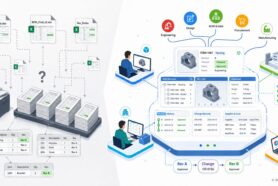
The core problem we keep returning to is this: engineering knowledge begins with files. CAD files are where design intent lives, where geometry is defined, and where the decisions of engineers are encoded. But the gap between a CAD file and structured product knowledge has always been enormous. Files do not automatically become bills of materials. Geometry does not automatically become component data. Design history does not automatically become a record of why decisions were made. Engineering teams have always had to bridge that gap manually, and the cost of that bridging is paid in time, errors, rework, and lost context every time a product changes hands or enters a new phase of its lifecycle.
The question we are focused on is how intelligent systems can close that gap, not by replacing the engineer’s judgment, but by making it easier to capture, organize, and reuse the knowledge that engineering teams already produce in the course of their normal work. That is not a small problem to solve, and it is not one that traditional PDM or PLM architectures were designed to address. It requires a different starting point: one that treats files as the origin of product knowledge rather than as attachments to be stored.
Product Memory: The Next Stage of Product Data Management
This is where our Product Memory Platform vision becomes the relevant frame. The direction we are developing at OpenBOM is not simply a better database of product records. It is a system designed to preserve context, link decisions to outcomes, and make product knowledge usable across engineering, manufacturing, procurement, and lifecycle processes over time. The distinction matters because most product data systems today are good at capturing what was decided and poor at capturing why, under what conditions, and with what tradeoffs.
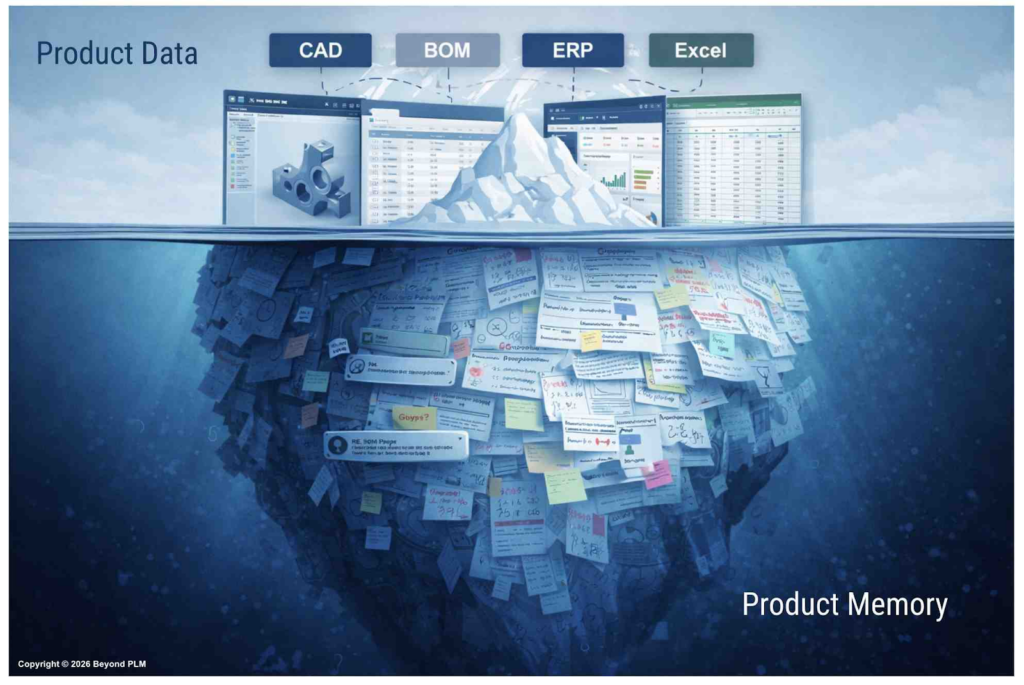
That missing layer is exactly what engineers need when they revisit a design, manage a change, evaluate a supplier, or hand a product off to a downstream team. You can read more about our direction on theOpenBOM Product Memory Platform page.
The work we are presenting in Miami is a concrete step along that path, focused specifically on CAD files and AI-driven digital thread intelligence. I am not making a full announcement in this post, but the session title describes the direction accurately: AI file intelligence that helps close the distance between the files engineers create every day and the connected, structured product knowledge that organizations need to operate effectively across teams and across time.
This is a conversation that fits the Threaded format well. The event is not a traditional trade show. It is a shared space designed for substantive exchanges between companies building new capabilities and enterprise teams that need to use them. That combination of audience and format is exactly right for the moment the industry is in.
If you are coming to Miami for ACE 2026, I would be glad to connect. And if you are following the conversation about AI, digital thread, and the future of product data from a distance, I will be writing more about what we discussed and what we learned after the event.
See you in Miami.
Meantime, REGISTER FOR FREE to check how OpenBOM can help you.
Best, Oleg
Join our newsletter to receive a weekly portion of news, articles, and tips about OpenBOM and our community.