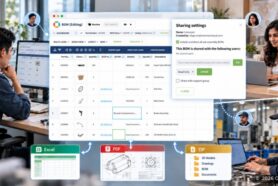
In my article today, we speak about best practices for part numbers, classification & catalog management in OpenBOM.
If there is one foundational habit that separates smooth OpenBOM implementations from chaotic ones, it is the discipline of creating structured part numbers and maintaining clean catalogs. Everything downstream depends on it — BOMs, sourcing, ordering, revision control, costing, and the digital thread itself.
For years I’ve watched teams struggle not because their engineering tools were wrong, but because their identification system was broken. So today, I want to take time to explain something deceptively simple but absolutely essential: part numbers, classification, and catalogs.
This is the article I wish every company would read before creating their first BOM.
The long story of part numbers — and why they matter more than ever
To understand why part numbers are so important today, it helps to go back to the early days of engineering and manufacturing — when the two disciplines practically lived on different planets. Engineering teams produced drawings and documents. Manufacturing teams ran MRP systems. They had different tools, different workflows, and almost no digital continuity.
The first big silo was obvious: engineering managed document numbers, and manufacturing managed part numbers. Drawings were handed to manufacturing as physical documents or PDFs, and manufacturing assigned the internal identifiers needed to procure materials and build products. The two systems weren’t connected, and the coordination happened through documents that passed back and forth for review and approval.
Over time, CAD tools became richer, product structures became more complex, and companies began to understand the value of connecting design and manufacturing. That’s when engineers suddenly found themselves exposed to part numbers — and often confused by them. What started as a manufacturing control mechanism slowly became the backbone of product development.
In modern manufacturing, you cannot build anything without reliable identification. Every component, every assembly, every material, and every purchased item needs a unique, stable, and searchable identifier. Without it, nothing ties together. Part numbers are the DNA of product development and manufacturing. They are what keep the digital thread from falling apart.
Why inconsistent part numbers break everything
When teams allow part numbers to emerge organically, problems pile up quickly. Two versions of the same resistor appear under different identifiers. Engineers accidentally reuse numbers that purchasing already assigned. CAD files get exported with temporary placeholders that later become permanent. Someone uses a descriptive part number in one catalog and a sequential one in another.
These mismatches ripple through the entire lifecycle. BOMs multiply inconsistently. Vendors receive RFQs that reference the wrong parts. Cost roll-ups fail. Procurement orders the wrong material. Revision tracking becomes unreliable. None of this happens because people make bad decisions — it happens because there is no shared system.
A clean part-numbering approach isn’t about rules for the sake of rules. It is about aligning engineering, operations, procurement, and suppliers around a stable identity model.
Once you fix this foundation, everything upstream and downstream becomes dramatically easier.
How to think about numbering systems (without overthinking them)
Teams often believe they must choose between elaborate category codes or completely opaque sequential numbers. The truth is that both work — as long as they are applied consistently.
A mechanical team might choose to use a simple sequential number with no embedded intelligence. An electrical team may decide to include a short prefix to distinguish resistors from connectors. A purchasing team may prefer to keep purchased parts distinct from internally-designed ones. All of these decisions are valid.
What matters most is clarity. You should know how new numbers are created, where they are stored, how uniqueness is enforced, and how catalog entries relate to part numbers.
A good system is one that can scale without becoming a burden.
Why classification matters alongside part numbers
Part numbers alone are not enough. Classification adds meaning and context. It divides items into logical groups so they can be filtered, compared, sourced, and analyzed. Classification is what lets you distinguish a fastener from a PCB, an electrical assembly from a machined component, or a sourced item from something manufactured in-house.
In OpenBOM, classification is flexible. You can keep it simple — mechanical, electrical, software — or you can add manufacturing types, cost categories, lifecycle states, and procurement classes. The point is not the number of fields. The point is that a part number combined with classification forms a reliable identity.
Catalogs become the place where this identity lives.
The role of OpenBOM catalogs — your single source of item truth
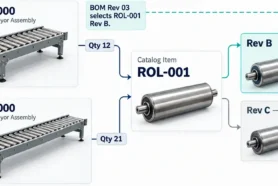
A catalog is more than a list. It is the authoritative record for each item: its part number, description, cost, supplier, classification, and any other attributes your process requires. Catalogs prevent duplication, resolve inconsistencies, and ensure that every BOM references clean, structured data.
Without catalogs, BOMs quickly devolve into spreadsheets that drift apart. With catalogs, everything becomes stable and connected.
When you export a CAD assembly or import a spreadsheet, OpenBOM uses catalogs to normalize the data, enforce uniqueness, and maintain integrity.
This is why I tell teams: the first five hours you invest in catalogs will save you hundreds of hours later.
Practical steps to begin with OpenBOM
Many teams assume that getting started with catalogs and part numbering requires a massive process redesign. The opposite is true. You can start small and still create a solid foundation.
A good way to begin is simply to think about the basic set of catalogs you need. If you are unsure, start with one. A single catalog is enough to hold all items. Later, you can split it into mechanical, electrical, purchased, or software if needed. The idea is to place every item somewhere predictable.

Once you know where items will live, define how part numbers will be assigned. Choose a pattern that makes sense for your team and use it consistently. OpenBOM enforces uniqueness directly in the catalog, so as soon as a numbering scheme is in place, every new item must follow it. This immediately reduces duplication and improves data quality.
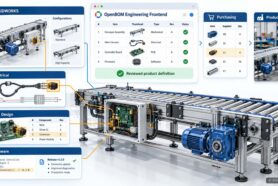
If you work in CAD, bring part numbers directly into the design phase. OpenBOM’s integrations include a Generate Part Number command, allowing you to assign identifiers inside SolidWorks, Fusion, or Onshape so that your product structure is exported with correct numbers.
If you have legacy spreadsheets, spend a few minutes cleaning the identifiers before importing them into OpenBOM. Remove duplicates, fix inconsistent formatting, and ensure descriptions match. A small amount of cleanup produces a much smoother import.
The best advice is to start with something small — one catalog, one rule for part numbers, one spreadsheet, one assembly. These first steps form a foundation that will support everything you do later.
How this foundation supports everything else
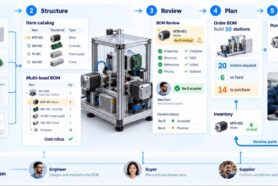
Once your catalog and part numbers are in place, OpenBOM becomes far more powerful. Catalogs feed into BOMs automatically. Items stay clean even when many people collaborate. Procurement gets consistent data. Engineering change becomes easier to track. Cost analysis becomes more reliable. You build a digital thread instead of a chain of spreadsheets.
Part numbers and catalogs form the structure on which the rest of your system sits.
Conclusion
Day 24 is not about advanced workflows or deep integrations. It is about the simple identity system that allows every other process to work smoothly. If you get this part right, OpenBOM becomes dramatically easier to use. If you skip it, complexity grows quickly.
Start small. Pick one catalog. Choose a numbering pattern. Normalize one spreadsheet. Import one assembly. Each step builds durable structure.
In the next article, we will move to the next logical topic — how to build a true digital thread using object references and linking. This is where part numbers and catalogs begin to show their real value.
REGISTER FOR FREE and try to set up OpenBOM – it only takes a few hours.
Best, Oleg
Join our newsletter to receive a weekly portion of news, articles, and tips about OpenBOM and our community.