In this era of manufacturing, companies strive to launch customized products for a specific niche faster than ever. As a result of this trend, manufacturers have become vulnerable to certain risks. The way you manage your bill of materials (BOM) will either increase or decrease these risks.
If you are working with a contract manufacturer (CM) then your goals should be aligned. The mutual goal for you (the brand) is to sell as many products as possible. So, the more you sell, the more your CM can make. The end result for both is to make more money.
Therefore, the way you manage and share your BOM with your CM is important. Excel and Spreadsheet BOMs have become the norm. This is just because everyone understands these and knows how to create them. While excel & spreadsheets are simple, they lack the functionality needed in the modern era of manufacturing.
And in this modern era of manufacturing, you should provide your CM, team members, and other contractors with a digital BOM.
Here are a few reasons why it’s in your best interest to provide your CM with a digital BOM.
Are we on the same BOM?
Have you worked with a contract manufacturer before? If so, then you know it can turn quite messy quite quickly.
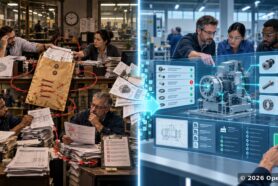
The reason for this mess is quite simple. Each time there is a proposed change, a change, or anything you want to communicate to your CM then you have emails back and forth. The BOM in excel or spreadsheet gets passed around with no one really knowing if they have the most updated BOM or if all the stakeholders have the most updated BOM.
This causes a lot of confusion for your CM.
The goal of the digital BOM is to bring everyone together. You no longer need to email the BOM to everyone, it is automatically shared in a centralized platform.
This also means that you have all of the most updated information at your fingertips. There is no need to call your purchasing team, email your engineering team, or message your CM to confirm the version of the most updated BOM.
Tracks History
While managing your BOM in excel or spreadsheets seems convenient, it does not allow you to go through historical changes of when you made those changes.
During the life of your product, you will need to know what products shipped on which day, when a certain item changed, what your BOM costs were last year, which supplier did you use for a specific component last year, etc…
A single spreadsheet provides no visibility into this. You need to dig and hope to find the BOM that can help answer those specific questions. Then your CM will also need to confirm this with their records as well. This can take hours or days to confirm.
The reason your CM prefers a digital BOM is that this platform will capture all changes that occur to the BOM. It takes minutes to find rather than the hours it takes you to look through emails and old files.
Change Management
How many times has a CM or supplier made a part without you approving it? Perhaps, they thought you approved it but in reality, you did not. This can be for either prototypes or mass production.
On the other hand, how many times did your CM propose a change and waited weeks for you to approve it? This can take weeks because they never properly communicated the change, or they did but the proposal was lost in emails.
While this is irritating for you, the brand, it is also irritating for the CM.
A CM prefers to use a digital BOM or a digital platform because of the convenience it brings to creating a change request all the way through to being rejected or approved. These changes or rejections are automatically reflected on the BOM. Thus creating a platform that automatically provides you with up-to-date information.
What Can You Do Today?
We all understand the risks of using Excel or spreadsheets to manage your product information. In the modern era of manufacturing, you need a digital BOM that connects your team, contractors, and suppliers.
This creates a single source of truth.
OpenBOM is a cloud-based platform to manage your engineering and manufacturing data. Companies from startups to Fortune 500’s use OpenBOM to create a centralized database to bring in, store and manage their manufacturing data. With this infrastructure, users also use OpenBOM to streamline both their change management and PO processes.
If you need to improve the way you manage your data and processes, contact us today for a free consultation.
Regards,
Jared Haw
Join our newsletter to receive a weekly portion of news, articles, and tips about OpenBOM and our community.