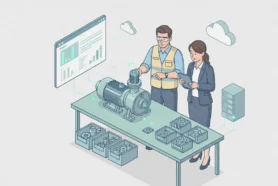
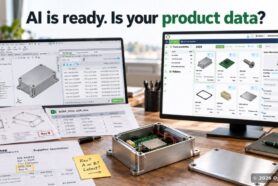
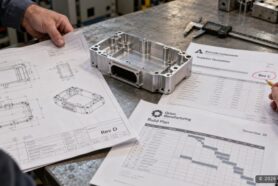
In this video, I talk about how to stop using Excel and move to OpenBOM. In fact, most of engineers and companies I meet are convinced that Excel is not good, but they scary of making a change. Excel (or spreadsheet) looks like something they familiar with even it is very bad and leads to many costly mistakes.
At OpenBOM, we invented a model that can help you to move from Excel to OpenBOM to manage product structure (BOMs) and related data.
1- Catalog (s)
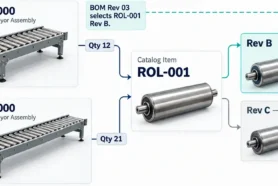
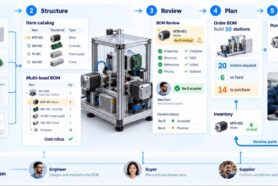
It is a centralized database of all information about items. Think about it as you Excel with all information such as manufacturer, cost, supplier, description, etc. Every item in catalogs is associated with Part Number.
2- Bill of Materials with reference-instance model
Bill of Materials is data about how items used in products. It includes reference instance model capable to connect parts to catalog information as well as parent-child relationships automatically created based on Part Numbers between BOM (Assembly) and items in Assembly BOM.
3- Multi-level / Flattened BOM
At any moment of time, you can switch between multi-level (structure BOM) and flattened BOM to provide quantity rollup.
Watch the video for more details:
Conclusion
All together – catalogs, BOMs, and Flattened models give you a foundation to remove the biggest pains of Excel BOM management. You have a single version of the truth about items (no need to copy / paste between excels), allows you to manage structure (instead of limited Excel indentation and levels), and automatically rollup data (eg. quantity) between multiple levels.
Check OpenBOM now by registering an account here.
Best, Oleg @ openbom dot com.
Want to learn more about PLM? Check out my Beyond PLM blog and PLM Book website
Read OpenBOM customer reviews on G2 Crowd to learn what customers are saying about OpenBOM.
Join our newsletter to receive a weekly portion of news, articles, and tips about OpenBOM and our community.