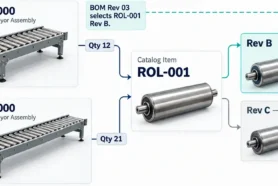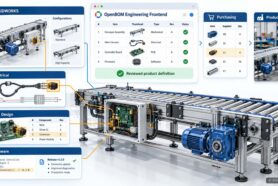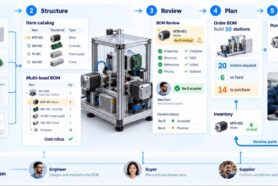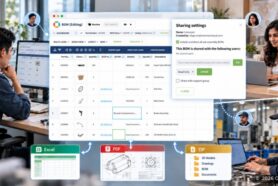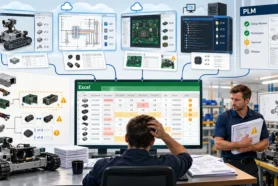
Part numbers became “smart” because systems were hard to access, expensive, disconnected, and difficult to share. Search, connected data, and AI are now changing how people find, understand, and communicate product information.
In my previous article, “Where Should the Part Number Live? Lessons From Real OpenBOM Onboarding Sessions,” I asked a question we hear constantly during onboarding: where should the part number come from, and where should it be managed? The article touched a nerve, and the discussion that followed was better than the article itself. The comments exposed the deeper question hiding behind every part number debate. It was never really about the number. It was about how people find, share, and talk about a part.
The discussion surfaced a few recurring arguments, and they frame everything I want to say in this article.
One argument was about classification. Letting the part number “just be” a stable identifier is the right instinct, but only if classification picks up the work the number used to carry. Parts and subassemblies need to be defined by how people actually look for them, and that classification has to become a continuous process, adjusted as the company learns more rather than fixed once at creation. That is a new demand, and I will come back to it.
A second argument pushed from the opposite side: people still talk to each other. In a meeting, a readable ID like MRD-PSG-010 is far easier to say, remember, and discuss than a string like 913675, especially when the numbers around it are equally random. This is not a systems limitation. It is human cognitive psychology, and it does not disappear just because the database improves.
A third argument came from how people actually refer to parts inside a company. When organizations study real usage, they tend to find that almost nobody communicates by the number. Engineers describe parts by properties and context, something like “the left bracket in the mixer on the customer project,” not by an ID. The number earns its keep mainly at the boundaries, with disconnected suppliers, partners, and the shop floor, where a barcode has to point at one specific item. Internally, once systems are connected, the number becomes something nobody needs to memorize.
And the long view is sobering. Significant numbering systems, the kind that try to make every digit mean something, tend to be a comfort for people outside engineering more than a working tool. They feel orderly, and they break down eventually. The companies that have carried the same part numbers for a century or more have watched it happen more than once.
None of these arguments contradict each other. Taken together, they point to one idea that, for me, explains the entire history of the smart part number.
Part Numbers Became Smart Because Systems Were Dumb
Engineers did not encode meaning into part numbers because they lacked discipline. They did it because they were practical, and the systems around them were not. Systems were hard to access, expensive to deploy, disconnected from one another, difficult to share, and weak at search.
So the part number quietly took on jobs it was never meant to do. It became a search tool. It became a classification shortcut. It became a communication mechanism. It became a way to say what you meant without opening a system that half the people in the conversation could not open anyway.
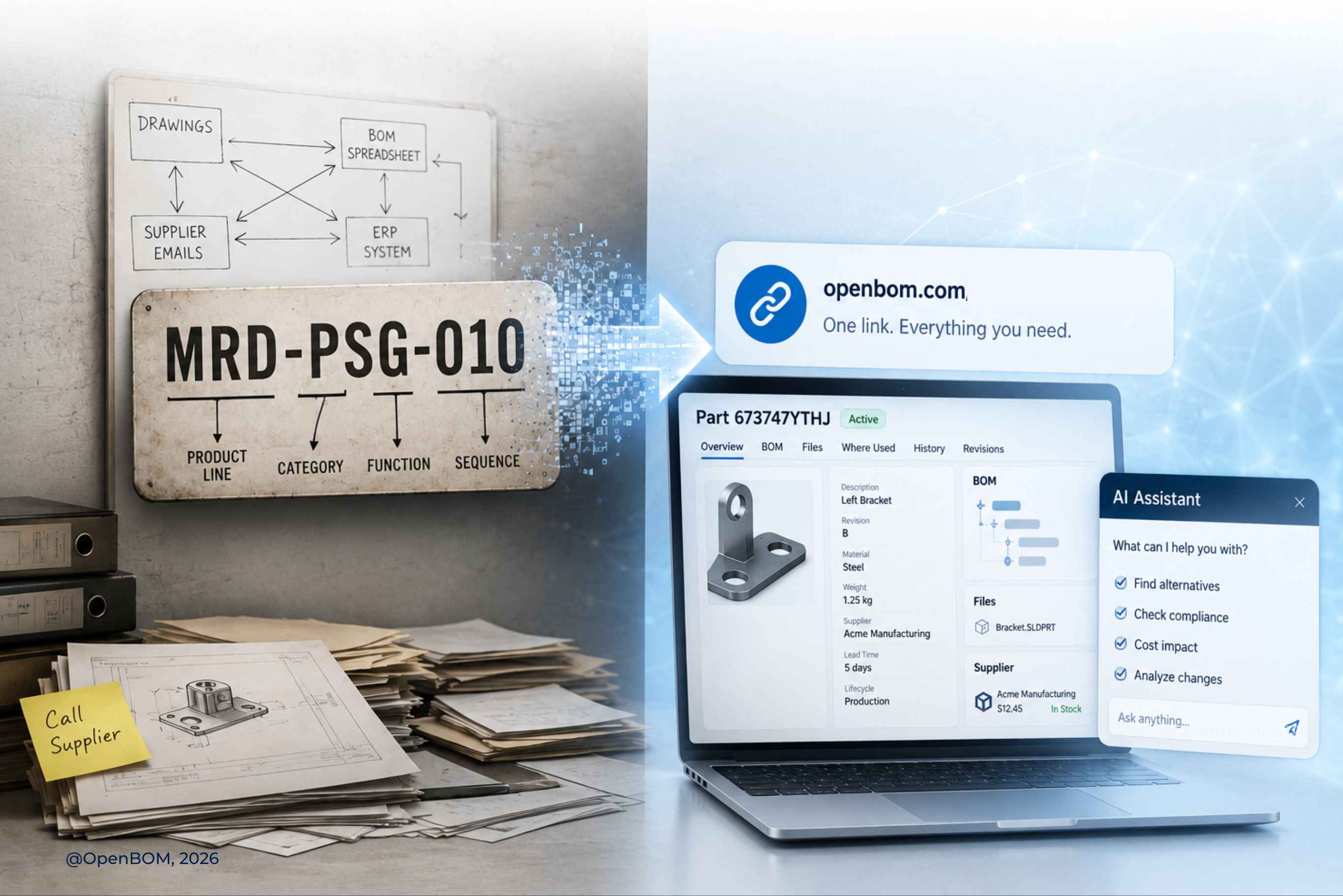
A number like MRD-PSG-010 was not only an identifier. It carried clues about the product line, the category, the function, the sequence. It let people recognize a part in a meeting, on a drawing, in a spreadsheet, or during a supplier call, at a time when the system holding the real data was rarely one click away.
In other words, the smart part number was a workaround. It was a poor man’s hyperlink.
Before Links, the Number Had to Carry the Meaning
Look at how we communicate today outside of enterprise systems. When I want to tell someone I need a standard part, I do not invent a clever code. I send a link. A link to McMaster-Carr, DigiKey, Mouser, Grainger, or Amazon. That link carries the picture, the description, the specifications, the supplier, the price, the availability, and often the alternatives. The link carries the context, and the other person immediately understands what I mean.
Inside companies, that was not possible for a long time. CAD data lived in one place. ERP data lived in another. BOMs lived in spreadsheets. Drawings lived in folders. Supplier data lived in email. Even where systems existed, licenses were expensive, interfaces were complicated, search was limited, and external partners usually could not see anything at all.
So companies pushed meaning into the part number, because the number was the one thing everyone could see. It traveled across every gap that the systems could not bridge. OpenBOM has changed it now, because an easy link to give you an access to everything you need.
The Conversation Problem Is Real, but the Number Is Not the Answer
The point about human conversation is correct, and I want to be honest about it. A readable ID is easier to say, remember, and discuss than a random string. People still meet, still hold design reviews, still call suppliers, and still talk on the shop floor.
But here is what actually happens in my day. Someone says, “we need to change part number 673747YTHJ.” My first question is always the same: can you send me a link? Because the number alone is never enough. I need to see the item, the description, the BOM, the revision, the CAD file, the supplier, and the change request behind it. The number lets us point at something. The link lets us understand it.
That is the real shift. In the past, people loaded meaning into the number because there was no easy way to share the data behind it. Today we should stop asking the number to carry the meaning and start making the data easy to reach. As that same reader also noted, an opaque ID is only a problem when it is disconnected. Connect it to accessible information and the opacity stops mattering.
Classification Is Valuable, but It Should Be Data, Not a Number
The classification point is right, and worth taking seriously. Classification is enormously valuable. It drives reuse, procurement, reporting, standardization, cost analysis, supplier management, and, increasingly, AI readiness. But classification and identity are not the same thing, and the old habit of welding them together is the source of a lot of pain.
In many companies, classification got embedded into the part number because there was no better place to expose it. If you wanted people to know a part was mechanical, purchased, or tied to a product family, you encoded it into the digits. That was a reasonable workaround for its time, and a long-term trap.
Product lines change. Technologies change. Suppliers change. Companies acquire other companies. A part born in one category gets reused in another. A numbering rule that looked elegant ten years ago becomes a constraint today. Classification frozen inside a permanent identifier cannot follow any of that.
This is exactly the continuous process I described in reply to that comment. Classification has to become continuous. It should live in the connected data layer, where it is visible, searchable, editable, and improved as the company learns. The identifier stays stable. The classification evolves. AI makes this far more achievable than it used to be, because the system can now propose classification from CAD data, BOM usage, and supplier records, and let people validate and refine it over time.
Significant Part Numbers Eventually Break
The “false feel good” deserves its own section, because almost every company tries the perfect schema at least once.
The schema looks logical. Every digit means something. Every section has a purpose. For a while, it even works. Then new product lines do not fit. Old categories go obsolete. Teams interpret the rules differently. Suppliers bring their own identifiers. A merger arrives with a competing system. Legacy numbers cannot be changed. The schema grows longer, more complex, and more political, until people spend more time arguing about the part number than managing the part.
Significant numbers create a feeling of control without the substance of it. They make the data look organized while the real organization, the connected information, is still missing. The more meaning you pour into the number, the more fragile the number becomes.
Reality Check One: You Cannot Renumber the Past
There is a hard fact that every part numbering debate eventually collides with. You cannot renumber what the company already has.
Most companies already carry thousands, hundreds of thousands, or millions of existing part numbers, and those numbers are wired into ERP, purchasing, drawings, CAD files, supplier contracts, shop-floor labels, service records, compliance history, and customer support. Changing them creates risk, broken references, supplier mistakes, and traceability problems. Even a genuinely better schema rarely justifies the cost and disruption of a mass renumbering project.
So the practical move is not to fix the past by rewriting it. It is to connect the past to the future. Keep legacy numbers stable, treat them as the identifiers they already are, and build a connected data layer around them: descriptions, classifications, attributes, relationships, BOM usage, supplier links, CAD references, revisions, and change history. Search and AI should work with what already exists and help people find and understand legacy data, not force the company into a renumbering project it cannot afford. Legacy numbers are part of a company’s memory. You do not erase them. You connect them.
Reality Check Two: Some People Will Still Want Meaningful Numbers
The second reality is gentler but just as important. Even with perfect search, even with a link on every item, even with AI that finds things by context, some people will still prefer numbers that carry a little human-readable meaning. They like patterns. They like hints. They like an ID that is easy to say in a meeting and easy to recognize on a drawing. BRK-ALU-025 will feel more comfortable to many people than a random system ID, and that is fine.
The mistake is not in allowing meaningful numbers. The mistake is in making the meaningful number the only place where meaning lives. A reasonable design separates three things: a stable unique identifier the system maintains, a readable display number where it helps communication, and the real meaning, which lives in the data model as classification, attributes, material, supplier, usage, and lifecycle state. Everyone wins. People who want readable numbers keep them for conversation. Systems keep stable identity. Search and AI rely on rich connected data instead of parsing fragile patterns. The rule is simple: meaningful numbers are a convenience, not a database. Use them where they help, but do not make the business depend on decoding them.
What People Actually Mean When They Search
This brings me back to that practitioner’s study, because it described how people really look for things. They rarely think in part numbers. They say “the left bracket in the mixer project,” “the standard screw from the last prototype,” “the PCB assembly we changed in the last revision,” or “the component that failed in the customer configuration.” They search by context, by memory, by relationship, by usage, by intent.
The part number is essential when we need a formal, unique reference: ERP, purchasing, barcodes, supplier communication, drawings, change control, traceability. But it is not how people naturally describe what they mean. That gap, between how we identify a part and how we talk about it, is exactly where search, sharing, and AI come in.
Search, Sharing, and AI Change the Equation
For decades the practical problem was access. Even when the data existed, it was hard to reach, hard to search, and hard to share, so people used the number to carry information across those gaps. Three things are now closing them.
Search is getting better. We expect to find things by description, attributes, context, and similarity, not by knowing a code in advance. Sharing is becoming natural. A link can take someone straight to the right object, BOM, drawing, change request, supplier quote, or catalog item. And AI can interpret intent, connecting words, properties, documents, relationships, and history so that people can find a part even when they do not know its number.
This is the real transformation. We are moving from “remember the code” to “describe what you need.” A user should be able to ask for the aluminum brackets used in a project, the purchased parts similar to a given one, the duplicates hiding under different numbers, the items missing classification, or the parts affected by a particular engineering change, and get an answer. The number does not have to carry that load anymore.
Where AI Fits, and Where It Does Not
It is tempting to say AI will replace part numbers. I do not think that is right. AI will not eliminate the need for stable identifiers. Every item, BOM, drawing, supplier part, purchase order, and change request still needs a unique reference. Systems, suppliers, shop floors, and ERP all need identifiers.
What AI changes is the direction of the relationship. For years, you had to know the number, or understand the schema, before you could find the part. That dependency is exactly why meaningful numbers became useful, because they helped people navigate weak systems. AI reverses it. Instead of starting from the number, you start from intent, and AI translates that intent into search across connected data: part numbers, descriptions, classifications, CAD metadata, BOM structures, supplier records, procurement history, and change data. The part number stays the stable anchor. The connected data provides the context. AI helps people say what they mean and find what they need. It does not make the number disappear. It removes the need to encode intelligence into the number in the first place.
This is also what makes continuous classification, the idea I returned to from that comment thread, finally practical. In the old model, classification was decided when the number was created and then frozen. In the new model, a part can start with a simple identifier and a basic description, and the system can enrich it over time from CAD data, BOM usage, supplier and purchase history, quality issues, and reuse patterns. AI suggests, people validate, the data gets richer, and the stable number never has to change. We stop trying to predict all future meaning at the moment of creation, and let the meaning grow around the part instead.
Let the Part Number Be Simple
None of this makes the part number obsolete. Every item still needs a stable identifier. ERP needs it, procurement needs it, suppliers need a reference, the shop floor needs labels and barcodes, and traceability depends on unique IDs. The conclusion is not that part numbers should be meaningless or that the past should be rewritten. The conclusion is that we should stop asking the part number to do every job at once.
A part number should be unique, stable, simple, easy to reference, and connected to the right data. The intelligence should not be trapped inside it. It should live in the data layer, the relationships, the classification model, the search engine, and the AI agents that help people find and understand what they need. At OpenBOM, this is the direction we keep returning to during onboarding: keep the identifier clean, and put the engineering knowledge into the connected data and the BOM structure around it, where it can be searched, shared, and improved.
Part numbers became smart because systems were dumb. Search, sharing, connected data, and AI are changing that foundation. When I need a standard part, I send a link to a catalog. When I need an internal part, I should be able to send a simple number with a link to the full connected data behind it. That is the whole shift.
Let the part number identify. Let the connected data explain. Let classification evolve. Let search and AI help everyone say what they mean.
Want to discuss how to organize and re-use your Part Numbers? Most importantly, want to check how to make all engineering information easy identified and shared internally and externally?
REGISTER FOR FREE to check how OpenBOM can help.
Best, Oleg
Join our newsletter to receive a weekly portion of news, articles, and tips about OpenBOM and our community.