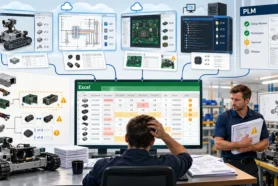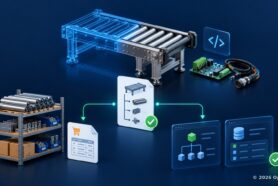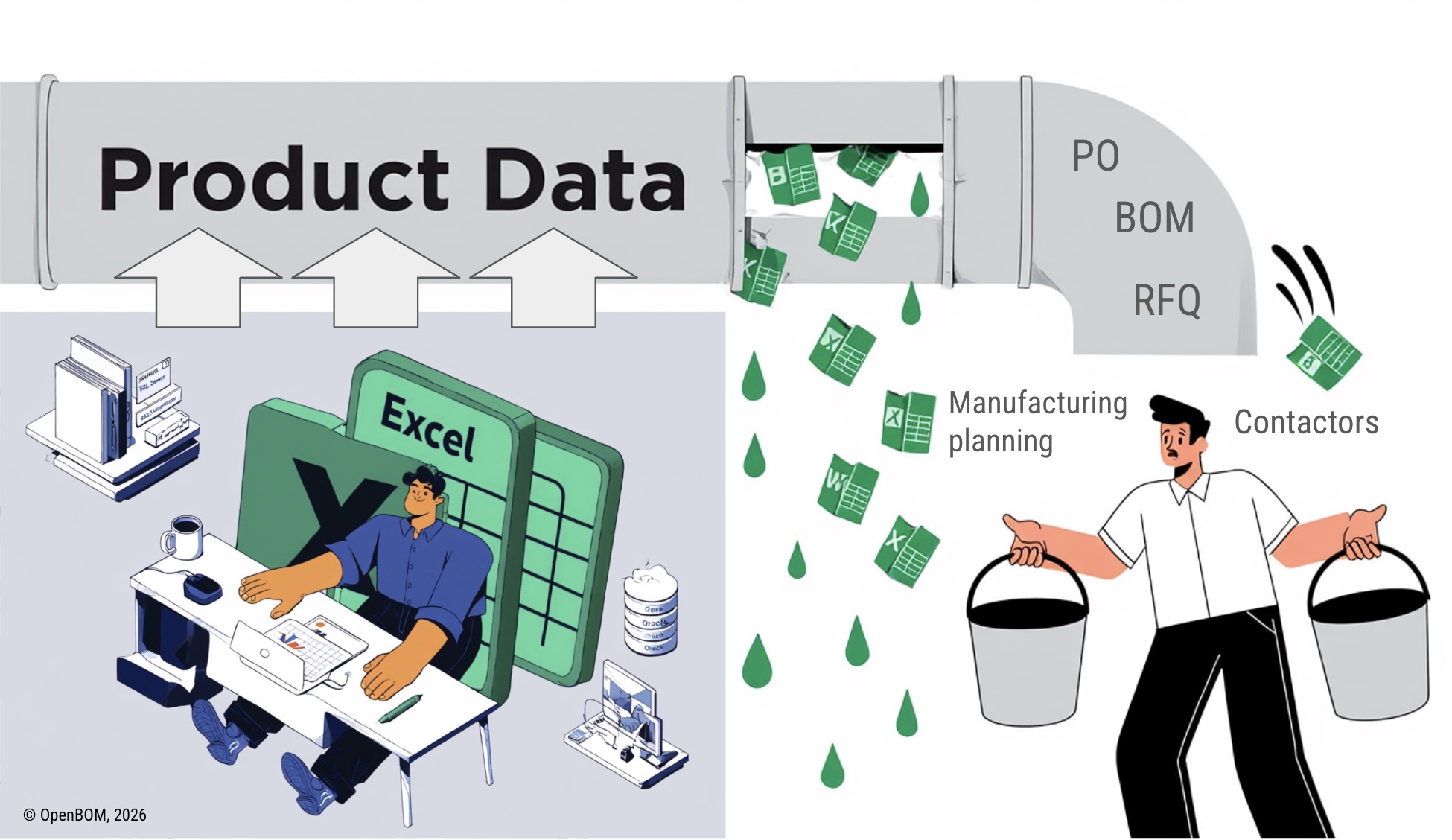
Every engineering team and manufacturing company is using Excel. For years, we thought Excel was a technical problem. But I think we’re close to cracking the code of Excel leak and it is about humans.
I want to share what we learned from our customers last year that led us to change OpenBOM licensing and subscription. You probably saw our announcement earlier this year speaking about OpenBOM’s new price structure for 2026. If not, please check it here.
Pay-After-Proof Pricing in OpenBOM 2026
Technology is rarely the limiting factor in engineering organizations. The tools are powerful, integrations exist, and capabilities continue to improve at a remarkable pace. What consistently slows adoption is not technology, but human behavior. It is about how people approach commitment, risk, and change when they are still trying to understand whether something will actually work for them.
At OpenBOM, we have spent time observing how teams behave around product data in real situations, not how process diagrams assume they should behave. We noticed a consistent pattern: people want structure, but there are barriers and shortcuts. They want to share data, but without turning access into a negotiation; and they want systems to grow with them, not future promises and demand to “rethink processes” before seeing the value.
Modern technology trends around AI development demonstrate a significant shift in how customers see the technology adoption.
I use the “Excel leak” as the best example and a natural outcome of this behavior. It is not a rejection of the need to structure the data structure, but a way to delay commitment while keeping work moving.
OpenBOM 2026 pricing is our response to that reality — a pay-after-proof model designed to follow human behavior, allowing teams to start small, learn by doing, and scale only when the value is already clear.
The Moment “Just Export It” Becomes a Habit
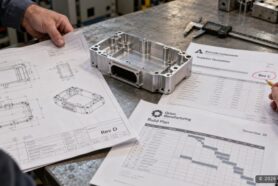
Everyone recognizes the moment the Excel leak begins, even if nobody names it. When a design is close to being finished, someone needs to review a bill of materials, purchasing wants visibility, manufacturing asks what is final, and the fastest way to move forward—without turning the moment into a larger discussion – it is to export the BOM to Excel. It feels harmless, neutral, temporary, and practical, a way to preserve momentum without committing to anything yet.
What is less obvious at first is how quickly that temporary step becomes routine, and how routine quietly turns into infrastructure. Copies get passed around, edits happen in parallel, decisions move outside the system, and as the product grows, so does the effort required to keep everyone aligned. Growth, which should feel like progress, slowly turns into a tax paid in reconciliation, explanation, and avoidable risk.
Problem vs Commitment Balance
Most organizations do not resist structure because they dislike it; they resist committing to systems before they have had a chance to experience real value. The hesitation is rarely philosophical — it is practical. Teams want to see the workflow in action, with real data and real people, before they decide how far they are willing to go.
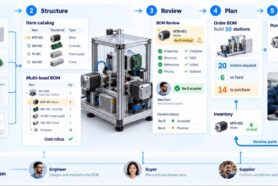
This understanding shaped the OpenBOM 2026 pricing model. Instead of asking teams to predict their future size, usage, or complexity, the model is designed to let them start small, use the system in real work, and only then decide how far to scale. Commitment follows confidence, not the other way around.
From One Person’s Structure To Everyone’s Clarity
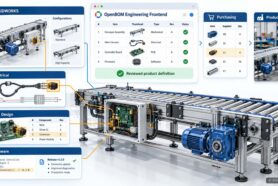
In practice, adoption often begins with one person. An engineer connects a CAD assembly to a live BOM in OpenBOM, not as part of a rollout or transformation initiative, but simply to bring order and clarity to their own work.
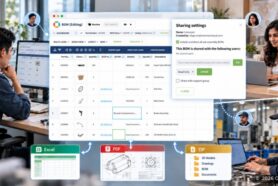
From that single action, value spreads naturally. With unlimited free read-only users, the BOM stops being personal and becomes shared. Purchasing can open it without requesting files, manufacturing can review it without waiting for explanations, management can see progress without asking for reports, and partners can look at the same structure everyone else sees. Visibility does not require coordination or licensing discussions; it happens because access is no longer the bottleneck.
What changes here is not only efficiency, but behavior. Sharing no longer means exporting. Alignment no longer depends on narration. One person does the work, and the organization benefits from a shared understanding of the product long before any scaling decision is required.
Automating One Small Thing
There is a huge progress made with AI and software development for the last 2-3 years. People that never developed anything are writing application code using tools like Cursor, Copilots, Claude Code, Codex and others. We want to offer to these people a way to use OpenBOM freely using API. Releasing Open API access to OpenBOM REST API we help them to integrate data from OpenBOM to their tasks.
Once teams trust the data, the next step almost always reveals itself. Someone notices a recurring manual task and begins to question why it exists at all. Maybe it is generating purchasing data, synchronizing part information with another system, or writing a small internal script to remove a repetitive weekly step.
These moments matter because they reflect how teams actually learn what is valuable. With OpenBOM 2026, API access is included, which allows teams to experiment with real programmatic use cases without turning automation into a separate business decision. They can build something small, see whether it helps, refine it, or discard it, all within the flow of real work.
The value here is cumulative rather than dramatic. Fewer handoffs, less repetition, fewer moments where someone becomes the integration layer. Over time, data stops being something that needs to be managed and starts becoming something that quietly supports the work.
Growth Before Payment
Hardware is hard. Everyone in manufacturing knows this. Growth rarely follows a plan. Projects get delayed, priorities shift, team members need time to adjust, and some initiatives slow down while others accelerate unexpectedly. Teams do not know in advance how many contributors they will need, how much product data will accumulate, or when a project will turn into a product line.
What they do know is when the workflow works, when the system becomes essential rather than optional.
OpenBOM 2026 is designed for self-checkout growth. When more people need to contribute, they can be added. You won’t need to contact sales, sign new contracts – self checkout form will allow you to add seats, add data, integrations, etc.
When the team reaches a new level of data scale, the data footprint can expand with it. There is no requirement to pre-buy capacity, no pressure to forecast usage years ahead, and no negotiation around needs that may never materialize. Growth happens when reality demands it, and cost follows actual use rather than optimistic plans.
The value is not lower cost, but clarity. Teams know exactly why they are scaling and exactly what they are getting in return.
OpenBOM AI Integrated
We are building for a future that depends on the product data. In 2026, automation and AI move closer to everyday engineering and operations workflows. OpenBOM will be used to simplify the tasks. Vibe coding and co-pilots will allow you to build agents that will automate tasks related to CAD integrations, BOM cost assessment and other related tasks. Then it reasons over connected data, traceable relationships, and consistent context.
OpenBOM helps teams build the kind of product data foundation that future AI tools will depend on. When new capabilities arrive, whether intelligent agents, automated checks, or AI-assisted decision support, they do not feel disruptive or experimental. They feel like a continuation of a workflow that already works.
Conclusion: An Invitation To Start Simple
OpenBOM 2026 pricing is not about paying less, and it is not about avoiding commitment forever. It is about not paying too early, before the value is real and before the workflow has proven itself.
Before you export a BOM to Excel next time, try OpenBOM instead. Start with one person, let everyone see the product, automate one real thing, and allow the value to reveal itself while the stakes are still small. Scale when you are ready—when growth is no longer a guess, but a fact.
Ready to experiment? REGISTER FOR FREE and start your OpenBOM journey today.
Best, Oleg
Join our newsletter to receive a weekly portion of news, articles, and tips about OpenBOM and our community.