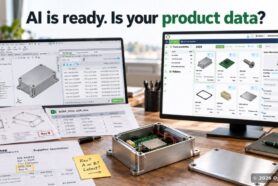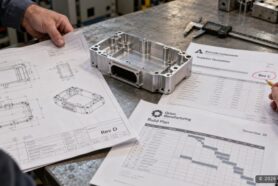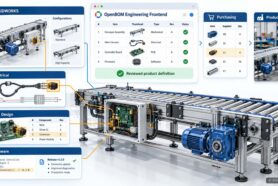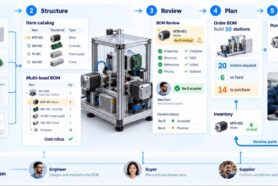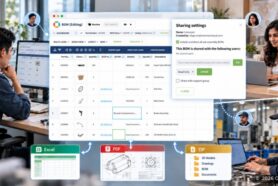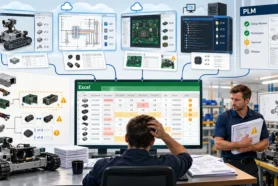
The next wave of digital transformation is here, and it’s changing the way manufacturers manage their products from engineering to production. Data handover was always one of the big problems in the organization of seamless processes between people, departments, and companies. For many years, the design of the production process (or CAD to BOM process) was manual and laborious. It included manually creating a Bill of Materials, saving derivative files, combining it all, and transferring via emails or zip files to procurement and production planning. It is a lot of unnecessarily manual work, mistakes, and inefficiency. Modern cloud-based design systems such as Onshape came to solve the problem of design and CAD data management, but yet the automatic data handover and downstream processes are still painful.
OpenBOM for Onshape Offers Seamless Data Integration
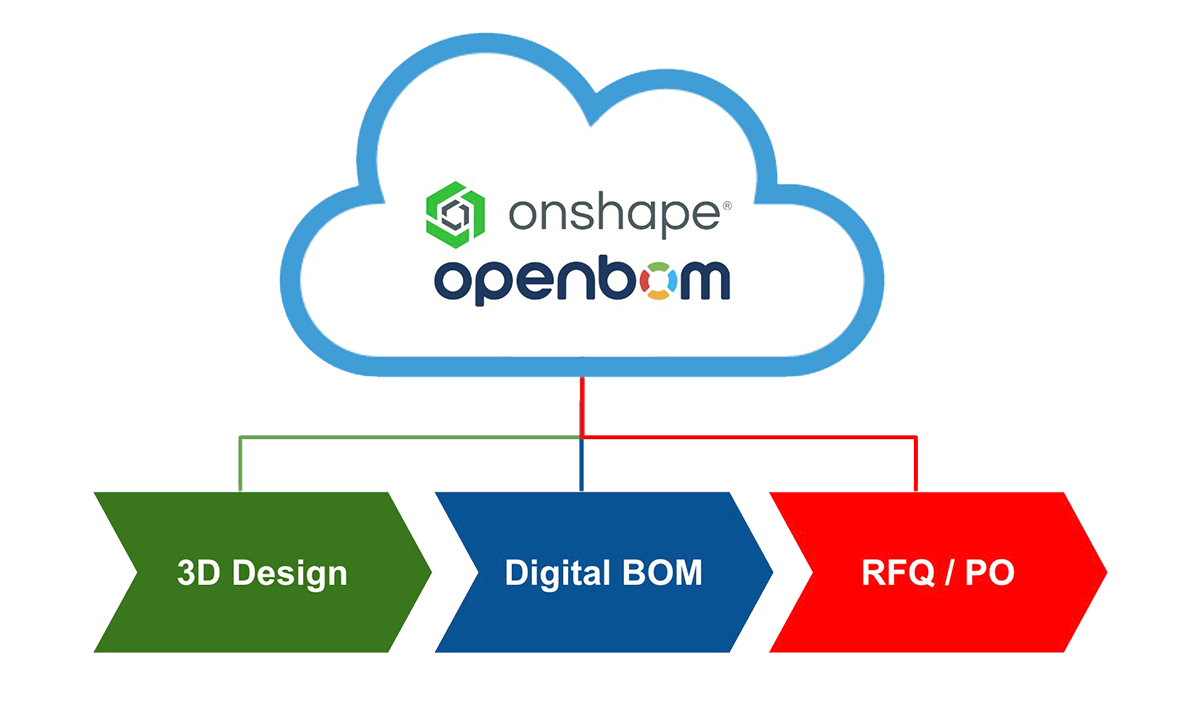
This is where OpenBOM comes with innovative solutions, which include seamless integration between OpenBOM and Onshape allowing data and files to stream between multiple systems and people. From the early beginning of OpenBOM development, we provided seamless integration between the two systems. Check Onsahpe article – Onshape Partner OpenBOM Keeps Product Development Workflows Flowing. Customers rightfully called Onshape and OpenBOM a “magic duo” that helped them to transform the way they do their work. The key element of the process, the digital BOM makes a big difference for customers.
Check another Onshape article – How Xtend Robotics Streamlines the RFQ and PO Process by Using OpenBOM and Onshape. Here is the passage by the lead Xtend Robotics engineer – David Rubli.
“What I like the most about Onshape and OpenBOM is the ability to model and plan for all aspects of our robots, and not just those items confined to traditional CAD.
Our wire harness and PCBs are all designed separately and then brought together in OpenBOM to form a complete multidisciplinary BOM of our entire buy-level product,” David explains. “We can manage non-modeled items like adhesive or labor easily in OpenBOM, create a new purchased BOM and manipulate options and variations.”
Reducing disparate tools speeds processes. We can go into manufacturing with confidence,” he says. In the past, component and supplier RFQs were done by hand and were a burden to the team.
“OpenBOM and Onshape combined to reduce the RFQ and PO process by 75% while greatly increasing the quality of the overall activity,” David says. “The individual RFQ was significantly more accurate and well understood by everyone involved.”
From One-Click To No-Click Solution
The last release of OpenBOM for Onshape makes the next step in the OpenBOM innovation and the level of seamless integration. The new integration turns to an event-driven process to eliminate the need from customers to perform manual updates at all. Here is the picture that demonstrates the improvement.
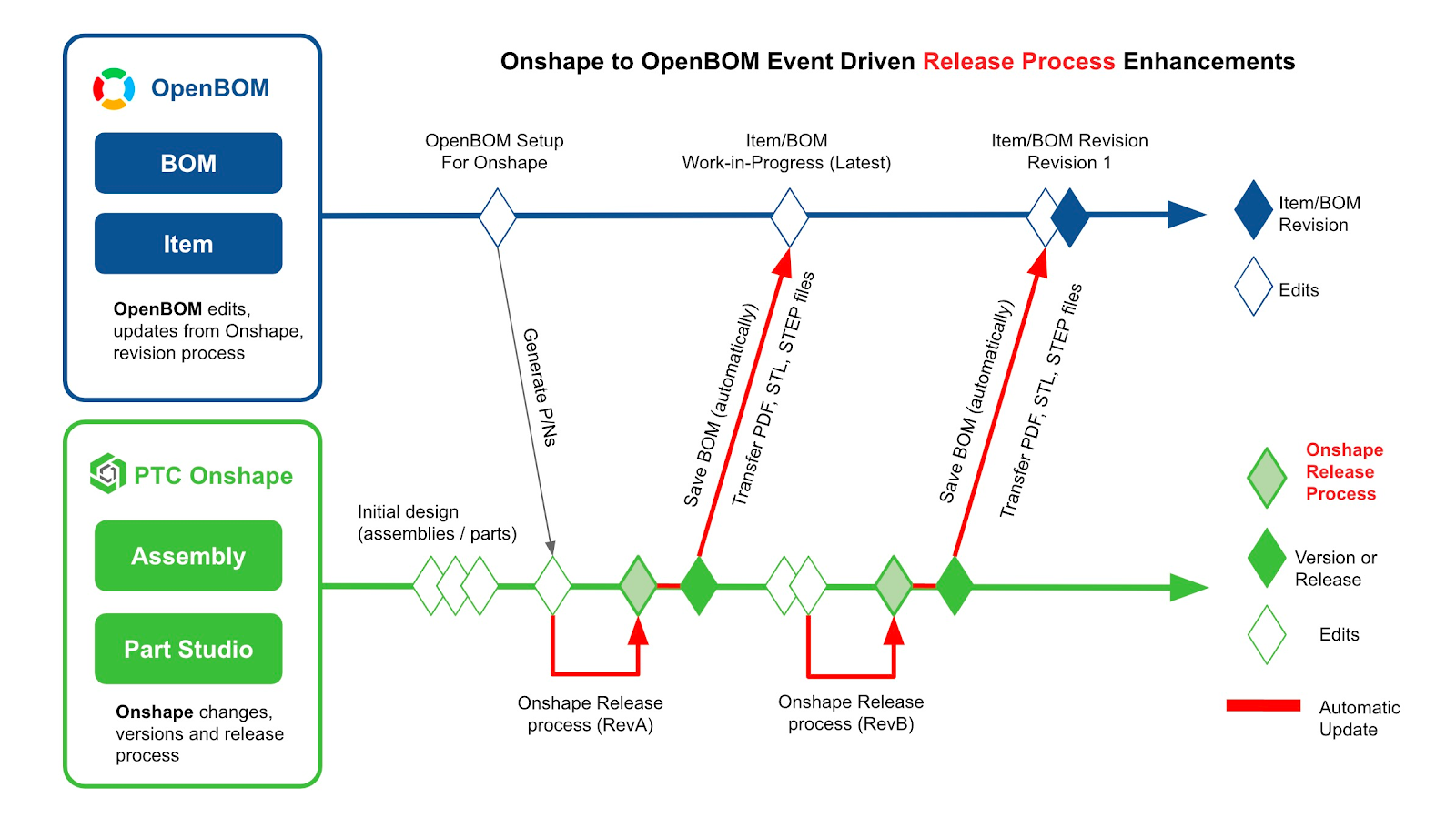
As you can see from the picture above, OpenBOM tracks the Onshape release process and automatically transfers the data – generates the BOM, creates derivative files, and merge changes with a digital BOM.
Demo Video
Please check the video of the new seamless “no-click” integration.
Conclusion
The release management process is one of the most complex in product data management and product lifecycle management software. By adopting no-click BOM integration between Onshape and OpenBOM, we established a truly collaborative environment allowing us to perform a successful release of product-related data. It supports a continuous product development process between software systems and reduces the collaborative effort needed to connect product data located in multiple systems.
Manufacturers now have a streamlined way of creating, viewing, updating, and managing Bills of Materials (BOMs). Improved collaboration is really the key to this new automatic release management process in the overall product development processes. OpenBOM enterprise integration allows the connection of ERP systems with OpenBOM no-code integration functions to streamline data from the product development lifecycle to manufacturing and enterprise resource planning.
This new technology helps foster agile collaboration between product lifecycle stakeholders in order to drive competitive advantage within the industry. With one-click synchronization between design models and other business processes such as purchasing, has become easier than ever before; leaving more time for innovative thinking that’ll help propel your organization forward.
REGISTER FOR FREE and check how OpenBOM can help you today.
Best, Oleg
Join our newsletter to receive a weekly portion of news, articles, and tips about OpenBOM and our community.