PLM, as an industry, has never suffered from a lack of awards, quadrants, or analyst graphics. What it has struggled with is something more fundamental: earning real trust from the people who actually use the tools every day.
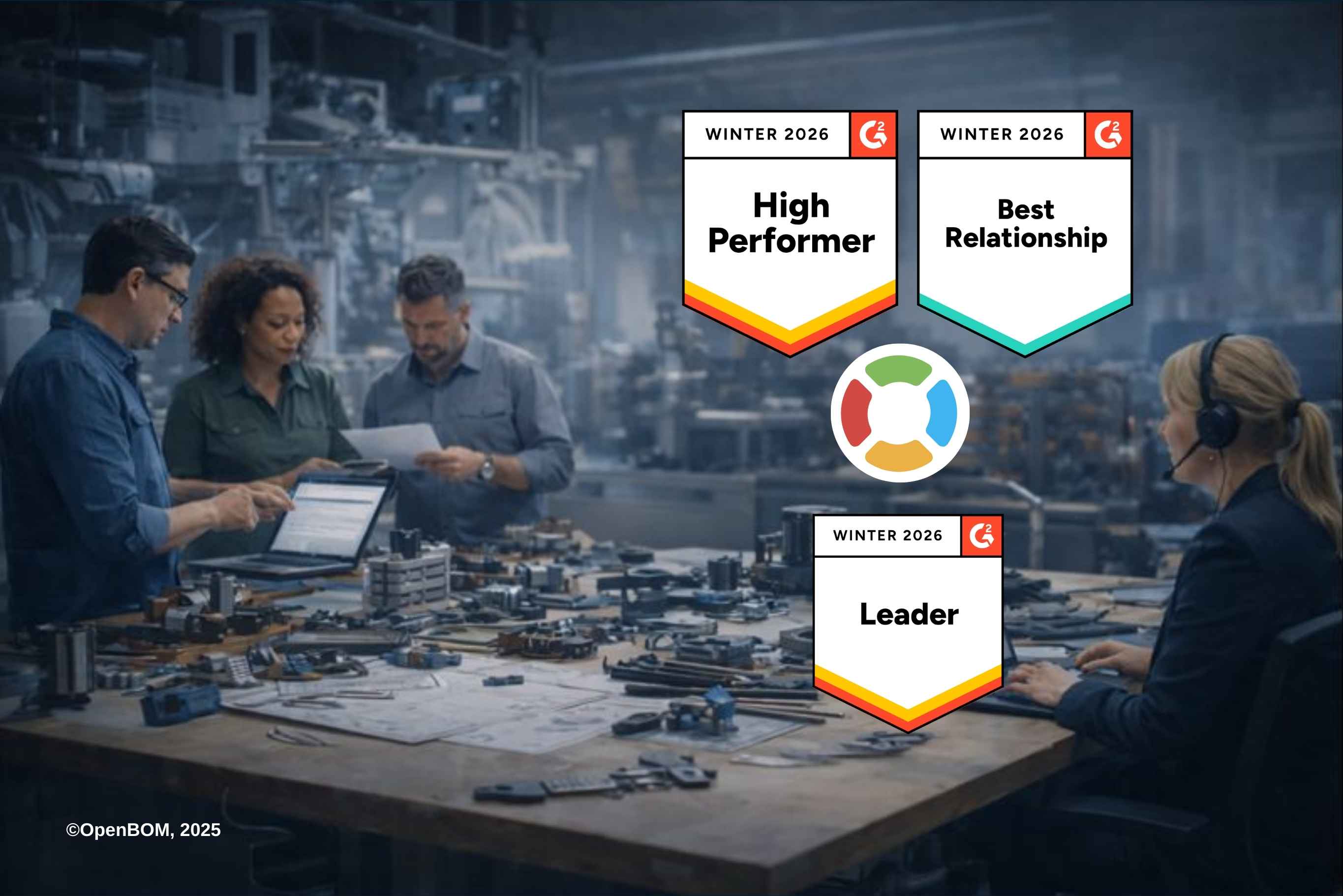
I don’t usually get excited about badges. That’s why being named a Leader in the G2 Winter PLM Reports made me pause.
Not because it looks good on a website, but because it comes directly from customers — engineers, operations teams, and manufacturing professionals — who took the time to write 748 verified reviews about how OpenBOM fits into their work.
According to G2, 89% of users rate OpenBOM 4 or 5 stars, 87% believe we’re headed in the right direction, and 84% say they would recommend OpenBOM. Those numbers matter because they aren’t based on promises. They’re based on lived experience.
And that’s where leadership really starts for us.
Leadership Isn’t About Features — It’s About Reducing Friction
One thing I’ve learned after years in PLM is that customers don’t judge systems by architecture diagrams. They judge them by how much friction they remove from everyday work.
One G2 reviewer summed this up in a simple sentence:
“Managing the project easy by reducing the time between cross functional teams.”
That sentence captures a reality many teams face. Engineering, procurement, manufacturing, and finance don’t fail because they disagree — they fail because information moves too slowly, gets duplicated, or gets lost between handoffs.
The same reviewer went on to explain why OpenBOM mattered from an engineer’s perspective:
“Being an engineer, it’s easy for me to track material for my projects along with specs, vendor details, pricing, quantities, which reduces mistakes, wastages and rendering delays.”
That’s not a feature list. That’s a description of time saved, errors avoided, and coordination improved.
The End of Spreadsheet-Driven PLM Workflows
Another recurring theme across G2 reviews is the quiet frustration with spreadsheets. Not because spreadsheets are bad tools — but because they were never meant to be the backbone of product lifecycle workflows.
One customer put it bluntly:
“Effortless BOM Generation—No More Manual Spreadsheets!”
They described how OpenBOM automatically generates a BOM directly from Fusion 360:
“What I like the most is we don’t need to create any spreadsheet and do manual work for creating BOM.”
This resonates deeply with what I’ve written before about why PLM keeps leaking into Excel. People don’t choose spreadsheets because they love them — they choose them because systems make collaboration hard.
When BOMs become living, connected data instead of static exports, spreadsheets quietly step out of the way.
Why “Single Source of Truth” Still Matters
“Single source of truth” is one of the most overused phrases in PLM. But occasionally, a customer uses it in a way that reminds you why the concept exists in the first place.
One G2 reviewer described OpenBOM this way:
“Everything (parts, assemblies, revisions, costs, suppliers) is centralized and connected. It keeps everyone working with the latest data.”
That statement matters because it’s not theoretical. It reflects a system where revisions, suppliers, costs, and purchase orders don’t live in separate Excels — or separate emails — but stay connected as the product evolves.
This is also why OpenBOM was recognized not only in the PLM category, but also in Product Data Management (PDM). The boundary between PDM and PLM is no longer about modules; it’s about whether data stays connected as work unfolds.
Conclusion and Next Steps
Being placed in the G2 Leaders Quadrant isn’t a finish line for us. If anything, it raises the bar.
Leadership means listening more carefully. It means continuing to simplify workflows that have been complicated for decades. And it means building toward a future where product data becomes true product memory — usable not just by people, but by intelligent systems that help teams make better decisions.
I’m grateful to every customer who left a review, shared feedback, or challenged us to improve. This recognition belongs to them as much as it belongs to us.
And we’re just getting started.
Want to check OpenBOM? REGISTER FOR FREE and get OpenBOM for 14 days trial instantly.
Best, Oleg
Join our newsletter to receive a weekly portion of news, articles, and tips about OpenBOM and our community.