Imagine it is three days before an important product launch, prototype build, qualification milestone, or customer delivery. Here is how the status might sounds like
- Engineering says the design is released.
- Procurement says the suppliers are covered.
- ERP shows the material and purchase orders.
- Manufacturing says the process is ready.
- Planning has the schedule.
Everything looks ready. Then someone asks the question that actually matters:
Are we actually ready to deliver what we committed to, when we committed to it?
And suddenly the answer is not so obvious. Someone opens a spreadsheet. Another person checks ERP. Engineering pulls up the latest BOM. Procurement checks suppliers and lead times. Manufacturing has a list of open issues. Someone asks about the latest engineering change. A meeting starts. Sometimes several meetings.
This made me wonder whether we are looking at the wrong problem.
Accuracy Is Local. Readiness Is Cross-Functional.
I recently wrote about a question many manufacturing companies ask: Is the BOM accurate? My conclusion was that this might be the wrong question. A BOM can be completely accurate and the company can still miss a launch, delay a prototype, or fail to deliver what was promised to a customer.
Engineering can have accurate information.
Procurement can have accurate information.
ERP can have accurate information.
Manufacturing can have accurate information.
But all of these systems can still describe slightly different realities, and that difference becomes critical when a company has made a commitment.
Accuracy is local. Readiness is cross-functional.
What Is Delivery Readiness?
Delivery readiness is the ability of a manufacturing organization to confirm that every representation of a product — engineering design, BOM, customer configuration, sourcing, ERP, manufacturing planning, and work instructions — describes a compatible reality for a specific commitment: a product launch, prototype build, qualification milestone, or customer delivery on a committed date. Delivery readiness is not a property of any single system. A BOM can be accurate, ERP records can be complete, and the process plan can be correct, while the organization is still not ready to deliver. Readiness exists — or fails — between systems, at the moment a commitment must be made.

Ready for What?
Different industries use different terminology. An automotive company may care about a production launch. An aerospace company may be approaching an important qualification build. A medical-device company may have a critical prototype or pilot build. An industrial equipment company may be preparing a configured product for a specific customer delivery. Another company may simply call it an NPI milestone.
The terminology matters less than the underlying situation.
There is a product outcome. There is a committed date. Someone is accountable for it. And something meaningful happens if the organization is not ready.
That is when product information stops being an abstract data-management problem and becomes a business problem.
One Product, Many Representations
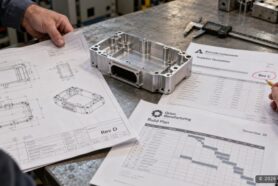
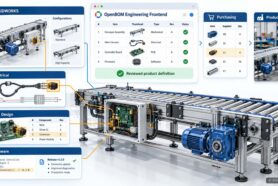
A product that must be launched, built, or delivered exists in many different representations across an organization. CAD and PDM describe geometry, files, positions, and revisions. The BOM describes product content. Configuration and order information describe what the customer expects. Sourcing information describes where components come from. ERP describes purchasing, inventory, and logistics. Manufacturing planning describes routing and processes. Work instructions describe how the product should actually be built.
Individually, every representation may be correct. But for a specific launch, build, or delivery to happen on a specific date, all of them need to describe a compatible reality.
Consider a few simple examples.
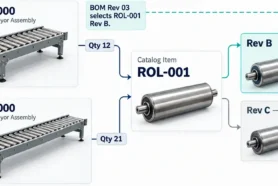
Engineering releases a new revision, but purchasing is still ordering the previous one. A component exists in the engineering BOM but has not been created in ERP. The customer ordered a configuration that manufacturing has not prepared. The BOM is accurate, but a critical component will arrive after the committed date. Manufacturing is preparing against a structure that changed yesterday. An engineering decision was made, but sourcing and production are still operating using the old information.
None of these necessarily means that CAD, PLM, ERP, procurement, or MRP is fundamentally wrong.
The problem exists between them.
Who Owns the Commitment?
This is the question I find increasingly interesting. Every function has systems supporting its work. Engineering has CAD, PDM, and PLM. Procurement has sourcing and supplier systems. Operations has ERP and MRP. Manufacturing has planning and execution systems.
But who owns the answer to:
Are we ready to make this commitment?
Depending on the company, this person might be an NPI leader, program manager, launch manager, manufacturing program manager, chief engineer, or product leader. The title is less important than the responsibility. It is the person who is on the hook for the date.
If the launch slips, this person needs to know why. If a prototype misses an important test window, this person feels the impact. If material is missing, this person needs to understand the consequence. If a customer delivery is late because engineering and manufacturing were working with different information, somebody owns the problem.
And I am beginning to wonder whether this person often has enormous accountability but surprisingly little dedicated information support. Here are tools I can see often:
- Engineering has PLM.
- Operations has ERP.
- The program manager has… Excel?
Somewhere There Is Probably a Readiness Spreadsheet
One of the most interesting questions might be very simple:
Show me how you decide that the product launch, prototype build, or customer delivery is ready.
I suspect that in many organizations the answer will eventually lead to a spreadsheet.
- Maybe it is Excel.
- Maybe Smartsheet.
- Maybe Jira.
- Maybe a PowerPoint deck.
- Maybe a homegrown database.
Maybe it is a daily or weekly readiness meeting where every function reports its status.
The technology itself is not important. What matters is why this artifact exists: it usually brings together information that already exists somewhere else —
- engineering release status;
- open changes;
- material availability;
- supplier status;
- missing parts;
- manufacturing issues;
- customer configuration;
- exceptions;
- owners;
- due dates;
- unresolved decisions.
In other words, this artifact becomes a manual reconciliation layer across enterprise systems.
A company may have sophisticated CAD, PLM, ERP, procurement, and manufacturing software. Yet before an important commitment, someone still exports information, copies it into a spreadsheet, calls a meeting, and asks everyone:
Are we ready?
Think about what that spreadsheet represents.
Readiness Is Not a Data-Quality Report
There is another important distinction. Imagine that a process compares engineering, sourcing, ERP, and manufacturing information and finds: 23 mismatches. 7 missing attributes. 4 revision differences. 8 incomplete supplier records.
Technically, this might be useful. But is this what the person accountable for the launch or delivery really needs? Probably not.
That person needs something much closer to:
READINESS STATUS: AT RISK
Three issues are blocking the commitment. Two decisions must be made before Friday. Four material or schedule risks could affect the delivery date.
And for every issue: What is wrong? Why does it matter? What information supports the conclusion? Who needs to resolve it? When must it be resolved?
That is a very different outcome.
The goal is not cleaner data. The goal is a better commitment decision.
The Readiness Meeting Is a Human Integration Process
Think about what happens during many readiness meetings. Someone asks engineering whether the design is released. Someone asks procurement whether the critical parts will arrive. Someone asks manufacturing whether tooling and processes are ready. Someone asks whether the latest ECO affects the planned configuration. Someone checks whether ERP and engineering refer to the same revision. Someone discovers that a supplier is working from yesterday’s information. Then people create action items and follow them until the next meeting.
When you look at the process this way, the readiness meeting is doing something very interesting. It is acting as a human integration and reconciliation mechanism. People are connecting information that enterprise systems cannot easily connect themselves.
Some companies undoubtedly have sophisticated automation around these processes. Others have formal checklists and well-established procedures. Some might discover problems only after an important milestone is missed.
But the question that interests me is:
How much human effort is required today simply to determine whether the organization is actually ready to meet its product commitment?
Do We Need Another System?
My instinct is that the answer is probably not another giant system promising to replace everything that already exists. Manufacturing companies have plenty of systems. The more interesting question may be whether the existing readiness process can become dramatically faster, more complete, and more reliable.
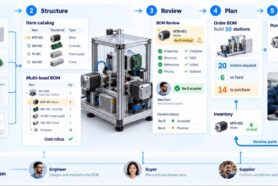
Can information from existing systems be brought together without replacing them? Can inconsistencies be identified before the readiness meeting? Can repetitive checks be automated? Can teams focus on the small number of issues that could actually stop a launch or delay a delivery? Can every blocker have evidence, impact, ownership, and a required decision?
AI will almost certainly change the economics of some of this work. Tasks that previously required people to manually inspect files, spreadsheets, BOMs, system exports, and reports can increasingly be automated. But technology is not the question I am trying to answer yet. The business problem comes first.
Are You Actually Ready to Deliver?
Manufacturing companies have spent decades building increasingly sophisticated systems for engineering, supply chain, manufacturing, and operations. Yet before one of the most consequential moments — a product launch, important prototype, qualification milestone, or customer delivery — a human being may still have to manually determine whether those systems collectively describe something the organization can actually deliver.
Maybe delivery readiness deserves to be treated as a first-class business problem. Not another source of truth. Not another PLM system. But a better way to support the person who must answer:
Are we ready to deliver what we committed to, when we committed to it?
I’m trying to understand how companies answer this question today. I would particularly like to hear from people involved in NPI, product launches, prototype and pilot builds, manufacturing programs, and customer deliveries.
Here is my question:
What was the last issue your team discovered too late — after everyone believed you were ready?
I would also like to know who ultimately decides that you are ready to proceed, and what information or tool they actually use to make that decision. And if your answer involves a spreadsheet, punch list, readiness meeting, or homegrown process, I would particularly like to compare notes.
I look forward to your responses – contact me directly
Best, Oleg
.
Join our newsletter to receive a weekly portion of news, articles, and tips about OpenBOM and our community.