Yesterday I wrote about the five hard problems engineering and manufacturing teams still face in 2026—from design data trapped in CAD files to fragmented product information scattered across spreadsheets and disconnected systems. If you look closely, most of these challenges share a familiar root cause: product knowledge spread across files, tools, and departments that were never designed to work together. Teams spend an enormous amount of time simply trying to understand the current state of the product—what version is correct, which supplier is approved, or which assemblies are affected by a change. Meanwhile, the products themselves are becoming more complex, more connected, and more dynamic. Managing them through CAD files and spreadsheets alone is increasingly difficult.
This tension reveals a deeper shift happening in manufacturing today. Modern physical products behave more like evolving systems than static objects. They change frequently, involve multiple disciplines, and require coordination across engineering, procurement, production, and suppliers. Software teams faced a similar challenge years ago and eventually reorganized their work around shared repositories, collaborative workflows, and persistent history. Manufacturing teams are beginning to confront the same reality.
To build physical products with the speed and flexibility of software, manufacturing organizations must rethink more than just tools. They must rethink how product knowledge is structured, how teams collaborate, and how companies interact across their supply chains. That shift can be summarized in five transformations.
Five Transformations for Software-Like Manufacturing
In my article today I want to talk about those five transformations happening in manufacturing companies. Each of these shifts addresses a fundamental limitation of traditional manufacturing systems.
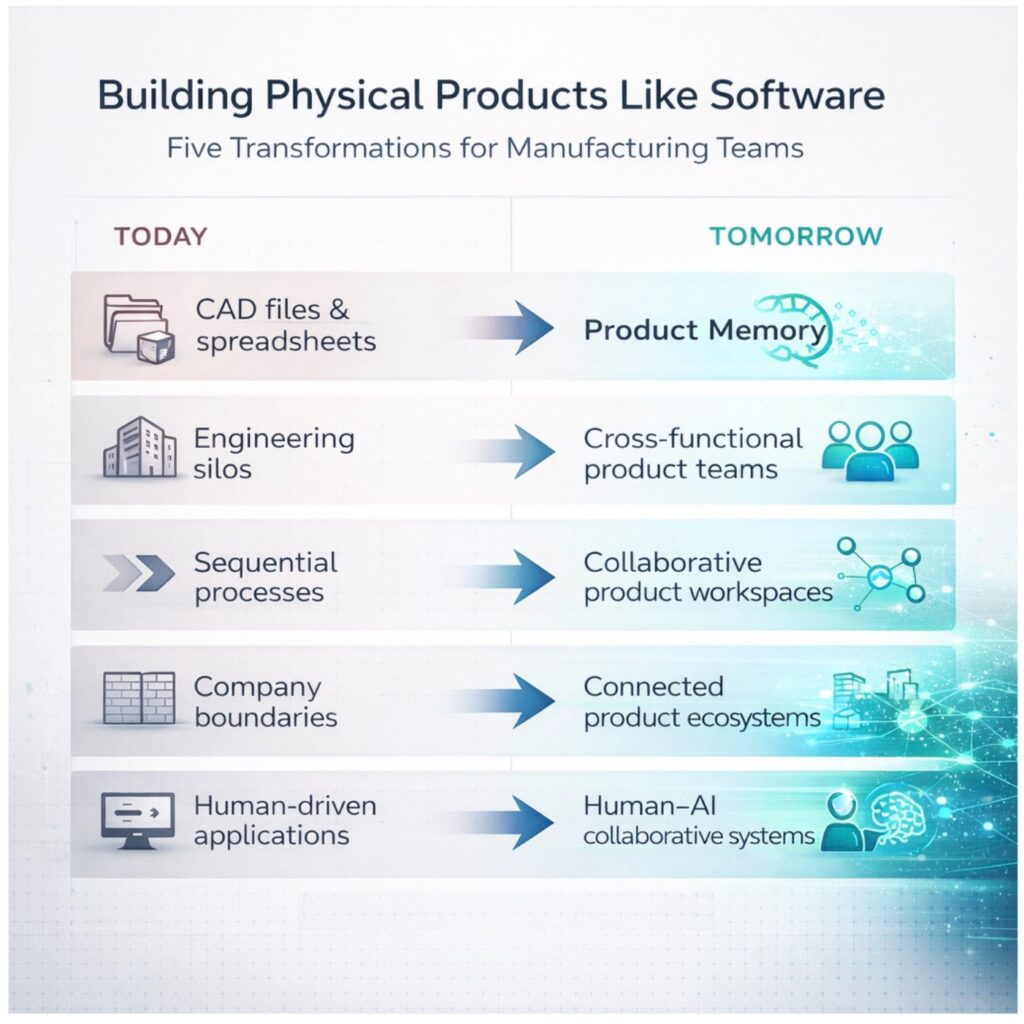
From CAD Files and Spreadsheets to Product Memory
For decades CAD files have served as the central artifact of engineering work. Around them, spreadsheets often emerged as the informal glue connecting information about parts, suppliers, costs, and manufacturing decisions.
This approach works reasonably well for small teams and relatively simple products. But as systems become more complex, files alone cannot capture the broader context of the product. Important information about supplier choices, alternates, manufacturing constraints, and lifecycle decisions lives outside the design files themselves.
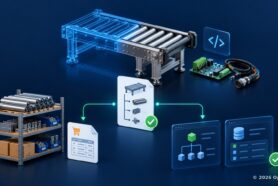
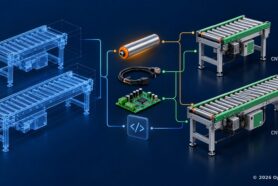
Product Memory represents a different model. Instead of treating product information as isolated documents, Product Memory organizes knowledge about the product into a persistent and structured context that connects engineering data, supply chain information, and manufacturing plans.
In this environment the product is no longer simply a collection of files. It becomes a living dataset that evolves over time and captures the relationships between components, decisions, and changes.
From Engineering Silos to Cross-Functional Product Teams
Traditional product development often follows clear departmental boundaries. Engineering defines the design, procurement sources the parts, and manufacturing plans production.
But modern products increasingly blur these boundaries. Engineering decisions influence supply chain risks. Procurement constraints can force design changes. Manufacturing realities shape how products must be structured.
When teams operate in isolation, coordination becomes slow and fragile. Information must travel across organizational boundaries through meetings, emails, and exported documents.
Cross-functional product teams approach this problem differently. Instead of organizing work strictly by department, they collaborate around a shared understanding of the product itself. Engineers, procurement specialists, and manufacturing planners interact with the same product knowledge and contribute their perspectives early in the process.
From Sequential Processes to Collaborative Product Workspaces
Many manufacturing workflows still follow a sequential logic: engineering completes the design, procurement begins sourcing, and production planning follows afterward.
In practice, however, modern product development rarely unfolds in such a clean sequence. Supplier shortages, regulatory requirements, cost targets, and customer feedback often force changes throughout the process.
Collaborative product workspaces allow teams to coordinate continuously rather than relying on rigid handoffs between departments. Everyone works from the same product context, enabling faster adjustments and reducing misunderstandings.
This approach mirrors how software teams collaborate around shared repositories rather than passing files from one stage to another.
From Company Boundaries to Connected Product Ecosystems
Few products today are built entirely within the walls of a single company. Suppliers, contract manufacturers, and specialized partners contribute essential components and expertise.
Yet product data frequently remains locked inside organizational systems. External partners receive static documents or exported spreadsheets rather than direct access to shared product structures.
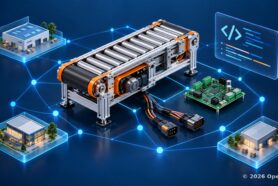
Connected product ecosystems reflect the reality that modern manufacturing is networked. Secure collaboration across companies allows suppliers and contractors to interact with product information while maintaining appropriate access controls.
Instead of exchanging files, organizations coordinate around shared product knowledge.
From Human-Driven Applications to Human–AI Collaboration
Traditional engineering tools were designed primarily as applications that generate outputs—models, drawings, reports, and spreadsheets. Humans operate the tools, interpret the results, and manually connect the pieces.
The rise of artificial intelligence introduces a new dynamic. AI agents can analyze product structures, identify inconsistencies, suggest alternatives, and assist teams with complex decisions.
But AI systems require structured context in order to operate effectively. Scattered CAD files and spreadsheets provide limited insight into how products are organized or how changes propagate across systems.
Human–AI collaboration becomes possible when both operate within a shared environment of structured product knowledge.
Why Product Memory Matters
All five transformations point toward a common idea: manufacturing organizations need a persistent memory of the product that connects engineering, procurement, and production.
Product Memory is not simply another database or document repository. It is a structured layer of knowledge capturing relationships, decisions, and history across the lifecycle of the product.
Just as software repositories allow development teams to understand the full context of their codebase, Product Memory allows manufacturing teams to understand the evolving state of their product at any moment.
This shared memory becomes the foundation for collaboration, change management, and intelligent automation.
AI Makes the Shift Even More Urgent
Artificial intelligence is accelerating the need for structured product knowledge.
AI systems can assist engineers and manufacturing teams in many ways—from analyzing product structures to identifying supply chain alternatives or detecting potential conflicts in assemblies. But their effectiveness depends on the quality and structure of the information they can access.
Files and spreadsheets provide very limited context. Product Memory creates a structured environment where AI agents can reason about the relationships between parts, systems, suppliers, and production plans.
In other words, AI does not eliminate the need for better product data foundations. It amplifies it.
The Next Evolution of Manufacturing
Manufacturing is entering a transition similar to what software development experienced years ago. As products become more complex and interconnected, managing them through static files and isolated tools becomes increasingly difficult.
Earlier in this article I introduced the concept of Product Memory—a persistent knowledge layer connecting engineering, procurement, production, and the broader supply chain. But in reality, what manufacturing organizations increasingly need is something even broader: Product Lifecycle Memory.
For decades the acronym PLM has stood for Product Lifecycle Management. But as products become more complex and AI begins to influence engineering and manufacturing workflows, the real challenge is not simply managing the lifecycle. It is remembering it—capturing the evolving knowledge of the product across design decisions, supplier choices, production planning, and operational changes.
In that sense, the next generation of manufacturing systems may not be defined by better tools or more workflows. They will be defined by their ability to maintain a Product Lifecycle Memory—a shared understanding of the product that evolves over time and allows humans and AI agents to work together.
Companies that continue to rely primarily on CAD files and spreadsheets will find it increasingly difficult to keep up with product complexity and customer expectations. Those that build a strong Product Lifecycle Memory will gain something manufacturing has historically struggled to achieve: the ability to build physical products with the speed and flexibility of software.
REGISTER FOR FREE to check how OpenBOM can help you today.
Best, Oleg
Join our newsletter to receive a weekly portion of news, articles, and tips about OpenBOM and our community.