Product Data Management (PDM) has been around for a long time, but its core functionality has remained largely unchanged. Initially introduced to manage CAD file revisions and prevent data overwriting when multiple engineers work on the same project, check-in and check-out, it quickly became the most popular and essential function of PDM systems. Despite its longevity, the traditional PDM model needs an update to keep pace with modern engineering and collaboration needs.
Cloud PDM Trends
With the advent of cloud systems, initial skepticism arose around the reliability and speed of cloud-based PDM. However, innovation prevailed, and today we see CAD systems with embedded PDM capabilities, such as PTC Onshape, Autodesk Fusion, and Altium 365, gaining traction. At OpenBOM, we have developed integrations with these cloud CAD systems. Yet, there remains a significant gap: a large number of CAD users continue to rely on desktop CAD systems. Additionally, advancements in connectivity have enabled the hosting of desktop CAD systems in the cloud.

So, what is the best approach for cloud PDM for these users? On one hand, the cloud offers powerful storage and collaboration capabilities. On the other hand, many engineers prefer having files accessible offline on their local computers, ensuring uninterrupted workflow even without an internet connection. This is where the OpenBOM Design Projects service is coming.
OpenBOM Design Projects
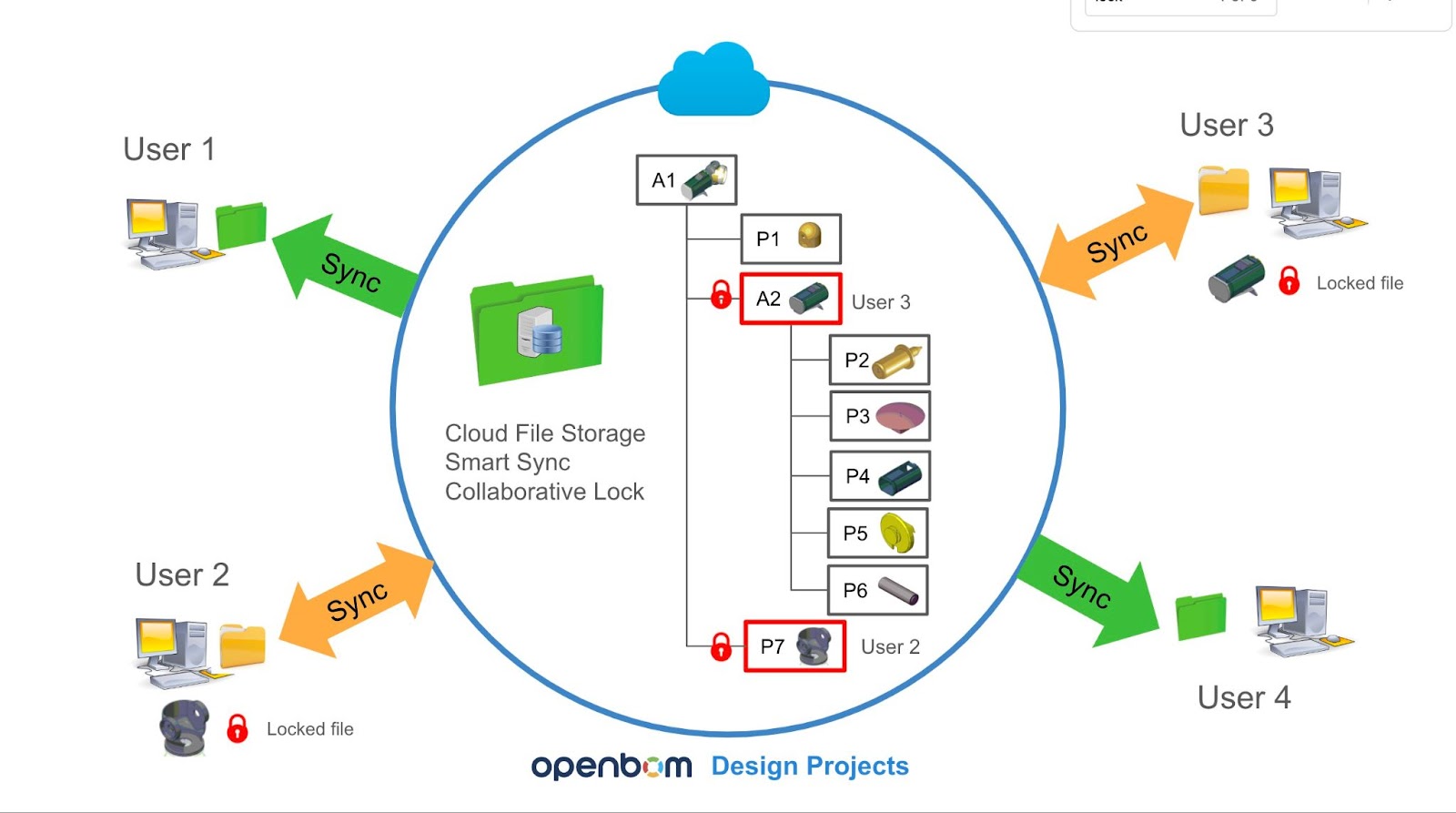
OpenBOM addresses this challenge with a hybrid solution that combines the best of both worlds. Our flexible data model organizes cloud data storage, while our intelligent “smart sync” function seamlessly synchronizes design projects between the cloud and desktops (both local and virtual). This approach ensures that engineers can work efficiently and collaboratively without the risk of data overwriting.
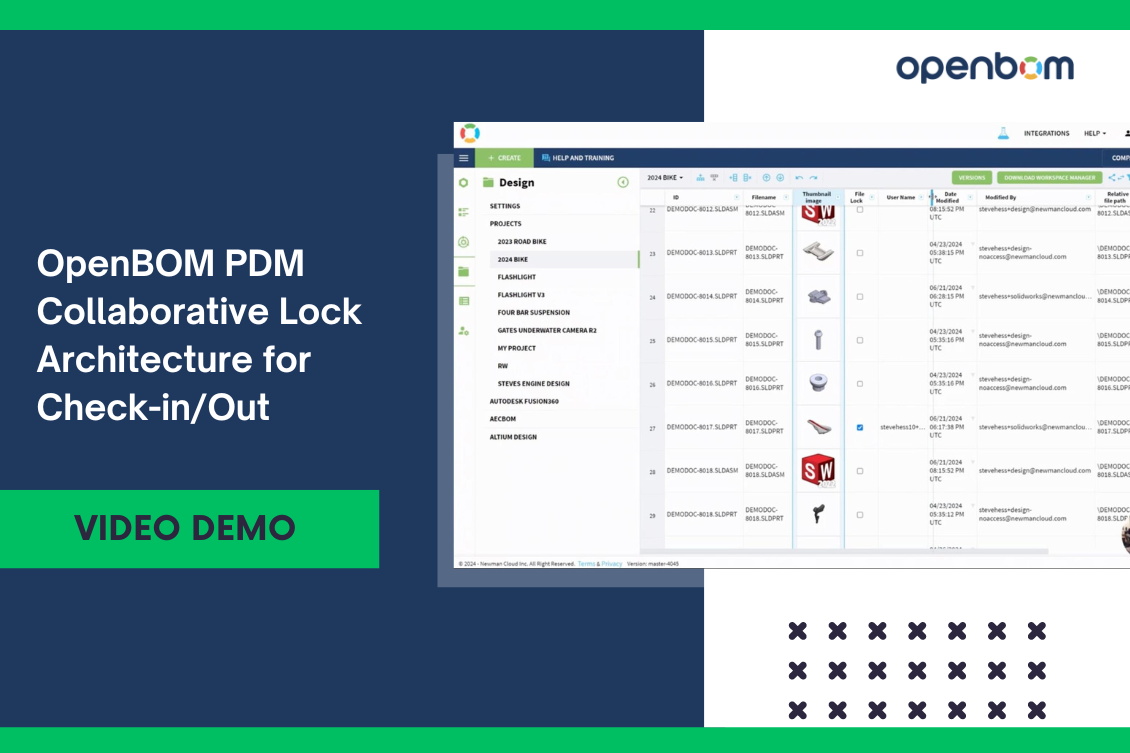
For a deeper dive into how this works, check out our Design Projects Live Demo.
Collaborative Lock Architecture of Check-In/Out
OpenBOM’s Design Projects and real-time collaborative technologies introduce a new approach, offering engineers unique capabilities to work together while preventing overwriting changes.
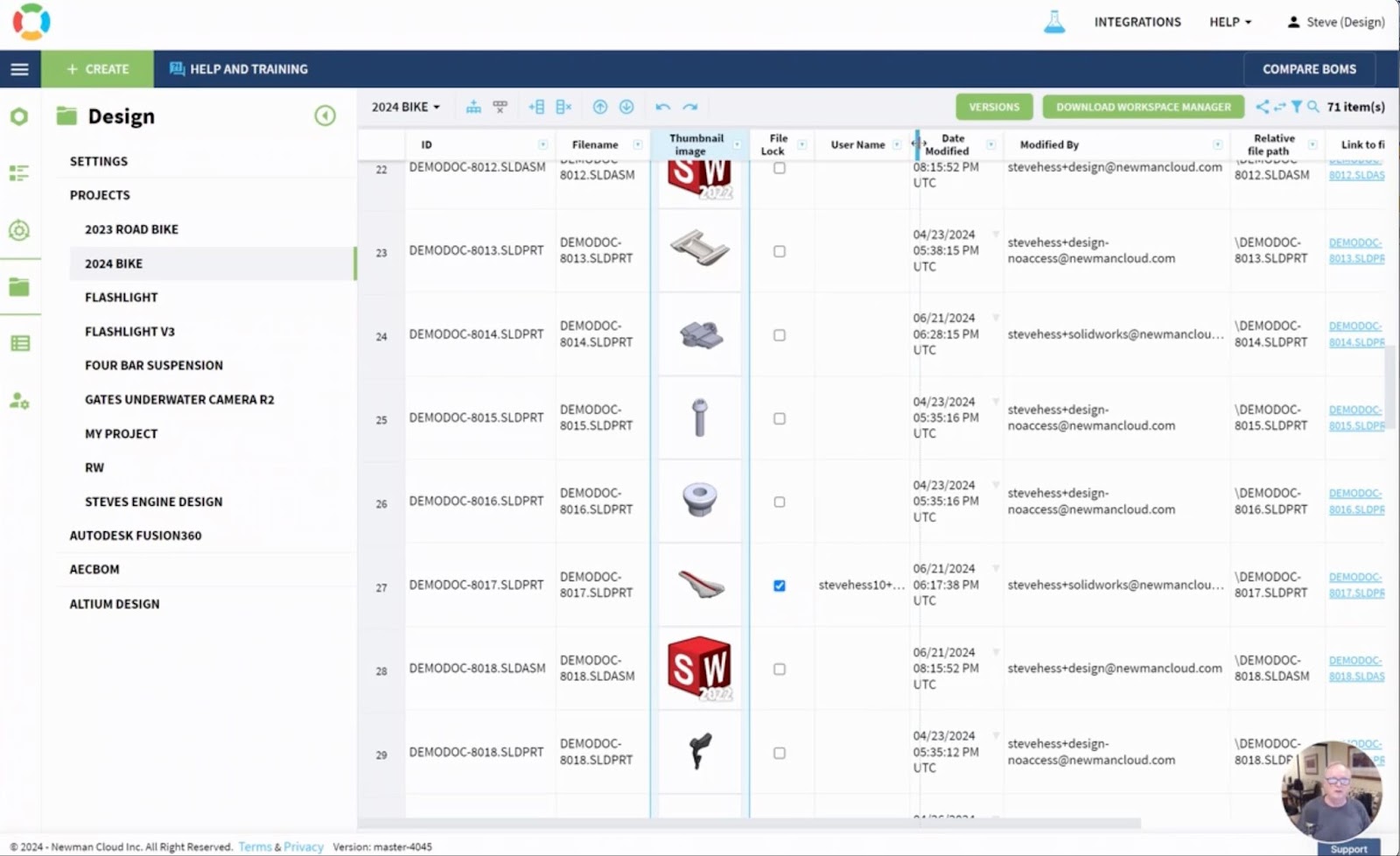
Our check-out function, also known as “file lock,” allows engineers to “lock” a file before making changes.
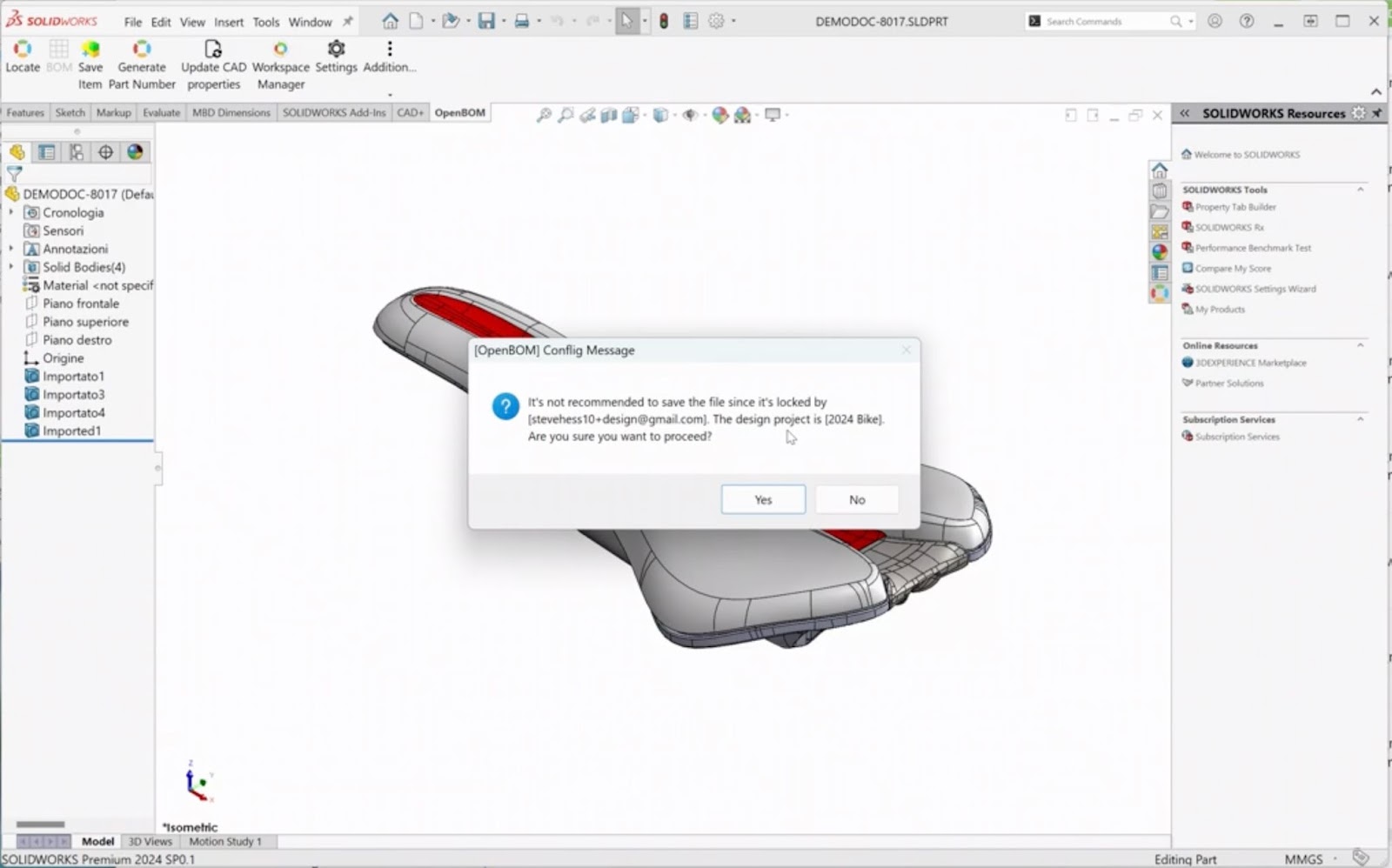
This lock prevents updates to the cloud storage and alerts other users attempting to change the file within their desktop CAD environments.
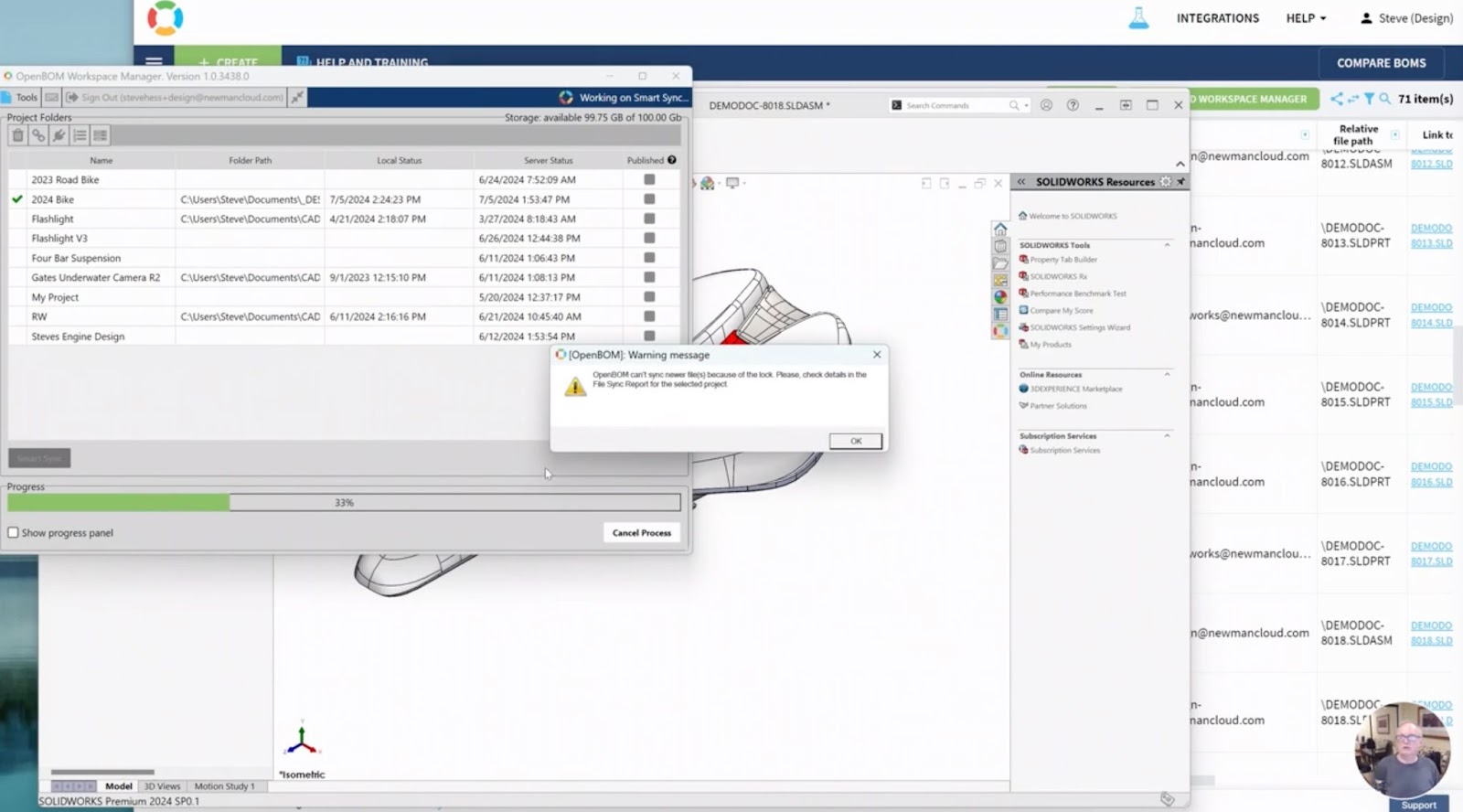
Unlike traditional PDM systems that block users from making changes (often by setting a read-only flag), OpenBOM provides greater flexibility. Users receive alerts to reach out to their colleagues and collaborate on managing the file lock, deciding who will make the necessary changes. This system fosters communication and teamwork, enhancing productivity and reducing errors.
For more information, watch our detailed video demonstration.
Conclusion
OpenBOM’s collaborative check-in/out process, using a “file-lock” mechanism, maximizes flexibility for users managing file changes and cloud storage uploads. The Smart Sync feature streamlines synchronization between desktops and the cloud, allowing engineers to focus on their work without worrying about data integrity. Simply click “smart sync,” and OpenBOM handles the rest.
Register for free and try OpenBOM Design Projects today to experience the future of PDM collaboration.
Best, Oleg
Join our newsletter to receive a weekly portion of news, articles, and tips about OpenBOM and our community.