Today, I’d like to continue my articles about OpenBOM data management. In my previous article, I was converting reference-instance fundamentals. Please check it here.
You can check also OpenBOM Data Management fundamentals article, which speaks about three important elements of OpenBOM data management model:
1- Data management architecture
2- Reference-instance model
3- Parent-chield relationships
To speak about Parent-Child relationships, I will use a simple model of a Skateboard. A very simple model contains 2 assemblies Skateboard and Axle Assembly. Each assembly has its parts.
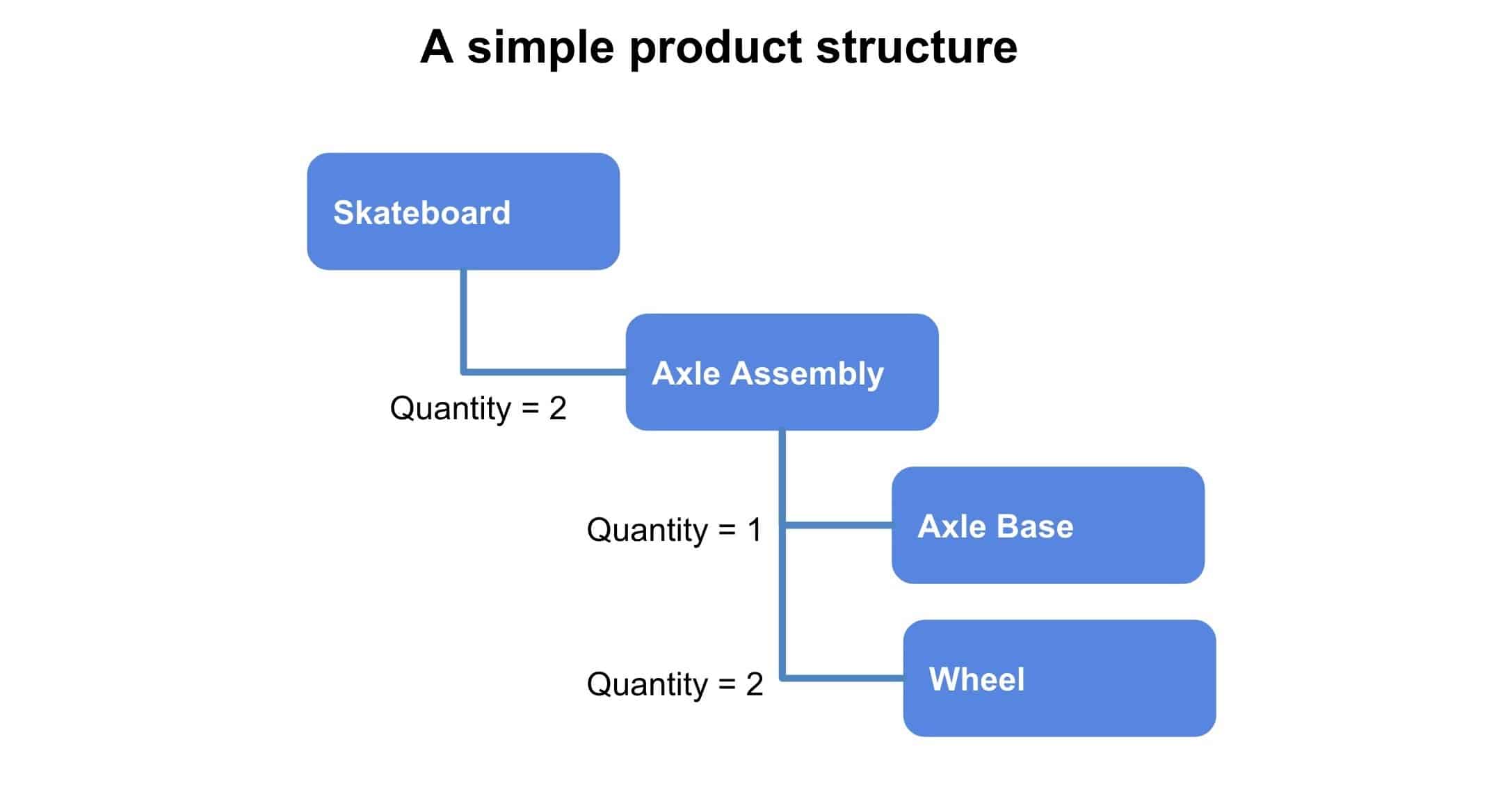
The parent-child relationships model creates relationships between assemblies. OpenBOM organizes relationships automatically based on Part Numbers. The parent-child relationships model works in parallel with the reference-instance model. Parent-child relationships are modeled in the Bill of Materials. The Reference-instance model is supported by relationships between Catalogs and BOMs.
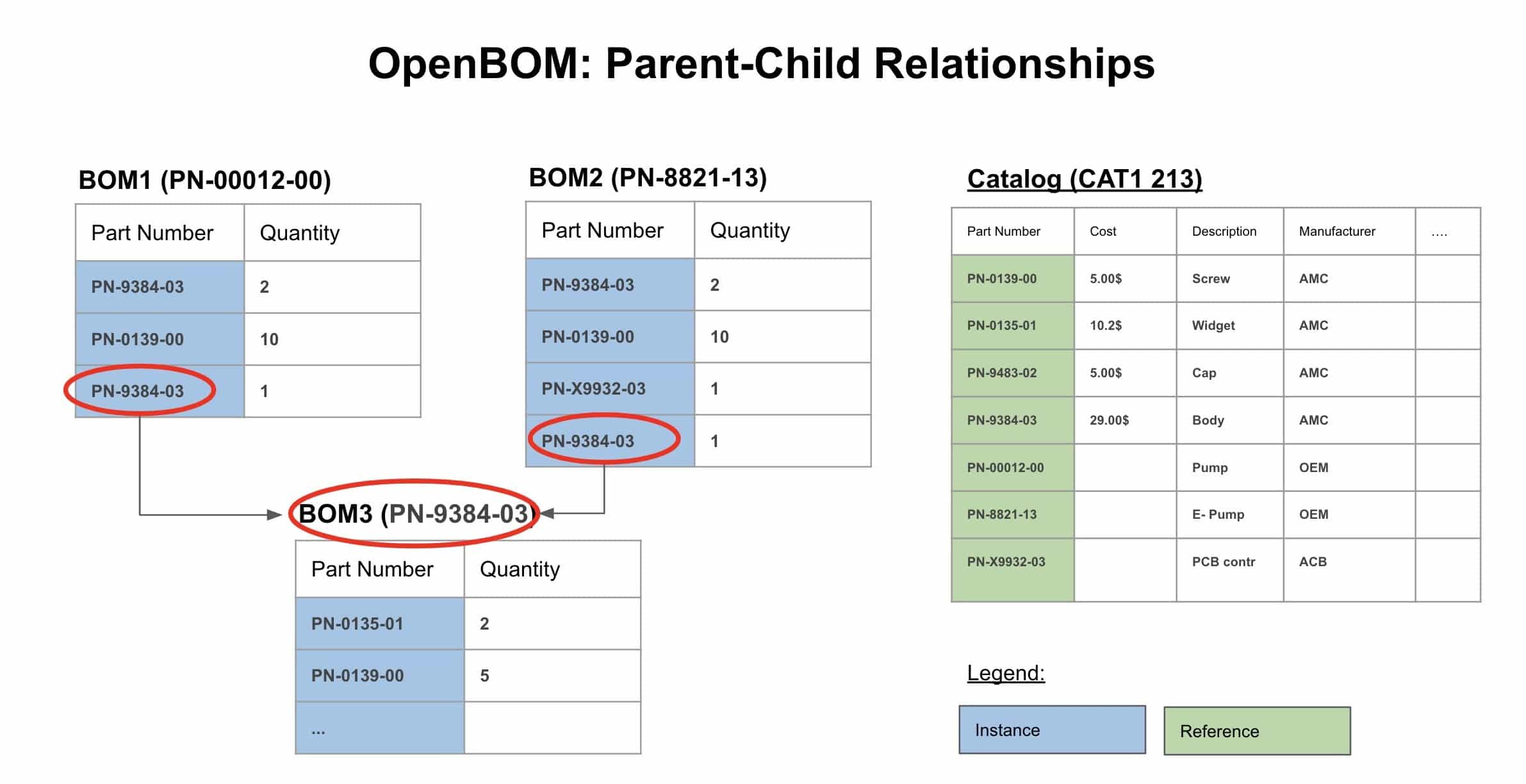
Here is a picture that explains parent-child relationships.
Here is the video of my OpenBOM Data Management – Part 2.
Conclusion
OpenBOM parent-child relationship is a fundamental element of the product information data model. OpenBOM creates automatic relationships based on part numbers and by doing so supports multi-level and flattened BOMs in OpenBOM.
Check what OpenBOM can do today subscribing to OpenBOM here or request a trial version.
Best, Oleg @ openbom dot com.
Let’s get to know each other better. If you live in the Greater Boston area, I invite you for a coffee together (coffee is on me). If not nearby, let’s have a virtual coffee session — I will figure out how to send you a real coffee.
Want to learn more about PLM? Check out my Beyond PLM blog and PLM Book website
Read OpenBOM customer reviews on G2 Crowd to learn what customers are saying about OpenBOM.
Join our newsletter to receive a weekly portion of news, articles, and tips about OpenBOM and our community.