When companies approach OpenBOM, they often bring a spreadsheet in hand, asking, “Can you do this with OpenBOM?”
This scenario encapsulates a common but critical misconception. These companies don’t need OpenBOM or even PLM at that moment. They already have Excel or Google Sheets for managing data.
The real issue lies in their operational model—it simply doesn’t scale. Spreadsheets are powerful, but their expressiveness limits how effectively companies can manage complex product structures, revisions, and queries.
Identifying the Real Problem
The crux of the challenge is not whether a tool like OpenBOM can replace a spreadsheet but rather understanding that their current way of working lacks scalability.
Spreadsheets were never designed to manage the intricacies of modern product lifecycle management (PLM). They fall short in handling revisions, maintaining hierarchical structures, or providing the level of traceability and query capabilities required in engineering and manufacturing.
The deeper issue is this: companies need an information model that aligns with how they develop, build, sell, support, and eventually retire products. This model—not the software—forms the backbone of a successful PLM strategy.
Why PLM Out of the Box is Difficult
No two companies are identical. Differences in engineering practices, product complexity, and organizational workflows mean that a one-size-fits-all PLM solution rarely works. While common practices and patterns exist, each organization needs an information model tailored to its unique needs. This customization is vital to ensure the PLM system reflects and supports the company’s processes effectively.

Developing a PLM Strategy
Here is a roadmap to creating a robust PLM strategy:
1. Define Your Strategy as a Desired State
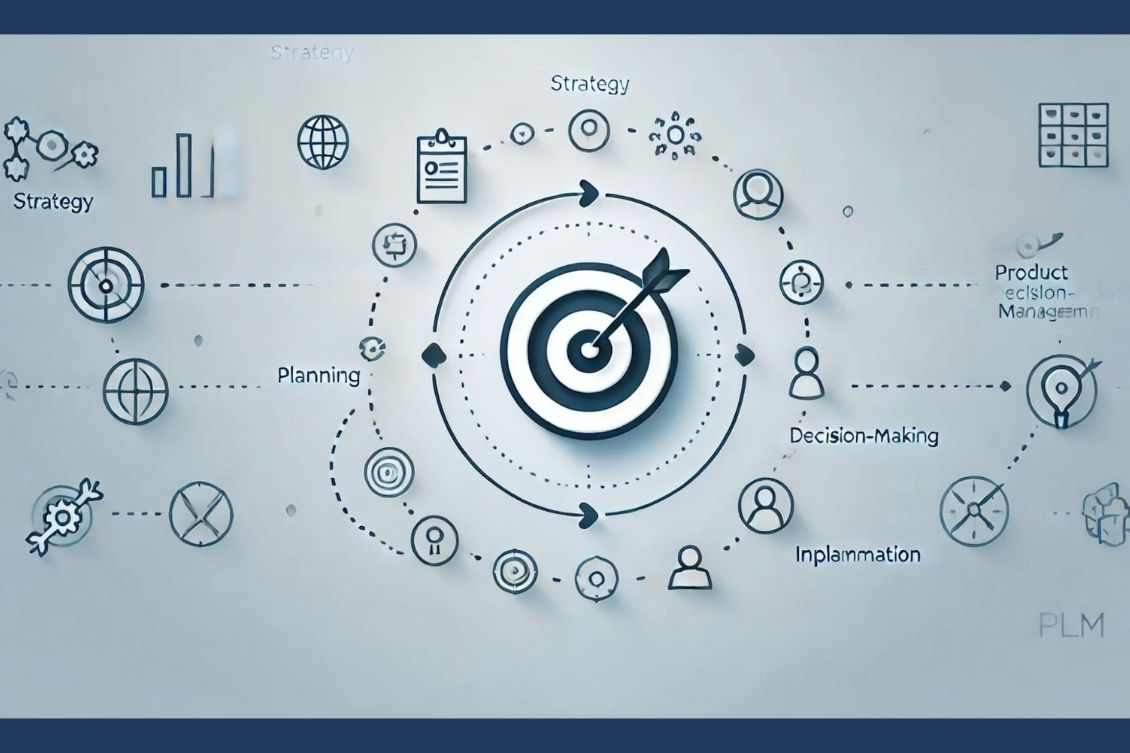
Strategy isn’t a checklist or set of steps. It’s a vision of the desired state and a reason for existence. In the context of PLM, your strategy should define what successful product lifecycle management model looks like for your organization.
2. Map Out Your Product Lifecycle Process
A product lifecycle is the series of stages your product goes through: design, development, manufacturing, sales, support, and retirement. Begin by mapping these stages, highlighting key processes and interdependencies.
3. Build an Information Model
Once you’ve defined your lifecycle processes, the next step is to create an information model. This is a conceptual representation of the data required to support your product lifecycle. Importantly, this step is still not about selecting software or databases; it’s about clearly defining the data structures, relationships, and workflows you need.
4. Implement the Model Using Software
With a solid information model in place, you can then select software to implement it. This is where many companies falter. If your information model is designed solely around the capabilities of spreadsheets, you’ll end up replicating those limitations in your PLM system. Avoid this trap by ensuring your information model leverages the advanced capabilities of modern PLM tools.
The Pitfall of Automating Chaos
A critical lesson: automating a messy process will only result in an automated mess. If your processes are chaotic, take a step back. Resist the urge to implement software prematurely. Instead, focus on defining and refining your processes and information model. Once these are in place, you can confidently implement a PLM system that drives real value.
How OpenBOM Can Help
OpenBOM provides a flexible data model and tools to help you define and tweak all elements of your information model. Unlike rigid systems, OpenBOM adapts to your business processes, enabling you to build a PLM strategy tailored to your unique needs.
In the following articles, we will show examples of different data models that can be implemented using OpenBOM.
Today, I want to share a few videos with basic use cases when OpenBOM is used to create different product models, structures, links and relationships.
For more videos and information about OpenBOM, check our Youtube channel.
Conclusion
A successful PLM strategy starts with an information model that reflects how you build, sell, and support your products. Without a clear strategy, implementing a PLM system will only amplify existing inefficiencies. By stepping back, focusing on process and model definition, and leveraging tools like OpenBOM, you can develop a scalable, efficient approach to product lifecycle management that aligns with your organization’s goals.
REGISTER FOR FREE to check how OpenBOM can help you.
Best, Oleg
Join our newsletter to receive a weekly portion of news, articles, and tips about OpenBOM and our community.