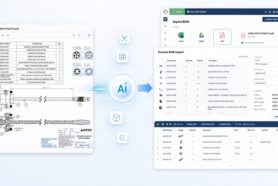
When we started OpenBOM, we realized that one of the key elements of the platform is the capability to be flexible and configurable to adjust to various customer requirements and business processes. Managing product data is a critical part of any successful product development and manufacturing operation. In order to make informed decisions about where to allocate resources and how to meet production goals, manufacturers need accurate and up-to-date information about the products they produce.
OpenBOM Flexible Data Model
When it comes to the development of data management solutions for industrial companies, manufacturing OEMs, engineers, suppliers, and contractors, we know that flexibility is a key element of successful architecture. Flexibility is a powerful concept that is appreciated by engineers and IT professionals. As much as out-of-the-box functionality is appreciated, the requirements for flexibility are always coming up with the same level of priority.
If you want to learn more about the OpenBOM data management platform, please check out these articles:
- OpenBOM Flexible Data Model
- OpenBOM Data Management Platform – Architecture, Flexibility, and Scalability
- OpenBOM: Flexibility, Configurations, and Customization
Today, we open a new chapter in OpenBOM data management capabilities for customers by introducing OpenBOM Custom Objects and Object Reference property.

Custom Objects
At the core of the OpenBOM data model is a flexible object-oriented data modeling mechanism that allows you to build any data type starting from the generic data objects and then specialized. This is how OpenBOM built all existing data objects – catalogs, items, bills of materials, orders, purchase orders, and vendors.

Until now, this data modeling flexibility was limited to predefined object types. And today we would like to tell you about what is coming next in the next OpenBOM release – we are going to open this data modeling capabilities to our customers. It is huge because from now, OpenBOM customers will be allowed to build a fully custom data model containing multiple object types. Think about products, requirements, tasks, and many other objects. We are also introducing a new type of property, called Object Reference, that will allow us to link custom objects between themselves. In such a way you can think about Requirements including reference to a project, tasks related to projects, or specific items.
Custom Object Examples
A new custom object dashboard will be coming to OpenBOM allowing the administrator of the company to create new custom object types. Each of these custom object types will be supporting full data property customization. By adding an object reference property, you will be able to select a link to another custom object. It will include object reference to one of the existing data objects that will be coming soon.
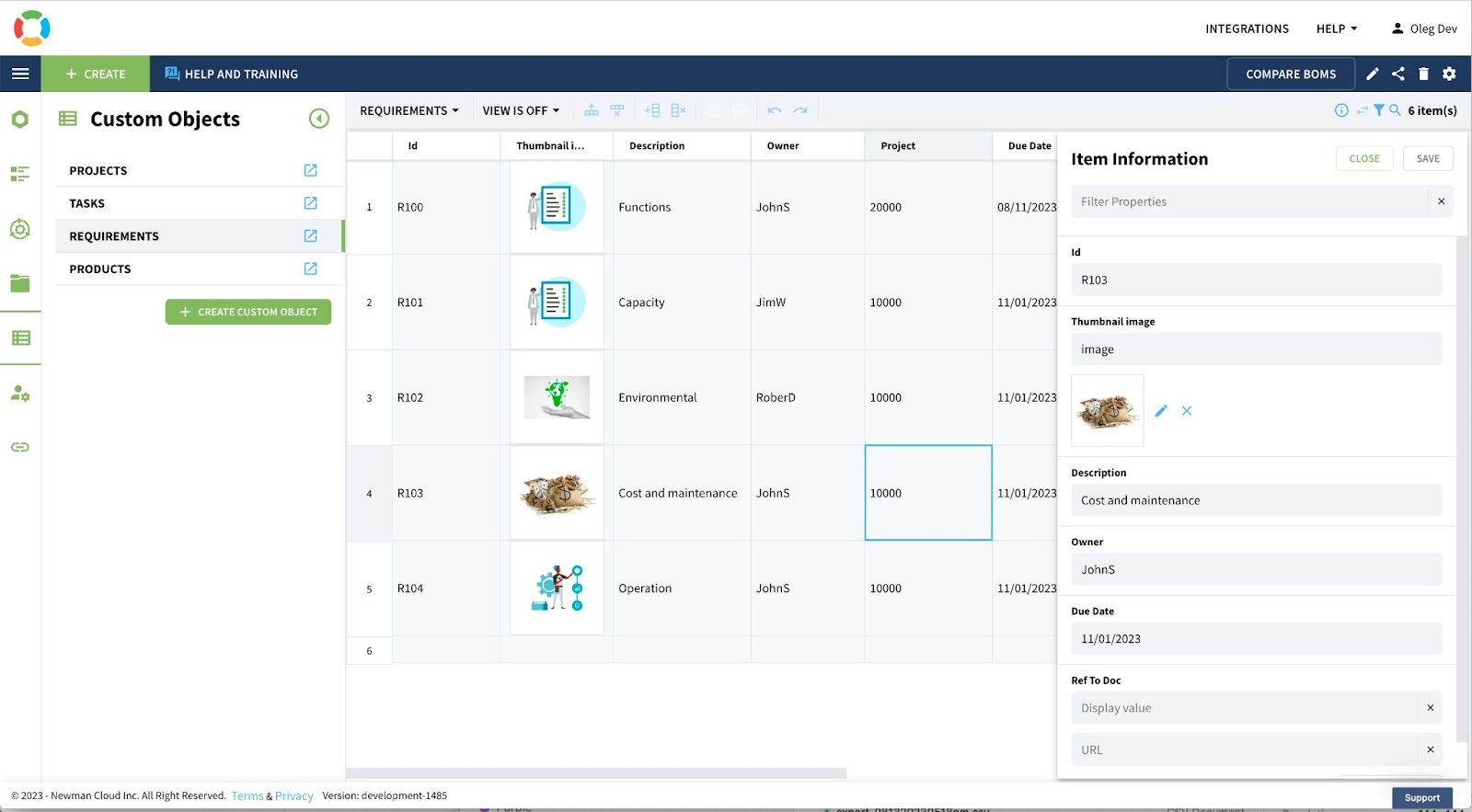
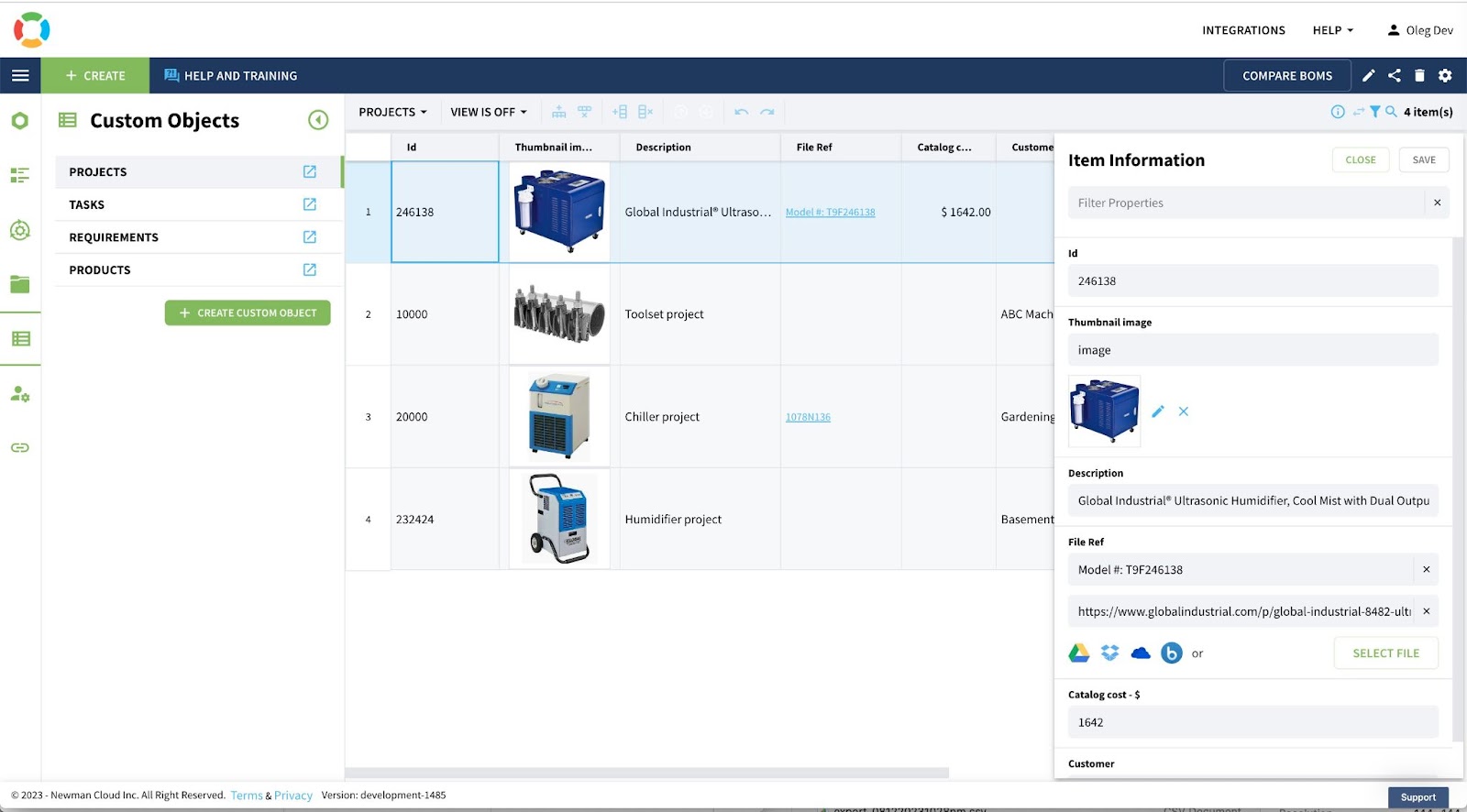
Here is an example of a custom object dashboard with two examples of custom objects – products, requirements, and tasks.
Example- Requirement Custom object:
Example- Projects Custom object:
Conclusion:
I’m super excited about the new level of flexibility coming to OpenBOM. Together with already existing data modeling, the new “Custom objects” will allow building an unmatched set of data modeling and customization capabilities.
If you want to discuss more about the coming data modeling enhancement, please contact OpenBOM to get more information.
Best, Oleg
Join our newsletter to receive a weekly portion of news, articles, and tips about OpenBOM and our community.