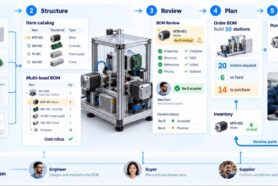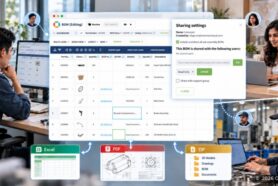
The digital thread is a concept that has been used to describe the integrated flow of information from design through manufacturing. It’s a powerful novel framework for product development, but it can be difficult to understand and implement. In order to ensure successful and efficient manufacturing, it is essential to create a digital thread that links data from every step of the process. The data coming from multiple design systems, and engineering must be connected with production data using digital processes. This digital thread must provide transparency throughout the entire process and allow access to real-time data.
OpenBOM’s innovative digital thread platform offers powerful programmatic mechanisms of no-code programming and REST API interfaces that can help you build a digital thread in a simple and powerful way. Let’s take a closer look at how OpenBOM can help you build a robust digital thread.
OpenBOM REST API
OpenBOM’s REST APIs are a set of tools that give users access to their cloud data. It enables them to easily integrate with other applications, such as ERP systems and design automation tools and supports multiple languages including Java, Python, C#, and JavaScript. These tools let users securely retrieve and modify their cloud data from any compatible application or device. They also allow users to quickly pull in real-time information from multiple sources for analysis.
To learn more about OpenBOM REST API, check our Documentation.

OpenBOM No-Code User-Defined Commands
The recent release of OpenBOM made the introduction of a new set of customization tools that allows you to build no-code integration on demand using OpenBOM user-defined commands.
These User-Defined Commands allow users to perform custom commands and pass the data payload to any REST API endpoint. It allows the organization of the process of integrating with the OpenBOM platform, without the need for programming knowledge. This enables users to create custom commands and macros using a simple, user-friendly interface. These commands can then be triggered manually or automatically based on certain conditions, making it easier and more efficient to perform common tasks.
The PLM No-Code User-Defined Commands are designed to streamline the data exchange process and are used together with any web API. They provide a way for users to automate data connectivity tasks, improve accuracy, and eliminate manual errors. This helps to improve overall productivity and enables users to focus on higher-level tasks that require their expertise and attention.
Building a Digital Thread Using OpenBOM API Tools
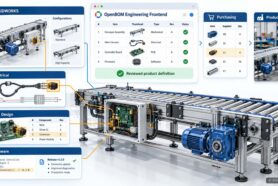
OpenBOM’s REST APIs and user-defined commands provide manufacturers with the ability to access data from within their organization more securely and quickly than ever before. OpenBOM helps to digitally transform analog data buried in various engineering documents, CAD data, and legacy data sources. This helps organizations build a digital thread by connecting all parts of their business together digitally – from CAD models through manufacturing operations – creating an efficient data flow that can be used by everyone across the enterprise efficiently without interruption or disruption of its operations due to data silos or manual processes slowing down progress or decision making capabilities.
Through this connection, organizations can easily track parts as they make their way through production as well as manage inventory levels more accurately ensuring that there is always enough inventory on hand when needed but not too much so that it becomes wasteful or costly due to inventory overhead expenses.
Conclusion:
OpenBOM’s development tools, CAD Add-ins and REST APIs provide organizations with powerful tools that help them build a digital thread within their business while also providing them with secure access to data from within their organization quickly and efficiently. The ability of OpenBOM to provide tools to build a virtual data presentation in the cloud using OpenBOM SaaS data modeling and REST API. These tools and APIs enable manufacturers to streamline processes across various departments within one central platform allowing for better collaboration and communication between teams. With OpenBOM’s suite of tools combined with its robust set of APIs, manufacturers have everything they need in order to build a strong foundation for success in today’s rapidly changing market environment!
REGISTER FOR FREE and explore how OpenBOM can help you today.
Best, Oleg
Join our newsletter to receive a weekly portion of news, articles, and tips about OpenBOM and our community.