Designing products is fun. But once you move from the design stage to production, you need to plan production and purchase. And it is very hard to do, even it sounds very simple – count parts, select vendors, organize part lists and purchases. Design data is complex and located in CAD systems that are not very easy to get out in the way and form you need.
For a very long time, PLM applications required complex IT, setup, configuration, and setup. Even hosted in the cloud, PLM system are not easy to start with. You need to wrap your head around PLM complexity. Most of web PLMs are not well integrated with CAD systems. OpenBOM is different. Below, I outline 5 points that make OpenBOM unique and different.
1- SaaS
OpenBOM is a new type of application available from the browser (it is called SaaS or cloud these days). You register and create your account in one minute to use OpenBOM
2- Integrated with all CAD
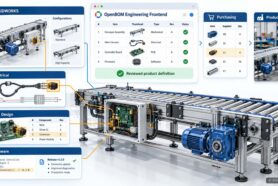
OpenBOM integrates with all CAD applications. CAD design is source of information for the Bill of Materials and production planning. OpenBOM is connected to CAD desktop systems using installed plug-ins and to cloud CAD systems using native REST API as all web applications do.
3- Automatic CAD data extraction
OpenBOM is connected to CAD systems and allows you to extract all data automatically. The data extracted in the way it needs to be used for production and purchasing planning. Many sophisticated CAD features are recognized automatically. It is tuned for each CAD system.
4- Instant Data Sharing
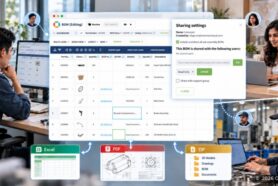
Data can be easily shared with everyone in your organization and outside as you do it with Google Apps and other applications. The data can be shared with anyone you need (you can set security rules of course).
5- Calculations and planning
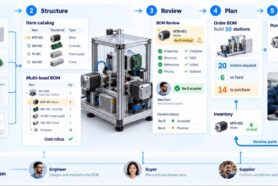
OpenBOM formula and calculation mechanism helps you to prepare orders, rollup quantity, and do all planning work. Automatic calculations and reporting allow you to create Order BOM and export purchase orders for each contractor and vendor.
Conclusion
OpenBOM is a new type of engineering and manufacturing application. It is native SaaS tool developed using all modern cloud and web technology, hosted using AWS (Amazon Web Service) and available globally to everyone.
It makes OpenBOM completely different from all old-style SQL database-driven applications you need to install on-premise or host in the cloud for each company separately. OpenBOM is multi-tenant, which makes data to be available for sharing across multiple companies and with anyone you need.
Check the story about how OpenBOM helped thousands of manufacturing companies to escape from Excel hell. Register to OpenBOM now to start your process of escaping Excels and Spreadsheets
Best, Oleg @ openbom dot com.
Want to learn more about PLM? Check out my Beyond PLM blog and PLM Book website
Read OpenBOM customer reviews on G2 Crowd to learn what customers are saying about OpenBOM.
Join our newsletter to receive a weekly portion of news, articles, and tips about OpenBOM and our community.