Across the manufacturing industry, digital transformation initiatives often begin with ambitious investments in digital technologies. Sensors are installed, dashboards are built, and data starts flowing at unprecedented scale. Yet many manufacturers discover—often years later—that despite significant investment, little has changed on the factory floor. Digital transformation is intended to address core business challenges, such as operational inefficiencies, quality issues, and outdated processes, by leveraging technology to improve operations.
Based on recurring patterns observed across manufacturing companies, consider this composite scenario: a mid-sized automotive supplier invests more than $2 million in industrial IoT sensors across its production lines. The sensors work perfectly, generating millions of data points every day. However, scrap rates remain unchanged, machine downtime increases, and quality managers still rely on manually updated spreadsheets at the end of each week. This scenario is all too common—approximately 70% of manufacturers struggle to scale digital initiatives beyond their initial pilot phase, a phenomenon often referred to as “Pilot Purgatory.”
This is not an isolated failure. It reflects a broader misunderstanding of what digital transformation in manufacturing actually requires. The issue is not broken technology, insufficient data, or lack of tools. It is the absence of orchestration—connecting technology, people, and processes into a system that changes how decisions are made. Today, digital transformation is a requirement for manufacturers to remain competitive, adapt to evolving customer expectations, and meet new technological and sustainability standards. The stakes are high: companies that fail to orchestrate digital transformation risk falling behind, losing market share, and missing out on the significant value that Industry 4.0 initiatives can deliver.
Digital Transformation in Manufacturing Is a System Change, Not a Technology Project
Most failed transformation efforts share a common root cause: manufacturers treat digital transformation as a collection of independent projects rather than a coordinated transformation of the manufacturing environment.
Production teams deploy IoT sensors. IT rolls out cloud systems. Quality departments adopt analytics tools. Maintenance introduces predictive maintenance software. Each initiative delivers localized improvements. Yet the organization still cannot answer fundamental questions such as:
- What is our real production capacity next week?
- Which supplier quality issues cause the most downtime?
- Where are defects actually originating?
Integration issues often arise when merging new digital technologies with older, non-connected equipment, making it difficult to achieve seamless data flow and system interoperability.
True digital transformation creates an integration layer—a decision system that connects digital technologies into a unified operational model. Integrated systems provide a centralized view of data, enabling decision-makers to access, analyze, and interpret information in real time for better, data-driven decisions. Without this, even advanced tools remain isolated, preventing improvements from compounding into competitive advantage.
What Digital Transformation Really Means for Manufacturing Companies
Digital transformation is frequently confused with digitization. The difference matters.
Digital transformation is not:
- Installing new software
- Replacing paper forms with tablets
- Adding sensors to machines
- Creating dashboards
Digital transformation is:
- Redesigning how decisions are made and who makes them
- Connecting manufacturing workflows so information flows automatically
- Enabling people to act on real-time data
- Building systems that learn from historical and real-time data
Digital transformation in manufacturing refers to the integration of digital technologies into all aspects of production and back-office processes.
The automotive supplier in the opening example digitized existing workflows instead of transforming them. Weekly production meetings remained weekly. Maintenance decisions stayed reactive. Authority structures stayed unchanged. Technology wrapped around old processes instead of redefining them.
That is digitization without transformation. Ultimately, the essential difference is that digitization simply converts existing processes to digital, while digital transformation fundamentally rethinks and integrates technology into every aspect of manufacturing operations.
The Digital Transformation Journey: Why Most Manufacturers Stall Midway
A successful digital transformation journey unfolds in stages. Most manufacturers stall because they stop after the first stage.
Early-stage transformation focuses on visibility—collecting data from machines, production lines, and suppliers. This stage is relatively easy. Sensors, cloud platforms, and dashboards can be deployed quickly.
The harder stage is operational change: redefining workflows, decision authority, and accountability. Who acts when a quality deviation appears? Who can adjust production parameters? When does maintenance intervene automatically?
Many manufacturers never cross this boundary. They accumulate data without changing behavior. As a result, transformation initiatives slow, credibility erodes, and skepticism grows.
Legacy Systems and Organizational Resistance to Change
Legacy systems persist not only due to technical debt but because they preserve existing power structures. In traditional manufacturing operations, information scarcity created authority. Experienced supervisors and managers controlled decisions because they controlled access to knowledge.
Digital systems democratize information. Real-time dashboards reduce information asymmetry. Predictive models challenge intuition-based decision-making. This shift can feel threatening, especially without a deliberate change management strategy.
Resistance to digital transformation is rarely about technology. It is about role redefinition, loss of control, and uncertainty about future relevance.
Why Digital Transformation in Manufacturing Fails Without Product Data Transformation
Digital transformation in manufacturing often focuses on machines, automation, and analytics, but the most persistent bottleneck sits earlier in the value chain: product definition. Every manufacturing decision—what to build, what to buy, how much to order, when to change—depends on how product data is created, structured, and shared across the organization.
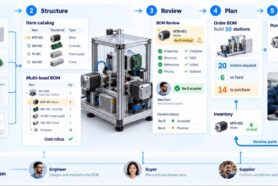
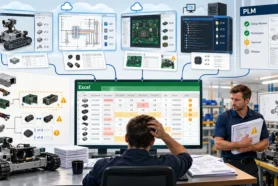
In many manufacturers, product data remains fragmented. Engineering maintains CAD models and spreadsheets. Purchasing rebuilds bills of material inside ERP systems. Manufacturing planners translate designs into production instructions. Each handoff introduces delay, interpretation, and error. The result is not a lack of data, but a lack of decision-ready data.
Digital transformation fails when product data is treated as a downstream artifact instead of a living system. Sensors, analytics, and AI cannot compensate for disconnected bills of materials, outdated revisions, or unclear ownership of product changes. Without transforming how product data flows across engineering, manufacturing, and supply chain, operational improvements remain localized and fragile.
True digital transformation in manufacturing begins when product data becomes a shared foundation—continuously updated, traceable, and accessible across functions—so decisions can be made earlier, faster, and with confidence.
Digital Technologies That Enable Transformation (When Integrated)
Cloud Computing as the Foundation
Cloud computing eliminates fragmented data ownership by forcing shared visibility. Cloud-based software centralizes manufacturing data, enables collaboration across sites, and accelerates system integration. Architecturally, cloud platforms make information silos difficult to sustain.
Industrial Internet and IoT
Industrial IoT enables real-time monitoring of equipment, energy consumption, and production output. When integrated into workflows, IoT shifts operations from reactive to predictive. Without workflow integration, however, sensor data becomes noise rather than insight.
Big Data and Big Data Analytics
Manufacturing generates massive volumes of data. Big data analytics transforms this information into patterns, trends, and predictions. There are numerous cases where big data analytics have been implemented to solve manufacturing challenges, demonstrating both the opportunities and complexities involved. However, analytics only create value when organizations redesign decision processes to act on insights quickly.
AI and machine learning are also increasingly used in manufacturing for predictive maintenance, quality control, and demand forecasting.
There Is No Single BOM: Why Multi-View Product Structures Matter
One of the most common assumptions holding back digital transformation in manufacturing is the belief that there should be a single, universal bill of materials. In practice, this assumption creates friction rather than clarity.
Engineering, manufacturing, procurement, finance, and service teams each require different views of the product. Engineers care about functional structure and design intent. Manufacturing needs routings, alternates, and process-specific groupings. Purchasing focuses on suppliers, costs, and lead times. Service teams require serialized configurations and spare parts relationships. Forcing all of these perspectives into a single BOM inevitably leads to compromises—and spreadsheets.
Digital transformation requires a multi-view product data model. Instead of one static BOM, manufacturers need multiple synchronized structures that reflect how different teams work while staying connected to the same underlying product definition. When product data can be viewed, filtered, and structured differently without duplication, organizations eliminate translation work and reduce errors across the lifecycle.
Manufacturers that adopt multi-view product structures move faster because changes propagate automatically. A design change updates procurement visibility. A supplier substitution informs manufacturing planning. Cost impacts are visible before production commitments are made. This is how digital transformation turns product data into a system of execution rather than a reporting artifact.
Why Approval-Based Change Management Slows Digital Transformation
Change management is often cited as a critical capability in digital transformation, yet many manufacturers still rely on approval-centric workflows designed for document control rather than decision exploration. Traditional ECO processes assume changes are rare, linear, and fully defined before discussion begins. Modern manufacturing reality is very different.
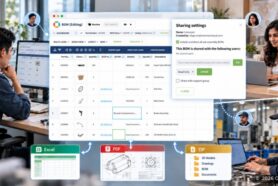
In practice, product changes evolve over time. Teams evaluate alternates, explore cost tradeoffs, test supply scenarios, and refine timing before a final decision is ready. When systems only support approval at the end of this process, teams are forced to work outside the system—usually in spreadsheets and email—until the moment of formal release.
Digital transformation in manufacturing requires a shift from approval-first workflows to collaborative change environments. Systems must support experimentation, visibility, and shared understanding long before a change is finalized. When teams can explore options together using the same product data, decisions improve and late-stage disruptions decline.
Organizations that modernize change management do not eliminate approvals; they reduce surprises. Digital transformation succeeds when change becomes a managed, transparent process—not a last-minute negotiation.
From Data to Product Memory: Preparing Manufacturing for AI-Driven Decisions
Artificial intelligence is increasingly positioned as a cornerstone of digital transformation in manufacturing. Predictive maintenance, demand forecasting, and automated quality inspection all promise efficiency gains. However, AI effectiveness depends on the quality and context of the data it consumes.
Most manufacturing systems capture what happened but not why decisions were made. Bills of materials show current state but not the reasoning behind supplier choices, cost tradeoffs, or design alternatives. Without this context, AI models operate on incomplete information, limiting their usefulness and trustworthiness.
Product memory fills this gap. By preserving decision history—what alternatives were considered, what constraints existed, and what outcomes followed—manufacturers create a foundation for AI that supports reasoning, not just prediction. Product memory allows systems to learn from past decisions and assist humans in navigating future complexity.
Digital transformation moves from automation to intelligence when product data includes context, intent, and change history. This is the difference between AI as a reporting tool and AI as a decision partner.
Artificial Intelligence and Data Analytics in Manufacturing
Artificial intelligence and data analytics extend the value of manufacturing data beyond human-scale analysis. Machine learning models detect correlations that would otherwise remain invisible, supporting applications such as:
- Predictive maintenance
- Automated quality inspection
- Demand forecasting
AI does not replace human judgment. It augments it. Successful manufacturers treat AI as decision support, combining algorithmic insights with domain expertise. Importantly, AI increases demand for skilled workers who understand both manufacturing processes and analytical models.
Improved Quality Control Through Digital Manufacturing Systems
Improved quality control is one of the most consistent outcomes of successful digital transformation. Digital inspection systems detect defects earlier, reduce human error, and enable root cause analysis across production lines.
When quality data is connected to production parameters, manufacturers move from inspection-based quality to prevention-based quality. This shift reduces scrap, improves consistency, and strengthens regulatory compliance.
Cost Savings and Operational Efficiency Gains
Digital transformation delivers cost savings not through technology alone, but through structural efficiency. Automated reporting reduces manual work and automation tools help eliminate repetitive tasks such as welding, painting, and assembly. Predictive maintenance reduces unplanned downtime. Real-time scheduling improves equipment utilization.
Manufacturers that integrate analytics into daily operations consistently report:
- Lower scrap and rework
- Reduced downtime
- Improved overall equipment effectiveness
- Faster response to demand changes
Digital transformation increases manufacturing efficiency by automating repetitive manual tasks throughout the production process.
These gains compound over time, creating durable competitive advantage.
Digital Transformation on the Factory Floor
Digital transformation becomes real—or fails—on the factory floor. When real-time data reaches operators, decision latency collapses. Operators can act immediately within predefined boundaries. Supervisors shift from approval roles to oversight roles. Digital transformation also helps manage and optimize production schedules, allowing manufacturers to quickly adapt to changes and minimize downtime. Enhanced order tracking and management streamline workflows, improve order accuracy, and deliver a better customer experience through seamless order processing across different locations.
Technologies such as augmented reality enhance training, safety, and collaboration. Digital twins and flexible automation enable manufacturers to achieve 70% faster changeover times for personalized products. However, success depends on aligning authority with system capabilities. Overly restrictive controls recreate bottlenecks digital systems are designed to remove.
Supply Chain Integration as Part of Digital Transformation in Manufacturing
A digitally transformed factory cannot operate effectively with an analog supply chain. Supplier delays communicated days late erase the value of real-time production visibility. Digital transformation in manufacturing also expands the reach of companies, enabling them to connect with new markets and customer segments through enhanced operational strategies and digital technologies.
Digital supply chain integration enables:
- Real-time inventory visibility
- Faster response to disruptions
- Better coordination with contract manufacturers
Improved visibility and tracking provided by IoT lead to better inventory management and greater agility in supply chains. Additionally, IoT and cloud-based systems improve visibility and demand forecasting within the supply chain, reducing waste.
Manufacturers should prioritize connectivity with critical suppliers first, building momentum through shared value rather than mandates.
Additive Manufacturing and the Next Phase of Digital Transformation
Additive manufacturing introduces new possibilities for prototyping, tooling, and low-volume production. Its value increases when integrated with digital design, production planning, and supply chain systems.
Rather than replacing traditional manufacturing, additive manufacturing complements it—shortening development cycles and enabling localized production where appropriate.
Building a Digital Workforce
Digital transformation redefines roles rather than simply requiring new skills. Leaders play a crucial role in driving digital transformation in manufacturing by setting the vision, fostering organizational buy-in, and modeling the behaviors needed for change. Operators, engineers, and managers must understand how their responsibilities evolve when systems automate routine tasks. Digital transformation also requires a workforce capable of managing digital systems and promotes regional training efforts to build these capabilities. The need for skilled labor is a significant challenge for manufacturers undergoing digital transformation.
Successful manufacturers redesign roles explicitly, update performance metrics, and align incentives with new workflows. Training supports adoption, but role clarity drives acceptance. To ensure effective use of new digital tools, training programs should be aligned with change management methods.
Measuring What Actually Matters
Transformation success cannot be measured by activity metrics such as dashboards deployed or sensors installed. Meaningful metrics focus on decision outcomes:
- Faster response to quality issues
- Higher percentage of predictive maintenance
- Reduced approval bottlenecks
- Improved time to market
If decisions are not changing, transformation is not happening.
Common Pitfalls in Digital Transformation Initiatives
Despite the promise of digital transformation, many manufacturers encounter significant obstacles that slow progress and limit results. One of the most common pitfalls is the lack of a unified strategy that connects digital investments to core business objectives. Without a clear vision, digital transformation becomes a series of disconnected projects, making the journey more difficult and less effective.
Another frequent challenge is inadequate investment in change management. Many manufacturers underestimate the importance of preparing teams to adapt to new digital systems and automated processes. When change management is overlooked, teams struggle to thrive, and resistance to new ways of working can stall transformation efforts.
A third pitfall is the failure to leverage data effectively. While the internet of things (IoT) and automated systems generate vast amounts of information, many manufacturers lack the data-driven approach needed to turn this data into actionable insights. This leads to missed opportunities to optimize manufacturing operations and improve decision-making across the manufacturing network.
Complexity is another barrier. Implementing IoT and other digital technologies can be overwhelming, especially when vendors do not provide adequate support or guidance. The result is often a slow, fragmented transformation that fails to deliver the expected value.
To avoid these pitfalls, manufacturers must approach digital transformation as a holistic effort—one that connects strategy, people, and technology. By recognizing these common challenges and taking proactive steps to address them, organizations can optimize their digital transformation journey and position their teams to lead and thrive in a rapidly evolving manufacturing environment.
Best Practices for Achieving Real Digital Transformation
Achieving successful digital transformation in manufacturing requires more than just adopting new technologies—it demands a comprehensive approach that integrates people, processes, and technology. To ensure your transformation delivers real value, start by aligning your digital strategy with your core business goals and objectives. This alignment ensures that every investment and initiative supports the outcomes that matter most to your organization.
Investing in change management is equally important. Equip your teams with the skills and capabilities they need to adapt to new digital systems and workflows. By developing a culture where employees are empowered to lead, innovate, and thrive, you create an environment where transformation can take root and grow.
Leverage data and analytics to optimize manufacturing operations and predict potential risks before they impact production. A data-driven approach enables you to identify inefficiencies, reduce defects, and make informed decisions that drive productivity and flexibility across your manufacturing environment.
Foster a culture of innovation and experimentation. Encourage teams to develop new ideas, test solutions, and learn from both successes and failures. This mindset not only accelerates transformation but also helps your organization stay responsive to changing market demands.
Finally, monitor and report on key metrics to ensure your digital transformation is on track to meet its goals. Regularly reviewing progress allows you to adjust strategies, celebrate wins, and address challenges before they become roadblocks.
By following these best practices, manufacturers can transform their operations, create lasting value, and achieve the key benefits of digital transformation: improved productivity, reduced defects, and increased flexibility in a competitive marketplace.
Why Digital Transformation Requires Open, Composable Systems
Many digital transformation initiatives stall under the weight of monolithic enterprise platforms. Large, tightly coupled systems promise end-to-end control but often limit flexibility, slow adoption, and increase dependency on vendor roadmaps. For many manufacturers—especially small and mid-sized companies—this approach creates more friction than value.
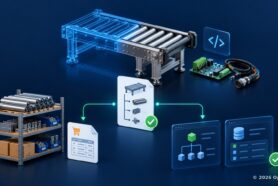
Digital transformation in manufacturing increasingly favors composable architectures: modular, cloud-native systems that integrate through open interfaces. Instead of replacing every system, manufacturers connect best-in-class tools around shared data models. This approach reduces risk, accelerates implementation, and allows transformation to evolve incrementally.
Open systems also enable transformation beyond the enterprise. Suppliers, contract manufacturers, and partners can participate without being forced into the same platform. As manufacturing networks become more distributed, openness becomes a strategic requirement rather than a technical preference.
Composable systems allow digital transformation to scale with the business—not constrain it.
Real-World Examples: What Actually Works
FENCEQUIP: Connecting Engineering Design With Purchasing Optimization
FENCEQUIP, a New Zealand manufacturer of post drivers, faced a common challenge: their Autodesk Fusion 360 CAD system enabled advanced design work, but transferring that data into procurement wasn’t straightforward. Manually managing BOMs, tracking changes, and ensuring purchasing decisions were based on accurate, up-to-date information created constant friction.
By implementing OpenBOM’s cloud-based platform, FENCEQUIP connected engineering directly with purchasing. The integration brought together essential components of digital transformation in manufacturing, such as software solutions for project and resource management. The platform eliminated manual data transfer, provided instant visibility into material costs and supplier options, and enabled cost assessment during the design phase—not after committing to production. Solutions like Honeywell Batch Historian also serve as key components by providing historical data for reporting and analytics, increasing efficiency in production processes.
Results: Reduced material waste, improved supplier negotiations, and dramatically better inventory management by ordering only what’s needed, when it’s needed.
The lesson: Digital transformation doesn’t require replacing everything. Sometimes connecting two critical systems—design and procurement—delivers more value than implementing comprehensive enterprise platforms.
Gates Underwater Products: From Excel to Cloud-Based Data Management
Gates Underwater Products, a precision manufacturer of underwater camera housings, relied on Excel spreadsheets for bill of materials management. As production complexity increased, Excel’s limitations became critical constraints—tracking changes in dynamic production environments required more robust solutions.
Their transition to OpenBOM marked their first move to cloud-based software after years as a SOLIDWORKS desktop user. The decision wasn’t taken lightly given the critical nature of their precision work, but the cloud platform provided real-time collaboration, anywhere access, and a single source of truth for all BOMs.
The cost proposition was compelling: 90% of the features found in expensive PLM/ERP solutions at 10% of the cost. This enabled Gates to implement powerful data management without breaking the bank, making the most of their money while still achieving digital transformation goals. Similarly, platforms like Siemens’ InsightsHub connect machines and systems to optimize complex processes on the factory floor using IoT technology, demonstrating how investment in the right solutions can drive efficiency and value.
The insight: Digital transformation often starts with solving the most painful constraint. For Gates, that wasn’t manufacturing execution or supply chain—it was getting accurate, real-time data management that scaled with production complexity.
FAQ: The Questions Manufacturers Actually Ask
Isn’t digital transformation just for large enterprises? No—small manufacturers need to be more strategic about where they invest. Focus beats breadth for smaller operations. Digital transformation impacts many aspects of manufacturing, including processes, equipment, workforce, and supply chains. The furniture manufacturer created more value with an $85K supplier portal than many companies spending millions on comprehensive platforms. In the D.C. region, manufacturers are increasingly employing digital platforms for regulatory compliance regarding data protection and environmental impact. As of 2025, 75% of manufacturers in the D.C. region are at ‘midlevel’ digital maturity, a significant increase from previous years.
How long does digital transformation take? 6-12 months for first significant results if you focus correctly. 2-3 years to build organizational capability for continuous improvement. But digital transformation isn’t a project with an end date—it’s an ongoing capability. In 2024, 31% of manufacturers faced financial impacts from cyberattacks, highlighting the need for robust security throughout the transformation process. Increased connectivity in manufacturing raises the risk of cyber-attacks, necessitating robust security strategies.
Do we need to replace all our legacy systems? Usually no. The question isn’t “replace or keep” but “integrate or isolate.” Legacy systems that can share data via APIs can participate in digital transformation. The focus on how to capture not managed data and connect silos is what will make you to win in digital transformation.
How do we get employees to embrace change? Involve them in defining what problems to solve, not just how to use solutions. When people help design systems that make their work better, they champion adoption. Approximately 90% of supply chain leaders report a lack of talent skilled in data analytics, AI/ML, and cybersecurity.
What’s the role of AI in manufacturing? AI is a tool for pattern recognition in complex data, not a replacement for human judgment. It is about intelligence introduced to your workflows and not human replacement. Best applications combine AI pattern recognition with human oversight and decision-making.
What about the costs and investment required? Upgrading to advanced hardware and software requires significant upfront investment, which is a barrier for firms with tight margins. A composable architecture with data management foundation is a path for gradual upgrade that re-think the way you manage data and processes.
Conclusion: Digital Transformation Is About How Decisions Are Made
When digital transformation in manufacturing fails, it is rarely because the technology did not work. Sensors collect data. Systems integrate. Dashboards update. The failure happens when decision-making remains unchanged.
Manufacturers often digitize existing processes instead of questioning whether those processes still make sense. They automate reporting while keeping approvals slow. They deploy analytics while leaving product data fragmented. In these cases, technology accelerates complexity rather than reducing it.
Real digital transformation begins when manufacturers treat product data as a shared, living system—one that connects engineering, manufacturing, and supply chain decisions in real time. When product definition is accessible, multi-dimensional, and continuously updated, decisions move earlier. Surprises move later—or disappear entirely.
This is not about having more tools. It is about building organizational capability: the ability to explore change collaboratively, understand impact before committing, and learn from every decision made. Technology enables this shift, but it does not cause it.
Digital transformation in manufacturing is ultimately an organizational change, not a software upgrade. Companies that succeed are not the ones with the most data, but the ones that use data to change how people work together. That is the difference between digitizing manufacturing and truly transforming it.
Interested to discuss how to manage your digital transformation project and create phased approach to re-architect your data management foundation and process?
Contact OpenBOM today– we’re happy to help.
Best, Oleg
Join our newsletter to receive a weekly portion of news, articles, and tips about OpenBOM and our community.