No one wakes up in the morning and says – I need to buy some software. It is a problem that brings people to search for a solution. Therefore, the first question we always ask companies – what is the problem that triggers you to come and talk to us? Here is what we learned…
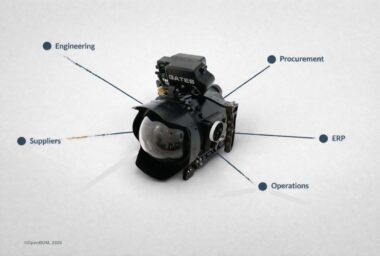
The real problem isn’t data access, it’s connection. Manufacturing companies don’t suffer from a lack of data. CAD files are everywhere. Spreadsheets are everywhere. Legacy systems store documents. Engineers often believe that if they’ve saved the file and sent the spreadsheet, they’ve “done their part.”
But when it comes to business functions like procurement and operations, this approach simply breaks down.
The reality is: access to engineering files isn’t the same as having the right data, at the right time, in the right context to make a business decision.
Procurement teams don’t need CAD files — they need a clean, structured list of what to buy, where to buy it, how much it costs, and when it’s needed. It also needs to have all required files connected. They need to understand what is needed, what’s approved, what is ordered, what’s a substitute, and what’s in conflict.
Unfortunately, that kind of clarity is rarely available in the scattered world of shared drives and Excel sheets. The result is predictable:
- BOM errors turn into purchase mistakes
- Orders are delayed
- Inventory buffers increase
- Sales slow down
- Operations lose trust in engineering
This isn’t a file-sharing problem — it’s a connected data flow problem.
To solve it, you need more than access. You need connected, contextualized data that seamlessly links engineering and business workflows.
That’s exactly what OpenBOM does — and the impact is clear in the stories of FenceQuip, NVTS Global, and Sierra Thermal.
From BOM Access to Purchasing Impact: The FenceQuip Story
When FenceQuip set out to implement lean manufacturing practices, they quickly ran into an issue that plagues many growing companies: disorganized, disconnected BOM data. Items were listed inconsistently across spreadsheets, and there was no reliable way to generate purchase orders from engineering designs.
This lack of structure meant purchasing decisions were often reactive, error-prone, and time-consuming.
OpenBOM changed that. By connecting their Onshape CAD data directly to BOMs and vendor catalogs, FenceQuip created a seamless pipeline from design to procurement.
“We can now generate accurate BOMs from Onshape, roll them up, and produce Purchase Orders in minutes,” they said.
Today, their process is lean, their purchasing is aligned, and their operations are far more predictable — all because their engineering data is now connected and actionable. Read more in the story online.

NVTS Global: 25% Less Error and Rework Through Connected Data
NVTS Global designs and manufactures complex electronic systems — an environment where even minor errors can lead to major costs. Before OpenBOM, their engineering and purchasing teams worked in silos. BOMs existed, but they weren’t aligned across departments.
Changes in design weren’t always reflected in the BOMs used for ordering. Procurement lacked real-time visibility. Rework was common.
OpenBOM introduced structure and traceability, with a shared data model that allowed engineering, operations, and purchasing to collaborate around a single source of truth.
“It’s the traceability, version control, and connectedness of the data that really makes the difference,” said NVTS.
The outcome? Fewer manual errors, faster turnarounds, and 25% less error and rework across the board. Check the NVTS story for more information.
Sierra Thermal: Turning Engineering Data into Repeatable Orders
Sierra Thermal manufactures high-performance thermal processing equipment. As they scaled, the need to manage product configurations, revisions, and repeated customer orders became urgent. But their old tools — Excel and file-based BOMs — couldn’t keep up.
With OpenBOM, they built a connected product structure that enables them to reuse assemblies, clone BOMs for new orders, and feed purchasing directly with accurate, timely data.
“We can copy and edit BOMs in minutes for repeat orders and eliminate ordering errors,” Sierra Thermal shared.
This transformation led to faster quoting, more precise ordering, and a better customer experience — not to mention less time spent chasing BOM updates across disconnected files. Read more in the article online.
Data Alone Won’t Save You — Connected Data Will
The common thread in all three stories isn’t access. Each company had data. But that data was scattered, static, and siloed.
OpenBOM helped these companies not by giving them more data — but by giving them the ability to connect, contextualize, and operationalize their data across the entire lifecycle from engineering to procurement.
The result isn’t just technical improvement — it’s real business performance:
✅ Faster quoting and sales
✅ Precise and timely ordering
✅ Lower procurement and inventory costs
✅ Fewer mistakes and rework
✅ Better collaboration across teams
Conclusion
Having access to CAD files or spreadsheets won’t solve your procurement challenges. True transformation happens when product data becomes structured, connected, and seamlessly flows across departments. That’s what OpenBOM delivers.
Companies like FenceQuip, NVTS Global, and Sierra Thermal are already seeing the results: fewer errors, faster quoting, smarter purchasing — and real business performance.
Want to see how OpenBOM can do the same for your business?
REGISTER FOR FREE to check it out for yourself.
Best, Oleg
Join our newsletter to receive a weekly portion of news, articles, and tips about OpenBOM and our community.