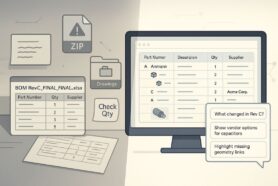
In the world of business software, replacing spreadsheets or Excel is the most popular topic. Guess what? Almost every successful business software is doing something that people were doing and/or still doing with Excel. It is just so easy and natural to start and do Excel.
Recently, I was reading my 10-year-old Beyond PLM posts about Excel: Why Do I Like my PLM spreadsheets and PLM Excel Spreadsheet From Odes to Woes.
If you need to manage Bill of Materials and other product information, there is something better than an Excel spreadsheet. OpenBOM can do better.
Here are my 5 reasons why you need to replace your spreadsheets tomorrow:
- OpenBOM is simple and natural as a spreadsheet. You can use it as a spreadsheet. Add data, copy/paste, add columns, rearrange them, etc.
- OpenBOM is online like Google Sheets and allows you to collaborate in real time and do simultaneous BOM editing.
- OpenBOM reference instance model allows you to organize central storage of information about components (eg. Manufacturer, Description, Cost, etc.) and then use it in many BOMs without duplicating data.
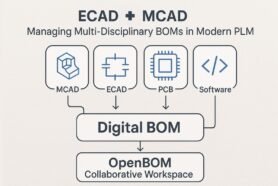
- OpenBOM can manage hierarchies. All the product structure (BOM) data are hierarchical: assemblies — subassemblies — parts. OpenBOM automatically connects things in hierarchies based on part numbers.
- OpenBOM does rollups and calculations. You can automatically rollup quantities in multi-level structures, as well as calculate any other roll-up based on custom properties you added to BOM (eg. cost, mass, etc.).
There are many other reasons why to choose OpenBOM — it is visual, integrated with other systems, allows you to import existing legacy data, manage inventory, and many others. Watch my next blog articles.
Conclusion
OpenBOM gives you a way to simplify BOM data management almost without losing flexibility and portability of Excel spreadsheets. And it’s easy to make this move — just register for OpenBOM free user plan and start managing BOMs different in 5 minutes.
Best, Oleg
Join our newsletter to receive a weekly portion of news, articles, and tips about OpenBOM and our community.