In a few weeks, I’ll be traveling to Jerez de la Frontera in Andalusia to attend the Share PLM Summit. The theme of Share PLM Summit is human-centric transformation and I found it is very much connected to some facts I found about Jerez (I have never been there before). So far, what I learned as part of my preparation for the presentation is very inspiring since it presents an interesting cultural connection between sherry wine, flamenco, and horsemanship – all together deeply rooted in human expression.
The vision of Share PLM I admire is to reshape the conversation about PLM around what PLM should be. I found Share PLM’s mission is simple but powerful: PLM is about people. It’s not just about systems, processes, and data models — it’s about how those tools empower real humans to collaborate, innovate, and bring products to life.
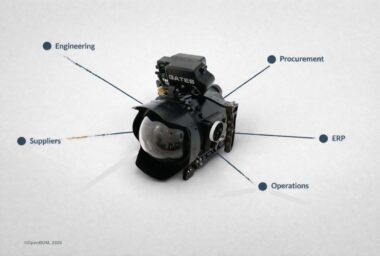
That’s why their work resonates so deeply with me. One of my favorite pictures I took from the Share PLM website is this one.

I found it as a very bold step to shift the narrative from technical complexity to user experience, engagement, and learning — helping companies design PLM systems that people actually want to use.
The subject of my presentation – PLM’s Missing Link: Data That Works for People. I’ll be speaking about human-centered PLM and how rethinking architectures — from monolithic to connected and composable — can help us better support the real people behind every product.
Why PLM Feels Broken for So Many People
Let’s be honest: PLM was never designed for humans. It was designed to manage CAD files, control revisions, and enforce processes. That was fine for the world of 20-30 years ago.
But today, the work is more complex, teams are more distributed, and speed is everything. Yet the tools we use often feel like they’re fighting against us. Engineers email spreadsheets because it’s faster than uploading to PLM. Procurement teams rebuild BOMs manually. Executives struggle to get a single view of the product. We’ve all seen it.
And that’s the story I want to unpack at Share PLM Summit — how we got here, and how we move forward.
Let’s Talk About the Real Missing Link
So, what is the missing link? It’s the connection between data and people.
It’s not enough to have “a single source of truth” if nobody trusts or understands how to use it. It’s not enough to control workflows if they don’t match how people actually collaborate. And it’s not enough to integrate systems if the output still ends up in someone’s email inbox.
We need systems that are built for humans. That means intuitive, usable, contextual data experiences — not forms, folders, and checkboxes. We need PLM that behaves more like Spotify or Airbnb — systems designed for how people make decisions, not just how data is stored.
A Fresh Perspective on Product Data – Manufacturing Graph
In my talk, I’ll be exploring five big ideas that I think can help us reframe PLM from something people avoid… into something people value.
First, we need to treat data as a product. That means designing it for consumption — clean, clear, and ready for use. Think of your internal data like an API: it should be discoverable, trustworthy, and responsive to its “users” — whether that’s a buyer, a supplier, or an engineer.
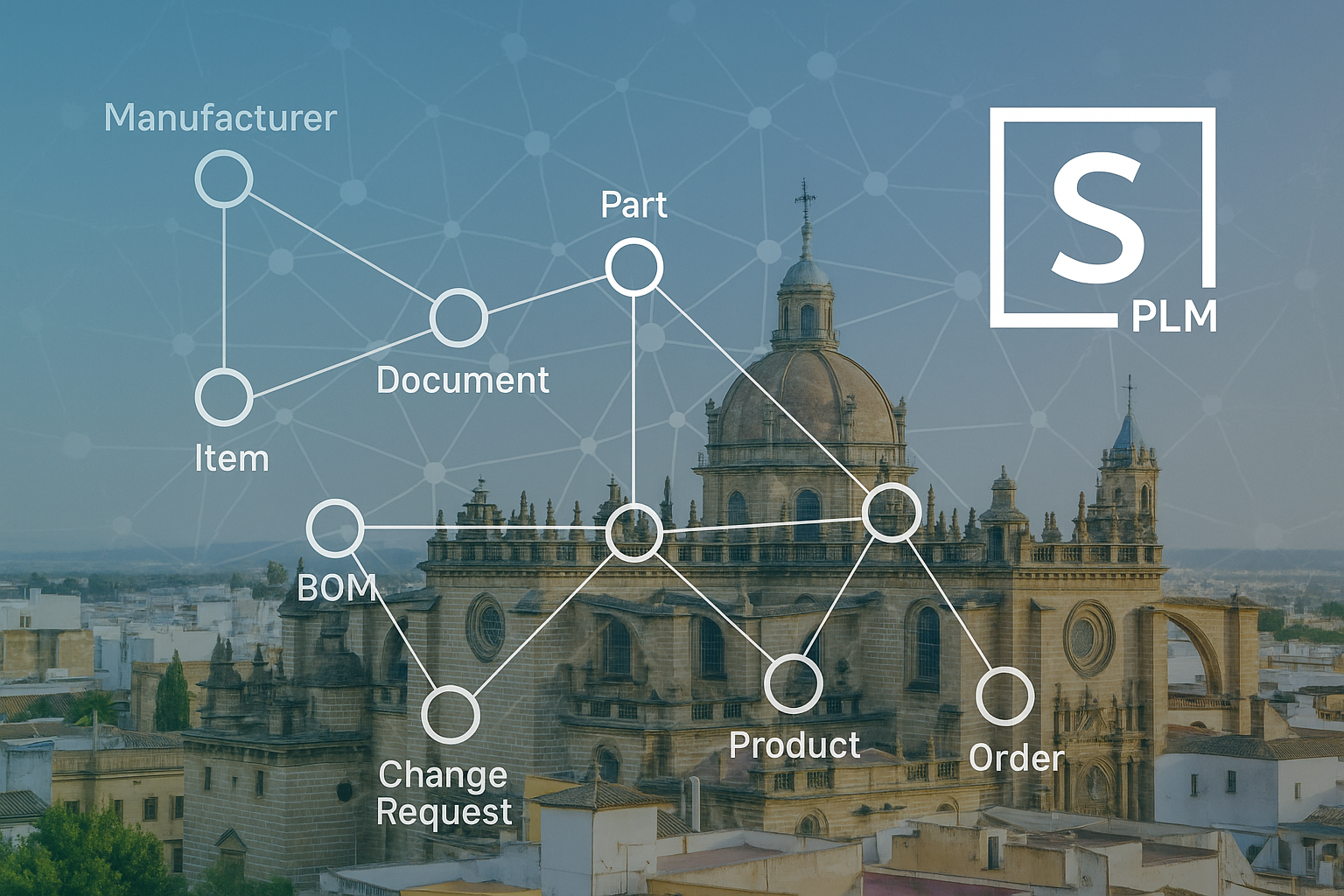
Second, we need to move from tables to graphs. Manufacturing is no longer a linear process. It’s a web of relationships: between parts, suppliers, regulations, and design changes. That’s why we’re building the xBOM service at OpenBOM — to model these relationships in a flexible, interconnected way.
Third, it’s time to break the monolith. Traditional PLM systems try to do everything in one massive, rigid platform. But in today’s cloud-native world, we need modular, composable services that connect seamlessly — not lock you in.
Fourth, we need a new business model for PLM. Shelfware licenses and long implementations don’t work anymore. We need tools that grow with usage, support real-time collaboration, and are accessible even to small and mid-sized companies.
And finally, we need to build for humans, not just compliance. That means rethinking the user experience from the ground up. It means reducing friction, creating clarity, and meeting users where they are.
Can we learn from history?
There’s something symbolic about talking about human-centered PLM in a city like Jerez with deep historical roots. Just like PLM, wine-making has data — temperature, acidity, and barrel type.
But the magic isn’t in the spreadsheet. It’s in how people use that knowledge. The same goes for flamenco — it’s rhythm, technique, and structure, yes… but at the heart of it, it’s expression, connection, and feeling.
PLM can learn from that. We’ve spent too long optimizing systems. Now it’s time to optimize for people.
Conclusion and Stay Tuned
I’ll be sharing more from the Share PLM Summit — not just the ideas, but the conversations, the insights, and yes, maybe even a glass of sherry or two. If you’ll be there, let’s connect. If not, keep an eye on this space.
Let’s keep asking the hard questions. Let’s keep building PLM systems that don’t just manage data — they empower people.
I’m preparing some announcement that will be made by that time – stay tuned.
It is not too late, REGISTER for Share PLM Summit 2025 and let’s meet there.
Best, Oleg
Join our newsletter to receive a weekly portion of news, articles, and tips about OpenBOM and our community.